
Aṅguttara Nikāya (AN)
Numbered collection (of suttas)
11 nipātas (books), thousands of suttas.
Each card below links to that whole book.
+AN 1 Ekakanipāta
The Book of the Ones
The Book of the Ones

The Book of the Ones takes a single thing at a time.
No sight or sound so occupies a man as those of a woman.
The same is said of a woman regarding a man.
An untamed and unguarded mind brings great harm.
A rice spike pointed the right way pierces the hand that holds it.
So a mind rightly directed pierces ignorance.
Even a fingersnap of kindness makes a monk worth his almsfood.
One person arises for the welfare of the many and that is the Tathāgata.
Long lists then name the foremost disciple in each field.
Twenty or thirty-one vaggas depending on the reckoning and 627 suttas.
+AN 2 Dukanipāta
The Book of the Twos
The Book of the Twos

The Book of the Twos pairs everything up.
Two things drive the training: shame and fear of wrongdoing.
Two kinds of punishment and two ways of settling an issue.
Two fools are the one who hides a fault and the one who will not forgive.
Two hopes are hard to give up: for long life and for gain.
Two gifts and two sharings and two acts of welcome.
Two people can never be repaid, and they are your mother and father.
Nineteen vaggas and 479 suttas.
From sutta 180 onward it is repetition series.
+AN 3 Tikanipāta
The Book of the Threes
The Book of the Threes

The Book of the Threes groups things by three.
Three marks of a fool and three of an astute person.
A chariot-maker shows his king one true wheel and one crooked.
Three messengers of the gods are old age and sickness and death.
A lump of salt ruins a cup of water and does nothing to the Ganges.
So one deed weighs differently on an undeveloped and a developed person.
The three trainings are higher ethics and higher mind and higher wisdom.
The Kālāmas are told not to go by tradition or by logic alone.
Eighteen vaggas and 352 suttas, with repetition series from AN 3.156.
+AN 4 Catukkanipāta
The Book of the Fours
The Book of the Fours
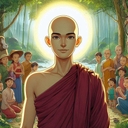
The Book of the Fours groups things by four.
Not understanding the four noble truths is why we have run on so long.
Four ways of answering a question and four kinds of person.
Rohitassa cannot reach the end of the world by walking.
It is found in this fathom-long body with its perception and mind.
Four streams of overflowing merit for a lay follower.
Four things worth doing with wealth honestly earned.
Four ways of practice, from painful and slow to pleasant and quick.
Kesi the horse trainer is asked how he trains a horse.
Twenty-eight vaggas and 783 suttas, repetition series from 201.
+AN 5 Pañcakanipāta
The Book of the Fives
The Book of the Fives
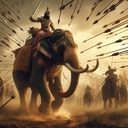
The Book of the Fives groups things by five.
Five powers of a trainee: faith and shame and fear and vigor and wisdom.
Five hindrances, and five ways to remove an unwanted thought.
Five subjects everyone should review often.
Everyone is subject to old age and sickness and death.
Five drawbacks of long wandering and five of settling in one place.
Five ways of speaking that a monk should abandon.
Five benefits of walking meditation and of listening to Dharma.
Five things that make the true Dharma last or vanish.
Twenty-six vaggas and 1152 suttas, mostly repetition after 250.
+AN 6 Chakkanipāta
The Book of the Sixes
The Book of the Sixes

The Book of the Sixes groups things by six.
Six qualities that make a monk worthy of offerings.
Six warm-hearted Dharmas that keep a community at ease.
Six unsurpassable things to see and to hear and to gain.
Six recollections: the Buddha and the Dharma and the Saṅgha.
Then ethical conduct and generosity and the gods.
Six roots of dispute and six elements of escape.
Six things that lead to coolness and to perfection.
Twelve vaggas and 649 suttas, with repetition series from 120.
+AN 7 Sattakanipāta
The Book of the Sevens
The Book of the Sevens

The Book of the Sevens groups things by seven.
Seven kinds of noble wealth and seven underlying tendencies.
The seven conditions that prevent the Vajjis from declining.
The same seven are then given to the monks in several forms.
Seven kinds of person, freed in seven different ways.
The great sacrifice is reinterpreted as three fires worth tending.
Seven ways of settling a legal issue in the monastic law.
Only 94 suttas are unique and the other 1124 are repetition series.
+AN 8 Aṭṭhakanipāta
The Book of the Eights
The Book of the Eights

The Book of the Eights groups things by eight.
Eight benefits of the release of the heart by kindness.
Eight worldly conditions: gain and loss and fame and disgrace.
Then praise and blame and pleasure and pain.
The eight-factored sabbath observance is described in full.
The ocean has eight amazing qualities and so does this Dharma.
Eight causes of an earthquake are listed.
Gotamī asks for the going forth and gets it under eight rules.
About 90 suttas are unique and the rest run on as repetition to 627.
+AN 9 Navakanipāta
The Book of the Nines
The Book of the Nines

The Book of the Nines groups things by nine.
Nine things support awakening and the first is good friendship.
Nine abodes of sentient beings and nine successive attainments.
Those are the four jhānas and the four formless states and cessation.
Nine ways to remove resentment when it arises.
Nine things a monk with the inclinations ended cannot do.
The lion roar and the safe place are given here.
Rememberings and right efforts and psychic power close the book.
432 suttas in all, of which 92 are unique.
+AN 10 Dasakanipāta
The Book of the Tens
The Book of the Tens
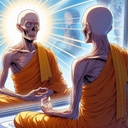
The Book of the Tens groups things by ten.
Ten benefits of ethical conduct, each leading on to the next.
Ten qualities that make a person a protector of himself.
Ten perceptions to develop, ending with breath meditation.
Ten courses of deeds in their unskillful and skillful forms.
Ten things to review often about your own mind.
Ten fetters, and ten qualities of one beyond training.
The ceremony of descent is given a Dharma meaning.
The body born of deeds and the noble path close the book.
746 suttas, of which those after about 220 are repetition series.
+AN 11 Ekādasakanipāta
The Book of the Elevens
The Book of the Elevens

The Book of the Elevens is the last and the shortest.
Eleven benefits of the release of the heart by kindness.
You sleep well and wake well and dream no bad dreams.
Gods protect you and fire and poison do not harm you.
Eleven things that lead onward with no need to wish for them.
Each stage supports the next from ethics up to freedom.
Eleven recollections for a lay follower to dwell on.
1151 suttas, of which those after 21 are repetition series.