+MN 147 Cūḷa-rāhul’-ovāda:
Advice to Rāhula
all
Advice to Rāhula
+Opening
| (derived from B. Sujato 2018/12) | (出自B. Sujato 2018/12) | |
| Majjhima Nikāya 147 | Middle Discourses 147 | 中部147经 |
| Cūḷarāhulovādasutta | The Shorter Advice to Rāhula | 给罗睺罗的简短忠告 |
| Evaṃ me sutaṃ— | So I have heard. | 我曾这样听闻。 |
| ekaṃ samayaṃ bhagavā sāvatthiyaṃ viharati jetavane anāthapiṇḍikassa ārāme. | At one time the Buddha was staying near Sāvatthī in Jeta’s Grove, Anāthapiṇḍika’s monastery. | 有一次,佛陀住在舍卫城附近的祇树给孤独园。 |
| Atha kho bhagavato rahogatassa paṭisallīnassa evaṃ cetaso parivitakko udapādi: | Then as he was in private retreat this thought came to his mind: | 然后当他独处静思时,心中生起这个念头: |
| “paripakkā kho rāhulassa vimuttiparipācanīyā dhammā. | “The qualities that ripen in freedom have ripened in Rāhula. | “罗睺罗的解脱品性已经成熟了。 |
| Yannūnāhaṃ rāhulaṃ uttariṃ āsavānaṃ khaye vineyyan”ti. | Why don’t I lead him further to the ending of defilements?” | 为什么我不进一步引导他走向烦恼的止息呢?” |
| Atha kho bhagavā pubbaṇhasamayaṃ nivāsetvā pattacīvaramādāya sāvatthiṃ piṇḍāya pāvisi. | Then the Buddha robed up in the morning and, taking his bowl and robe, entered Sāvatthī for alms. | 然后佛陀早上穿上僧袍,拿起钵和僧袍,进入舍卫城乞食。 |
| Sāvatthiyaṃ piṇḍāya caritvā pacchābhattaṃ piṇḍapātapaṭikkanto āyasmantaṃ rāhulaṃ āmantesi: | Then, after the meal, on his return from alms-round, he addressed Venerable Rāhula: | 然后,饭后,从乞食回来,他对罗睺罗尊者说: |
| “gaṇhāhi, rāhula, nisīdanaṃ; | “Rāhula, get your sitting cloth. | “罗睺罗,拿你的坐具。 |
| yena andhavanaṃ tenupasaṅkamissāma divāvihārāyā”ti. | Let’s go to the Dark Forest for the day’s meditation.” | 我们去幽暗林进行白天的禅修。” |
| “Evaṃ, bhante”ti kho āyasmā rāhulo bhagavato paṭissutvā nisīdanaṃ ādāya bhagavantaṃ piṭṭhito piṭṭhito anubandhi. | “Yes, sir,” replied Rāhula. Taking his sitting cloth he followed behind the Buddha. | “是的,世尊,”罗睺罗回答。他拿着坐具跟在佛陀后面。 |
+147.0 – (thousands of devas want to witness Buddha lead Rahula to arahantship)
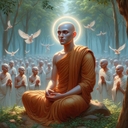
| Tena kho pana samayena anekāni devatāsahassāni bhagavantaṃ anubandhāni honti: | Now at that time many thousands of deities followed the Buddha, thinking: | 那时,成千上万的天神跟随着佛陀,心想: |
| “ajja bhagavā āyasmantaṃ rāhulaṃ uttariṃ āsavānaṃ khaye vinessatī”ti. | “Today the Buddha will lead Rāhula further to the ending of defilements!” | “今天佛陀将进一步引导罗睺罗走向烦恼的止息!” |
| Atha kho bhagavā andhavanaṃ ajjhogāhetvā aññatarasmiṃ rukkhamūle paññatte āsane nisīdi. | Then the Buddha plunged deep into the Dark Forest and sat at the root of a tree on the seat spread out. | 然后佛陀深入幽暗林,坐在一棵树下铺好的座位上。 |
| Āyasmāpi kho rāhulo bhagavantaṃ abhivādetvā ekamantaṃ nisīdi. | Rāhula bowed to the Buddha and sat down to one side. | 罗睺罗顶礼佛陀,然后坐在一旁。 |
| Ekamantaṃ nisinnaṃ kho āyasmantaṃ rāhulaṃ bhagavā etadavoca: | The Buddha said to him: | 佛陀对他说: |
+147.1 – (is eye permanent, suffering, self? )
all
| “Taṃ kiṃ maññasi, rāhula, | “What do you think, Rāhula? | “罗睺罗,你认为呢? |
| cakkhu niccaṃ vā aniccaṃ vā”ti? | Is the eye permanent or impermanent?” | 眼睛是常还是无常?” |
| “Aniccaṃ, bhante”. | “Impermanent, sir.” | “无常,世尊。” |
| “Yaṃ panāniccaṃ dukkhaṃ vā taṃ sukhaṃ vā”ti? | “But if it’s impermanent, is it suffering or happiness?” | “但是如果它是无常的,它是苦还是乐?” |
| “Dukkhaṃ, bhante”. | “Suffering, sir.” | “苦,世尊。” |
| “Yaṃ panāniccaṃ dukkhaṃ vipariṇāmadhammaṃ, kallaṃ nu taṃ samanupassituṃ: | “But if it’s impermanent, suffering, and perishable, is it fit to be regarded thus: | “但是如果它是无常的,是苦的,是会坏的,它适合被认为是: |
| ‘etaṃ mama, esohamasmi, eso me attā’”ti? | ‘This is mine, I am this, this is my self’?” | ‘这是我的,我就是这个,这是我的自我’吗?” |
| “No hetaṃ, bhante”. | “No, sir.” | “不,世尊。” |
| “Taṃ kiṃ maññasi, rāhula, | “What do you think, Rāhula? | “罗睺罗,你认为呢? |
+§1.2 – (is form [visble to eye] permanent, suffering, self?)
| rūpā niccā vā aniccā vā”ti? | Are forms permanent or impermanent?” | 色是常还是无常?” |
| “Aniccā, bhante”. | “Impermanent, sir.” | “无常,世尊。” |
| “Yaṃ panāniccaṃ dukkhaṃ vā taṃ sukhaṃ vā”ti? | “But if they're impermanent, are they suffering or happiness?” | “但是如果它们是无常的,它们是苦还是乐?” |
| “Dukkhaṃ, bhante”. | “Suffering, sir.” | “苦,世尊。” |
| “Yaṃ panāniccaṃ dukkhaṃ vipariṇāmadhammaṃ, kallaṃ nu taṃ samanupassituṃ: | “But if they're impermanent, suffering, and perishable, are they fit to be regarded thus: | “但是如果它们是无常的,是苦的,是会坏的,它们适合被认为是: |
| ‘etaṃ mama, esohamasmi, eso me attā’”ti? | ‘This is mine, I am this, this is my self’?” | ‘这是我的,我就是这个,这是我的自我’吗?” |
| “No hetaṃ, bhante”. | “No, sir.” | “不,世尊。” |
+§1.3 – (is eye conciousness permanent, suffering, self?)
| “Taṃ kiṃ maññasi, rāhula, | “What do you think, Rāhula? | “罗睺罗,你认为呢? |
| cakkhuviññāṇaṃ niccaṃ vā aniccaṃ vā”ti? | Is eye consciousness permanent or impermanent?” | 眼识是常还是无常?” |
| “Aniccaṃ, bhante”. | “Impermanent, sir.” | “无常,世尊。” |
| “Yaṃ panāniccaṃ dukkhaṃ vā taṃ sukhaṃ vā”ti? | “But if it’s impermanent, is it suffering or happiness?” | “但是如果它是无常的,它是苦还是乐?” |
| “Dukkhaṃ, bhante”. | “Suffering, sir.” | “苦,世尊。” |
| “Yaṃ panāniccaṃ dukkhaṃ vipariṇāmadhammaṃ, kallaṃ nu taṃ samanupassituṃ: | “But if it’s impermanent, suffering, and perishable, is it fit to be regarded thus: | “但是如果它是无常的,是苦的,是会坏的,它适合被认为是: |
| ‘etaṃ mama, esohamasmi, eso me attā’”ti? | ‘This is mine, I am this, this is my self’?” | ‘这是我的,我就是这个,这是我的自我’吗?” |
| “No hetaṃ, bhante”. | “No, sir.” | “不,世尊。” |
| “Taṃ kiṃ maññasi, rāhula, | “What do you think, Rāhula? | “罗睺罗,你认为呢? |
+§1.4 – (is eye contact permanent, suffering, self?)
| cakkhusamphasso nicco vā anicco vā”ti? | Is eye contact permanent or impermanent?” | 眼触是常还是无常?” |
| “Anicco, bhante”. | “Impermanent, sir.” | “无常,世尊。” |
| “Yaṃ panāniccaṃ dukkhaṃ vā taṃ sukhaṃ vā”ti? | “But if it’s impermanent, is it suffering or happiness?” | “但是如果它是无常的,它是苦还是乐?” |
| “Dukkhaṃ, bhante”. | “Suffering, sir.” | “苦,世尊。” |
| “Yaṃ panāniccaṃ dukkhaṃ vipariṇāmadhammaṃ, kallaṃ nu taṃ samanupassituṃ: | “But if it’s impermanent, suffering, and perishable, is it fit to be regarded thus: | “但是如果它是无常的,是苦的,是会坏的,它适合被认为是: |
| ‘etaṃ mama, esohamasmi, eso me attā’”ti? | ‘This is mine, I am this, this is my self’?” | ‘这是我的,我就是这个,这是我的自我’吗?” |
| “No hetaṃ, bhante”. | “No, sir.” | “不,世尊。” |
| “Taṃ kiṃ maññasi, rāhula, | “What do you think, Rāhula? | “罗睺罗,你认为呢? |
+§1.5 – (is sensation, perception, co-activity, consciousness permanent, suffering, self?)
| yamidaṃ cakkhusamphassapaccayā uppajjati vedanāgataṃ saññāgataṃ saṅkhāragataṃ viññāṇagataṃ tampi niccaṃ vā aniccaṃ vā”ti? | Anything included in feeling, perception, co-activities, and consciousness that arises conditioned by eye contact: is that permanent or impermanent?” | 任何包含在受、想、行、识中,由眼触所生起的,是常还是无常?” |
| “Aniccaṃ, bhante”. | “Impermanent, sir.” | “无常,世尊。” |
| “Yaṃ panāniccaṃ dukkhaṃ vā taṃ sukhaṃ vā”ti? | “But if it’s impermanent, is it suffering or happiness?” | “但是如果它是无常的,它是苦还是乐?” |
| “Dukkhaṃ, bhante”. | “Suffering, sir.” | “苦,世尊。” |
| “Yaṃ panāniccaṃ dukkhaṃ vipariṇāmadhammaṃ, kallaṃ nu taṃ samanupassituṃ: | “But if it’s impermanent, suffering, and perishable, is it fit to be regarded thus: | “但是如果它是无常的,是苦的,是会坏的,它适合被认为是: |
| ‘etaṃ mama, esohamasmi, eso me attā’”ti? | ‘This is mine, I am this, this is my self’?” | ‘这是我的,我就是这个,这是我的自我’吗?” |
| “No hetaṃ, bhante”. | “No, sir.” | “不,世尊。” |
❧
+147.2 – (is ear permanent, suffering, self? )
| “Taṃ kiṃ maññasi rāhula, sotaṃ niccaṃ vā aniccaṃ vā”ti? “Aniccaṃ, bhante … pe … |
“What do you think, Rāhula? Is the ear … | “罗睺罗,你认为呢?耳朵…… |
+147.3 – (is nose permanent, suffering, self? )
| ghānaṃ niccaṃ vā aniccaṃ vā”ti? “Aniccaṃ, bhante … pe … |
nose … | 鼻子…… |
+147.4 – (is tongue permanent, suffering, self? )
| jivhā niccā vā aniccā vā”ti? “Aniccā, bhante … |
tongue … | 舌头…… |
+147.5 – (is body permanent, suffering, self? )
| kāyo nicco vā anicco vā”ti? “Anicco, bhante … |
body … | 身体…… |
+147.6 – (is mind permanent, suffering, self? )
| mano nicco vā anicco vā”ti? | mind permanent or impermanent?” | 心是常还是无常?” |
| “Anicco, bhante”. | “Impermanent, sir.” | “无常,世尊。” |
| “Yaṃ panāniccaṃ dukkhaṃ vā taṃ sukhaṃ vā”ti? | “But if it’s impermanent, is it suffering or happiness?” | “但是如果它是无常的,它是苦还是乐?” |
| “Dukkhaṃ, bhante”. | “Suffering, sir.” | “苦,世尊。” |
| “Yaṃ panāniccaṃ dukkhaṃ vipariṇāmadhammaṃ, kallaṃ nu taṃ samanupassituṃ: | “But if it’s impermanent, suffering, and perishable, is it fit to be regarded thus: | “但是如果它是无常的,是苦的,是会坏的,它适合被认为是: |
| ‘etaṃ mama, esohamasmi, eso me attā’”ti? | ‘This is mine, I am this, this is my self’?” | ‘这是我的,我就是这个,这是我的自我’吗?” |
| “No hetaṃ, bhante”. | “No, sir.” | “不,世尊。” |
| “Taṃ kiṃ maññasi rāhula, dhammā niccā vā aniccā vā”ti? | “What do you think, Rāhula? Are thoughts permanent or impermanent?” | “罗睺罗,你认为呢?法是常还是无常?” |
| “Aniccā, bhante”. | “Impermanent, sir.” | “无常,世尊。” |
| “Yaṃ panāniccaṃ dukkhaṃ vā taṃ sukhaṃ vā”ti? | “But if they're impermanent, are they suffering or happiness?” | “但是如果它们是无常的,它们是苦还是乐?” |
| “Dukkhaṃ, bhante”. | “Suffering, sir.” | “苦,世尊。” |
| “Yaṃ panāniccaṃ dukkhaṃ vipariṇāmadhammaṃ, kallaṃ nu taṃ samanupassituṃ: | “But if they're impermanent, suffering, and perishable, are they fit to be regarded thus: | “但是如果它们是无常的,是苦的,是会坏的,它们适合被认为是: |
| ‘etaṃ mama, esohamasmi, eso me attā’”ti? | ‘This is mine, I am this, this is my self’?” | ‘这是我的,我就是这个,这是我的自我’吗?” |
| “No hetaṃ, bhante”. | “No, sir.” | “不,世尊。” |
| “Taṃ kiṃ maññasi rāhula, manoviññāṇaṃ niccaṃ vā aniccaṃ vā”ti? | “What do you think, Rāhula? Is mind consciousness permanent or impermanent?” | “罗睺罗,你认为呢?意识是常还是无常?” |
| “Aniccaṃ, bhante”. | “Impermanent, sir.” | “无常,世尊。” |
| “Yaṃ panāniccaṃ dukkhaṃ vā taṃ sukhaṃ vā”ti? | “But if it’s impermanent, is it suffering or happiness?” | “但是如果它是无常的,它是苦还是乐?” |
| “Dukkhaṃ, bhante”. | “Suffering, sir.” | “苦,世尊。” |
| “Yaṃ panāniccaṃ dukkhaṃ vipariṇāmadhammaṃ, kallaṃ nu taṃ samanupassituṃ: | “But if it’s impermanent, suffering, and perishable, is it fit to be regarded thus: | “但是如果它是无常的,是苦的,是会坏的,它适合被认为是: |
| ‘etaṃ mama, esohamasmi, eso me attā’”ti? | ‘This is mine, I am this, this is my self’?” | ‘这是我的,我就是这个,这是我的自我’吗?” |
| “No hetaṃ, bhante”. | “No, sir.” | “不,世尊。” |
| “Taṃ kiṃ maññasi rāhula, manosamphasso nicco vā anicco vā”ti? | “What do you think, Rāhula? Is mind contact permanent or impermanent?” | “罗睺罗,你认为呢?意触是常还是无常?” |
| “Anicco, bhante”. | “Impermanent, sir.” | “无常,世尊。” |
| “Yaṃ panāniccaṃ dukkhaṃ vā taṃ sukhaṃ vā”ti? | “But if it’s impermanent, is it suffering or happiness?” | “但是如果它是无常的,它是苦还是乐?” |
| “Dukkhaṃ, bhante”. | “Suffering, sir.” | “苦,世尊。” |
| “Yaṃ panāniccaṃ dukkhaṃ vipariṇāmadhammaṃ, kallaṃ nu taṃ samanupassituṃ: | “But if it’s impermanent, suffering, and perishable, is it fit to be regarded thus: | “但是如果它是无常的,是苦的,是会坏的,它适合被认为是: |
| ‘etaṃ mama, esohamasmi, eso me attā’”ti? | ‘This is mine, I am this, this is my self’?” | ‘这是我的,我就是这个,这是我的自我’吗?” |
| “No hetaṃ, bhante”. | “No, sir.” | “不,世尊。” |
| “Taṃ kiṃ maññasi, rāhula, | “What do you think, Rāhula? | “罗睺罗,你认为呢? |
| yamidaṃ manosamphassapaccayā uppajjati vedanāgataṃ saññāgataṃ saṅkhāragataṃ viññāṇagataṃ, tampi niccaṃ vā aniccaṃ vā”ti? | Anything included in feeling, perception, co-activities, and consciousness that arises conditioned by mind contact: is that permanent or impermanent?” | 意触所生的受、想、行、识,是常还是无常?” |
| “Aniccaṃ, bhante”. | “Impermanent, sir.” | “无常,世尊。” |
| “Yaṃ panāniccaṃ dukkhaṃ vā taṃ sukhaṃ vā”ti? | “But if it’s impermanent, is it suffering or happiness?” | “但是如果它是无常的,它是苦还是乐?” |
| “Dukkhaṃ, bhante”. | “Suffering, sir.” | “苦,世尊。” |
| “Yaṃ panāniccaṃ dukkhaṃ vipariṇāmadhammaṃ kallaṃ nu taṃ samanupassituṃ: | “But if it’s impermanent, suffering, and perishable, is it fit to be regarded thus: | “但是如果它是无常的,是苦的,是会坏的,它适合被认为是: |
| ‘etaṃ mama, esohamasmi, eso me attā’”ti? | ‘This is mine, I am this, this is my self’?” | ‘这是我的,我就是这个,这是我的自我’吗?” |
| “No hetaṃ, bhante”. | “No, sir.” | “不,世尊。” |
❧
+147.7 – (seeing this, disenchantment → dispassion → nirvana)
| “Evaṃ passaṃ, rāhula, sutavā ariyasāvako cakkhusmiṃ nibbindati, rūpesu nibbindati, cakkhuviññāṇe nibbindati, cakkhusamphasse nibbindati, yamidaṃ cakkhusamphassapaccayā uppajjati vedanāgataṃ saññāgataṃ saṅkhāragataṃ viññāṇagataṃ tasmimpi nibbindati. | “Seeing this, a learned noble-one's-disciple grows disenchanted with the eye, forms, eye consciousness, and eye contact. And they grow disenchanted with anything included in feeling, perception, co-activities, and consciousness that arises conditioned by eye contact. | “看见这一点,一个有学识的圣弟子对眼、色、眼识和眼触感到厌离。他们对眼触所生的受、想、行、识中的任何东西都感到厌离。 |
| Sotasmiṃ nibbindati, saddesu nibbindati … pe … | They grow disenchanted with the ear … | 他们对耳…… |
| ghānasmiṃ nibbindati, gandhesu nibbindati … | nose … | 鼻…… |
| jivhāya nibbindati, rasesu nibbindati … | tongue … | 舌…… |
| kāyasmiṃ nibbindati, phoṭṭhabbesu nibbindati … | body … | 身…… |
| manasmiṃ nibbindati, dhammesu nibbindati, manoviññāṇe nibbindati, manosamphasse nibbindati, yamidaṃ manosamphassapaccayā uppajjati vedanāgataṃ saññāgataṃ saṅkhāragataṃ viññāṇagataṃ tasmimpi nibbindati. | mind, thoughts, mind consciousness, and mind contact. And they grow disenchanted with anything included in feeling, perception, co-activities, and consciousness that arises conditioned by mind contact. | 意、法、意识和意触感到厌离。他们对意触所生的受、想、行、识中的任何东西都感到厌离。 |
| Nibbindaṃ virajjati, virāgā vimuccati. Vimuttasmiṃ vimuttamiti ñāṇaṃ hoti. | Being disenchanted, desire fades away. When desire fades away they’re freed. When they’re freed, they know they’re freed. | 由于厌离,贪欲消退。当贪欲消退时,他们就解脱了。当他们解脱时,他们就知道自己解脱了。 |
| ‘Khīṇā jāti, vusitaṃ brahmacariyaṃ, kataṃ karaṇīyaṃ, nāparaṃ itthattāyā’ti pajānātī”ti. | They understand: ‘Rebirth is ended, the spiritual journey has been completed, what had to be done has been done, there is no return to any state of existence.’” | 他们明白:‘生死已尽,梵行已立,所作已办,不再有任何存在状态。’” |
+147.10 – (conclusion: Rāhula becomes arahant, thousands of devas enter stream)
| Idamavoca bhagavā. | That is what the Buddha said. | 佛陀如是说。 |
| Attamano āyasmā rāhulo bhagavato bhāsitaṃ abhinandīti. | Satisfied, Venerable Rāhula was happy with what the Buddha said. | 罗睺罗尊者心满意足,对佛陀所说感到高兴。 |
| Imasmiñca pana veyyākaraṇasmiṃ bhaññamāne āyasmato rāhulassa anupādāya āsavehi cittaṃ vimucci. | And while this discourse was being spoken, Rāhula’s mind was freed from defilements by not grasping. | 当此法被宣说时,罗睺罗的心由于不执取而从烦恼中解脱。 |
| Tāsañca anekānaṃ devatāsahassānaṃ virajaṃ vītamalaṃ dhammacakkhuṃ udapādi: | And the stainless, immaculate vision of the Dhamma arose in those thousands of deities: | 那成千上万的天神生起了无垢、清净的法眼: |
| “yaṃ kiñci samudayadhammaṃ sabbaṃ taṃ nirodhadhamman”ti. | “Everything that has a beginning has an end.” | “凡有生者,皆有灭。” |
❧