
Saṃyutta Nikāya (SN)
Connected collection (of suttas)
56 saṃyuttas, 5 vaggas (chapters).
Each card below links to that whole saṃyutta.
+§ – Sa-gāthā-vaggo: with verses chapter (1 of 5)
all
+SN 1 Devatā Saṃyutta:
Connected Discourses with Devatas (Deities)
Connected Discourses with Devatas (Deities)
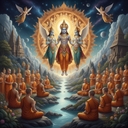
Deities come to the Buddha at night and put their questions in verse.
He answers each one in verse of his own.
Eight chapters run from A Reed to Incinerated.
What must be cut to sleep at ease, and what is the sharpest sword?
A monk crosses the flood by neither halting nor straining.
Faith is what a person crosses the flood with.
The Satullapa group praise the good and the miserly are rebuked.
Old age and death roll over everything like boulders.
+SN 2 Devaputta Saṃyutta:
Connected Discourses with the Sons of the Devas
Connected Discourses with the Sons of the Devas
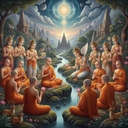
The sons of the deities come by night and speak in verse.
The Buddha answers them or lets them answer each other.
Anāthapiṇḍika returns as a deity and praises Jeta Grove.
He names Sāriputta as the finest of the monks.
Various sectarian gods take the side of their own teachers.
Time flies by and the moments slip past.
Rohitassa cannot reach the end of the world by travelling.
The end of the world is found in this fathom-long body.
+SN 3 Kosala Saṃyutta:
Connected Discourses with the King of Kosala
Connected Discourses with the King of Kosala
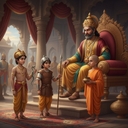
King Pasenadi of Kosala visits the Buddha again and again.
He asks whether so young a teacher can really be awakened.
Four things must not be despised for being young.
Nobody is dearer to anybody than their own self.
So one who loves the self should not do evil.
Old age and death roll in like mountains from four directions.
He is told to eat in moderation and grows slim.
Ascetics cannot be judged by appearance in a short meeting.
+SN 4 Māra Saṃyutta:
Connected Discourses with Māra
Connected Discourses with Māra
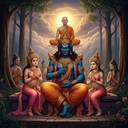
Māra comes at the Buddha in one shape after another.
He appears as an elephant king and as a snake.
He drops boulders and makes noises to break the meditation.
He urges the Buddha to rule as a righteous king instead.
Every time he is recognized and named out loud.
Realising he is known, Māra vanishes on the spot.
He is called a killjoy who has followed for seven years.
He goes off dejected with his lute fallen from his arm.
+SN 5 Bhikkhunī Saṃyutta:
Connected Discourses with the Nuns
Connected Discourses with the Nuns
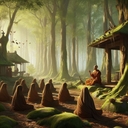
Ten nuns are approached by Māra while meditating in the woods.
He tries fear and flattery and the taunt that women lack the wisdom.
Āḷavikā is told there is no escape from the world.
Somā answers that womanhood makes no difference to one whose mind is settled.
Kisāgotamī has finished grieving for her sons.
Vijayā is offered pleasure and refuses it.
Uppalavaṇṇā is threatened at the foot of a tree.
Vajirā answers that a being is only a heap of co-activities.
Every nun recognizes Māra and he vanishes.
+SN 6 Brahma Saṃyutta:
Connected Discourses with Brahmās
Connected Discourses with Brahmās
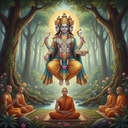
Brahmā Sahampati appeals to the newly awakened Buddha to teach.
Beings with little dust in their eyes will understand.
The Buddha surveys the world and agrees.
He decides to honor the Dharma itself since no teacher stands above him.
Brahmā Baka holds the view that his world is permanent.
The Buddha shows him what lies beyond it.
A wicked Brahmā and his retinue are humbled.
Kokālika slanders Sāriputta and Moggallāna and falls into hell.
+SN 7 Brāhmaṇa Saṃyutta:
Connected Discourses with Brahmins
Connected Discourses with Brahmins
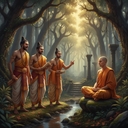
Brahmins of the Bhāradvāja clan come to abuse the Buddha.
He does not accept the abuse, so it stays with the giver.
Anger repaid with anger makes things worse for both.
The farmer brahmin is told the Buddha also ploughs.
His seed is faith and his rain is restraint.
Verses chanted for food are not to be eaten.
The fire sacrifice is reinterpreted as the inner fires.
One brahmin after another goes forth and becomes an arahant.
+SN 8 Vaṅgīsa Saṃyutta:
Connected Discourses with Vaṅgīsa
Connected Discourses with Vaṅgīsa
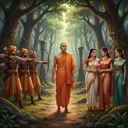
Vaṅgīsa is the monk foremost in spontaneous poetry.
As a new monk he is troubled by discontent and by lust.
He composes verses to steady himself.
He praises Sāriputta for teaching deeply and clearly.
He celebrates the great assembly of arahants at Gaggarā.
He confesses his own conceit at his gift for words.
He is invited to speak verses for the Buddha at will.
At the end he declares his own final knowledge.
+SN 9 Vana Saṃyutta:
Connected Discourses on the Forest
Connected Discourses on the Forest
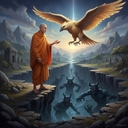
Monks are living alone in forest groves.
A deity of the woods watches over each of them.
When a monk grows drowsy the deity stirs him up.
When his mind strays to lay life he is called back.
One is warned off daydreaming and another off idle thoughts.
A monk who smells a lotus is told he is stealing its scent.
Wrong livelihood and vanity are pointed out gently.
Each admonition is short and in verse.
+SN 10 Yakkha Saṃyutta:
Connected Discourses with Yakkhas
Connected Discourses with Yakkhas
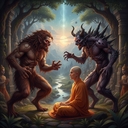
Yakkhas meet the Buddha and his monks in lonely places.
Indaka asks how form comes to be in a mother womb.
Sakkā and Sūciloma put their questions sharply.
Āḷavaka demands answers and threatens violence.
He asks what wealth is best and what taste is sweetest.
Faith is the best wealth and truth the sweetest taste.
The Buddha stays unshaken and the yakkha takes refuge.
A mother yakkha is quieted so a monk can teach her.
+SN 11 Sakka Saṃyutta:
Connected Discourses with Sakka
Connected Discourses with Sakka
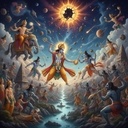
Sakka is lord of the gods, and his story is told from his past life.
He won that station by seven vows kept as a human being.
He supported his parents and spoke gently and truthfully.
In war with the demons he refuses to kill even when winning.
Patience toward a weaker foe is the harder strength.
He honors monks and bows in the direction of the Saṅgha.
Verses on conquering anger by not answering it.
He is praised as one who serves ascetics and brahmins.
+§ – Nidāna-vaggo: cause chapter (2 of 5)
all
+SN 12 Nidāna Saṃyutta:
Connected Discourses on Causation
Connected Discourses on Causation
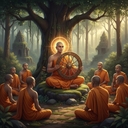
The great saṃyutta on dependent origination.
Ignorance conditions co-activities and so on to the whole mass of dukkha.
The same chain is run backwards to its ending.
Every past Buddha awakened by seeing exactly this.
Four nutriments feed beings already born and those seeking birth.
The ten powers and the lion roar are given here.
Neither the self nor another makes dukkha: it arises by conditions.
The middle teaching avoids both existence and non-existence.
Kaccānagotta and the simile of the sprouting seed appear here.
The last chapter runs the chain through abbreviated series.
+SN 13 Abhisamaya Saṃyutta:
Connected Discourses on Realization
Connected Discourses on Realization
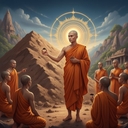
The breakthrough to the Dharma is measured by similes of quantity.
What a stream-enterer has already ended is compared to what is left.
Seven specks of dirt on a fingernail against the great earth.
A few drops of water against the water in a pond.
The confluence of great rivers against two or three drops.
A tiny pebble against the whole Himalaya.
Whatever remains is nothing beside what has already been destroyed.
+SN 14 Dhātu Saṃyutta:
Connected Discourses on Elements
Connected Discourses on Elements
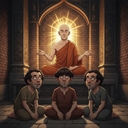
The elements are examined for their diversity.
Diversity of elements gives diversity of contacts and feelings.
The order runs from element to perception to thought to desire.
It never runs the other way around.
Beings come together according to their element.
Those of poor character seek out others of poor character.
The ways of performing deeds are sorted the same way.
Seven elements are named from light through to cessation.
+SN 15 Anamatagga Saṃyutta:
Connected Discourses on the Conceit ‘I Am’
Connected Discourses on the Conceit ‘I Am’
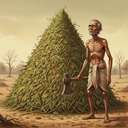
The round of transmigration has no discoverable beginning.
Beings hurry on hindered by ignorance and fettered by craving.
The tears you have shed are more than the water in the oceans.
So is the mother milk you have drunk and the blood you have spilled.
One person bones in one aeon would make a heap like a mountain.
A mountain of solid rock is worn away slower than an aeon passes.
There is no being who has not been your mother or father.
That is reason enough to grow disenchanted and be free.
+SN 16 Kassapa Saṃyutta:
Connected Discourses with Kassapa
Connected Discourses with Kassapa
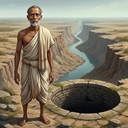
Mahākassapa is content with any robe and any almsfood.
The Buddha tells the monks to take him as their example.
He is told he may put aside the ascetic practices and refuses.
He keeps them for his own ease and for those who come after.
He approaches families without expecting anything.
The moon simile: draw back and stay a stranger among families.
He answers why there are fewer rules now and more awakened monks before.
Counterfeit Dharma is what makes the true Dharma disappear.
+SN 17 Lābhasakkāra Saṃyutta:
Connected Discourses on Gains and Honour
Connected Discourses on Gains and Honour

Gains and honour and popularity are a dreadful thing.
They are a hindrance to reaching the unsurpassed sanctuary.
A fisherman hook is swallowed with the bait.
A turtle harpooned by a line is dragged wherever the hunter wants.
A dung beetle is proud of its heap of dung.
A mule dies of its own foal and a plantain of its own fruit.
Even a monk with the inclinations ended is not indifferent to them.
Devadatta was ruined by gains and honour.
+SN 18 Rāhula Saṃyutta:
Connected Discourses with Rāhula
Connected Discourses with Rāhula
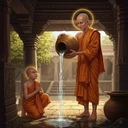
The Buddha instructs his son Rāhula again and again.
The eye and forms and eye consciousness are gone through in turn.
Then contact and feeling and perception and craving.
Then the elements and the aggregates.
Each is impermanent and therefore dukkha and therefore not a self.
Seeing that, a disciple grows disenchanted.
When Rāhula is ripe the Buddha gives the final teaching.
Underlying tendencies and the conceit I am are uprooted.
+SN 19 Lakkhaṇa Saṃyutta:
Connected Discourses with Lakkhaṇa
Connected Discourses with Lakkhaṇa
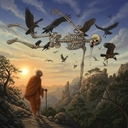
Lakkhaṇa and Moggallāna come down from Vulture Peak.
Moggallāna smiles on the way and will not say why in that place.
Before the Buddha he reports what he saw with the divine eye.
Skeletons and lumps of flesh flying through the air.
A man with hairs of the body as swords and as spears.
Each is a being reaping what it did in a past life.
A cattle butcher and a fowler and a corrupt judge among them.
The Buddha confirms that he saw these beings himself.
+SN 20 Opamma Saṃyutta:
Connected Discourses on Comparisons
Connected Discourses on Comparisons
A saṃyutta made of similes.
The roof peak holds every rafter, and conceit holds every unskillful state.
Fingernail dirt shows how few beings return as humans.
A pot tilted pours out and a pot upright holds.
A spear cannot pierce a mind full of kindness.
A cat catches a mouse and dies of it.
Drums are patched until only the pegs are left.
The deep discourses will be neglected for poetry.
+SN 21 Bhikkhu Saṃyutta:
Connected Discourses with Monks
Connected Discourses with Monks
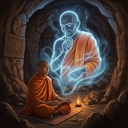
Short discourses about individual monks.
Kolita finds that noble silence is the second jhāna.
Upatissa cannot be shaken by any change to his teacher.
A barrel of ghee is the simile for one whose mind is settled.
Nanda dresses too well and is corrected.
Tissa is sulky and is told nobody will admonish him.
A new monk sleeps all day and turns out to be an arahant.
Vaṅgīsa closes the collection with verses.
+§ – Khandha-vaggo: aggregates chapter (3 of 5)
all
+SN 22 Khandha Saṃyutta:
Connected Discourses on the Aggregates
Connected Discourses on the Aggregates

The great saṃyutta on the five aggregates.
Nakula father is old and sick and is told to train his mind.
Form and feeling and perception and co-activities and consciousness.
Each is impermanent and dukkha and not a self.
The burden and the bearer of the burden are defined.
Whatever is not yours should be given up.
Be your own island with no other refuge.
Khemaka still has the conceit I am with no self view left.
Flowers and foam and mirage similes appear here.
The last chapters run through views built on the aggregates.
+SN 23 Rādhā Saṃyutta:
Connected Discourses with Rādhā
Connected Discourses with Rādhā

Rādhā asks the Buddha one short question after another.
He asks what Māra is and is told that form is Māra.
A being is whoever is caught up in the aggregates.
A child drags a sandcastle apart when done playing with it.
So the aggregates should be scattered and demolished.
The same set is run through as liable to be destroyed.
Then as impermanent and dukkha and not self.
Rādhā is praised for asking so persistently.
+SN 24 Diṭṭhi Saṃyutta:
Connected Discourses on Views
Connected Discourses on Views
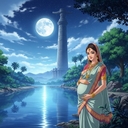
Views are traced back to the aggregates they stand on.
The wind does not blow and the rivers do not flow.
The world is eternal or not eternal or finite or infinite.
There is no result of giving and no other world.
Every one of those arises when there is form and feeling.
Whoever sees that the aggregates are impermanent has no such doubt.
That doubt-free seeing is stream-entry itself.
The four rounds repeat the set with a wider frame each time.
+SN 25 Okkantika Saṃyutta:
Connected Discourses on Entering
Connected Discourses on Entering

Entering the fixed course of rightness is described.
The eye and the ear and the rest are impermanent and changing.
Then forms and sounds and the other objects.
Then consciousness and contact and feeling and perception.
Then intention and craving and the elements and the aggregates.
One who trusts this teaching is a follower by faith.
One who accepts it after pondering is a follower of the Dharma.
Neither can die without first realising the fruit of stream-entry.
+SN 26 Uppāda Saṃyutta:
Connected Discourses on Arising
Connected Discourses on Arising

The arising of the eye is the arising of dukkha.
It is the arising of disease and of old age and death.
The same is said of every sense and every object.
Then of consciousness and contact and feeling.
Then of the elements and the aggregates.
The ending of each is the ending of dukkha.
It is the subsiding of disease and the ending of old age and death.
+SN 27 Kilesa Saṃyutta:
Connected Discourses on Defilements
Connected Discourses on Defilements
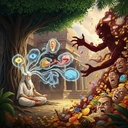
Desire and lust for the eye is a corruption of the mind.
The same holds for the ear and nose and tongue and body and mind.
Then for forms and sounds and the other objects.
Then for the six consciousnesses and contacts and feelings.
Then for perception and intention and craving.
Then for the elements and the aggregates.
When that desire is given up the mind is fit for direct knowledge.
+SN 28 Sāriputta Saṃyutta:
Connected Discourses with Sāriputta
Connected Discourses with Sāriputta
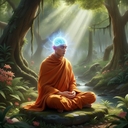
Sāriputta is asked how his face came to be so clear.
He answers that he spent the day in the first jhāna.
No thought of I or mine or conceit occurred to him there.
The same answer is given for each jhāna in turn.
Then for the four formless attainments.
Then for the cessation of perception and feeling.
A wanderer asks who his teacher is and gets a plain answer.
He begs his food in a way that is wholly pure.
+SN 29 Nāga Saṃyutta:
Connected Discourses with Nāgas
Connected Discourses with Nāgas

Four kinds of dragon are named by how they are born.
Egg-born and womb-born and moisture-born and spontaneously born.
Each kind outranks the ones born before it.
Some keep the precepts wishing to be reborn among dragons.
Giving to ascetics with that wish leads there.
Various gifts are listed with the same result.
The whole set is repeated for each of the four births.
+SN 30 Supaṇṇa Saṃyutta:
Connected Discourses with Supaṇṇas
Connected Discourses with Supaṇṇas
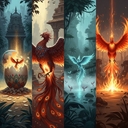
Phoenixes seize dragons and carry them off.
They are born in the same four ways as the dragons.
A phoenix born from an egg can only seize dragons born from an egg.
A spontaneously born one can seize any of the four.
Some keep the precepts wishing to be reborn among them.
Giving with that wish leads to that rebirth.
The list of gifts is run through as before.
+SN 31 Gandhabba Saṃyutta:
Connected Discourses with Gandhabbas
Connected Discourses with Gandhabbas
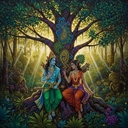
Fragrance devas live in roots and heartwood and flowers.
The Buddha lists the kinds of plant they inhabit.
Some monks wish to be reborn in that company.
Keeping the precepts with that wish leads there.
So does giving to ascetics and brahmins.
Gifts of food and drink and cloth and lamps are listed.
The set is repeated for each class of fragrance deva.
+SN 32 Valāhaka Saṃyutta:
Connected Discourses with Cloud Devas
Connected Discourses with Cloud Devas
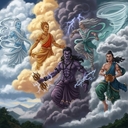
Cloud gods live in the cool and warm and stormy skies.
They cause rain by descending into their own bodies.
Sometimes they do not, and then it does not rain.
A monk asks how to be reborn among them.
The answer is the precepts kept with that wish.
Then giving to ascetics with the same wish.
The list of gifts runs through as in the neighbouring chapters.
+SN 33 Vacchagotta Saṃyutta:
Connected Discourses with Vacchagotta
Connected Discourses with Vacchagotta
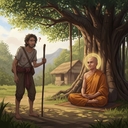
Vacchagotta asks why the ten questions are left undeclared.
Is the world eternal, and does a Tathāgata exist after death?
He asks the Buddha and then each of the great disciples.
Every one of them gives him the same reason.
The undeclared points arise from not knowing form.
They arise from not knowing feeling and the other aggregates.
One who has fully understood the aggregates has no such view.
The agreement among all of them is what impresses him.
+SN 34 Jhāna Saṃyutta:
Connected Discourses on the Jhānas
Connected Discourses on the Jhānas
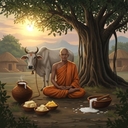
Skill in the jhānas is broken into eleven abilities.
Skill in the attainment and in staying and in emerging.
Skill in pliancy and in the range and in resolution.
Skill in thoroughness and in persistence and in suitability.
Every pair of abilities is crossed with every other.
So a meditator may be good at one and poor at another.
The full grid of combinations is worked through in order.
Only the one skilled in all of them is complete.
+§ – Saḷ-āyatana-vaggo: six sense bases chapter (4 of 5)
all
+SN 35 Saḷāyatana Saṃyutta:
Connected Discourses on the Six Sense Bases
Connected Discourses on the Six Sense Bases
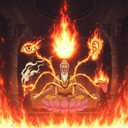
The great saṃyutta on the six sense bases.
The eye and ear and nose and tongue and body and mind.
Each is impermanent and dukkha and not a self.
The All is nothing but these six with their objects.
Anyone claiming another All could not explain it.
Everything is burning with the fires of greed and hate and delusion.
Migajāla is told that the true lone dweller has ended craving.
Vipers and the six animals bound together and the empty village.
Restraint at the senses is what keeps the mind unburnt.
The end of relishing is the end of dukkha.
+SN 36 Vedanā Saṃyutta:
Connected Discourses on Feeling
Connected Discourses on Feeling
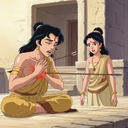
Feeling is pleasant or painful or neither.
Three feelings become five and six and eighteen and thirty-six.
One hundred and eight ways of teaching feeling are counted out.
An untaught person struck by pain is hit by a second dart.
A taught disciple feels the bodily dart and not the mental one.
Feelings are like the winds that blow across the sky.
In each jhāna something has already been stilled.
Whatever is felt is included within dukkha.
+SN 37 Mātugāma Saṃyutta:
Connected Discourses on Wives and Mothers
Connected Discourses on Wives and Mothers
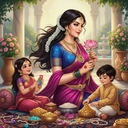
The particular sufferings of women are set out.
She goes to her family young and is parted from her relatives.
She bears a child and waits on her husband.
Five qualities make her displeasing and five make her pleasing.
Confidence and conduct and learning and generosity and wisdom.
Anger and envy and stinginess are what send her downward.
Her particular powers are named, and wisdom is the strongest.
With those powers she lives in her household without fear.
+SN 38 Jambukhādaka Saṃyutta:
Connected Discourses with Jambukhādaka
Connected Discourses with Jambukhādaka
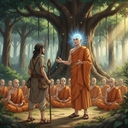
The wanderer Jambukhādaka questions Sāriputta.
Nirvana is the ending of greed and hate and delusion.
Arahantship is that same ending by that same path.
He asks about dukkha and identity and the inclinations.
He asks who in the world is truly happy.
The answer to every question ends with the eightfold path.
He asks what is hard to do in this teaching.
Going forth is hard, and being content once gone forth is harder.
+SN 39 Samaṇḍaka Saṃyutta:
Connected Discourses with Samaṇḍaka
Connected Discourses with Samaṇḍaka
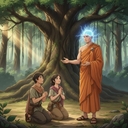
The wanderer Sāmaṇḍaka questions Sāriputta.
The questions are the same ones Jambukhādaka asked.
Nirvana and arahantship are the ending of the three roots.
The path to each of them is the noble eightfold path.
Dukkha and identity and ignorance are covered in turn.
The whole saṃyutta is one short chapter.
Its point is that the answers do not change with the questioner.
+SN 40 Moggallāna Saṃyutta:
Connected Discourses with Moggallāna
Connected Discourses with Moggallāna
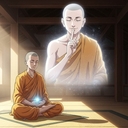
Moggallāna describes his own struggle in the first week.
He reached the first jhāna and perceptions of sense pleasure pulled him back.
The Buddha appeared by psychic power and steadied him.
The same is told for each jhāna in turn.
Then for the four formless attainments.
Then for the signless samādhi of the heart.
He credits the Buddha with every one of those breakthroughs.
He then visits the gods and asks about going for refuge.
+SN 41 Citta Saṃyutta:
Connected Discourses with Citta
Connected Discourses with Citta
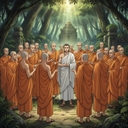
Citta is the householder foremost among the teachers of Dharma.
He questions senior monks and answers them in turn.
The fetter is not the eye or the form but the desire between them.
A black ox and a white ox are yoked by the harness alone.
He explains the co-activities of body and speech and mind.
He describes the measureless and the nothingness releases.
He tells his old friend the naked ascetic what he has attained.
On his deathbed he tells the gods he wants nothing they offer.
+SN 42 Gāmaṇi Saṃyutta:
Connected Discourses with Village Headmen
Connected Discourses with Village Headmen
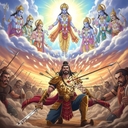
Village headmen bring the Buddha their questions.
Does a warrior who dies in battle go to a special heaven?
He is asked three times before he is answered plainly.
The same is done for actors and for those who tend fires.
A family that gives at the wrong time is discussed.
The conch blower and the reach of kindness appear here.
The Jain doctrine of a fixed measure of past deeds is examined.
The headmen take refuge one after another.
+SN 43 Asaṅkhata Saṃyutta:
Connected Discourses on the Unconditioned
Connected Discourses on the Unconditioned
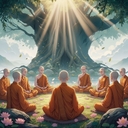
The unconditioned is taught with many names.
The end of greed and of hate and of delusion is what is meant.
The path to it is rememberfulness immersed in the body.
Then calm and insight and samādhi with thinking and without.
Then emptiness and signless and undirected samādhi.
Then the four rememberings and the right strivings and the powers.
Thirty-three names are given for the same goal.
The truth and the far shore and the island and the shelter.
+SN 44 Avyākata Saṃyutta:
Connected Discourses on the Undetermined
Connected Discourses on the Undetermined
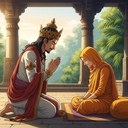
The undeclared points are taken up one by one.
The nun Khemā answers King Pasenadi about them.
Counting the sands of the Ganges is easier than measuring a Tathāgata.
The Buddha gives the king the very same answers.
A fire that goes out has not gone in any direction.
Vacchagotta asks whether there is a self and is answered by silence.
Either answer would have sided with a wrong view.
Ānanda is told afterwards why the silence was the right reply.
+§ – Mahā-vaggo: great chapter (5 of 5)
all
+SN 45 Magga Saṃyutta:
Connected Discourses on the Path
Connected Discourses on the Path

The saṃyutta on the noble eightfold path.
Good friendship is the whole of the holy life and not the half of it.
Ignorance leads the way to the unskillful and knowledge to the skillful.
Each factor of the path is defined in turn.
The path is developed depending on seclusion and fading away.
The Ganges slants and slopes towards the east.
So a monk developing the path slants towards nirvana.
The wrong way and the right way are contrasted throughout.
The last chapters run the path through abbreviated series.
+SN 46 Bojjhaṅga Saṃyutta:
Connected Discourses on the Factors of Enlightenment
Connected Discourses on the Factors of Enlightenment

The saṃyutta on the seven factors of awakening.
Remembering and investigation and vigor and rapture.
Then tranquility and samādhi and equanimity.
Developed together they lead to knowledge and freedom.
Sick monks recover on hearing the seven recited.
The Buddha himself asks to hear them when he is unwell.
The hindrances starve the factors and the factors starve the hindrances.
Some factors suit a sluggish mind and others a restless one.
Breath meditation fulfils all seven of them.
+SN 47 Satipaṭṭhāna Saṃyutta:
Connected Discourses on the Foundations of Mindfulness
Connected Discourses on the Foundations of Mindfulness
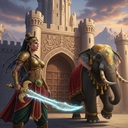
The saṃyutta on the four ways of remembering.
Continuously seeing the body and the sensations and the mind and the Dharma.
This is the one-way path for the purification of beings.
Be your own island with the Dharma as your only refuge.
The cook simile: notice which dish your guest actually takes.
An acrobat and his pupil each look after themselves and each other.
The most beautiful girl in the land and the bowl of oil.
Sāriputta and Moggallāna die and the assembly seems empty.
The Buddha says he is like an old cart held together by straps.
+SN 48 Indriya Saṃyutta:
Connected Discourses on the Faculties
Connected Discourses on the Faculties

The saṃyutta on the five faculties.
Faith and vigor and remembering and samādhi and wisdom.
Wisdom is the chief of them and holds the rest together.
The measure of each faculty tells what kind of noble person one is.
From the arahant down to the follower by faith.
The pleasure faculty and the other feelings are examined here.
In the boar cave Sāriputta says he does not go by faith alone.
He knows for himself and so has no doubt.
The last chapters run the faculties through abbreviated series.
+SN 49 Sammappadhāna Saṃyutta:
Connected Discourses on the Right Strivings
Connected Discourses on the Right Strivings
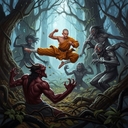
The saṃyutta on the four right strivings.
Prevent the unskillful that has not arisen.
Give up the unskillful that has arisen.
Bring up the skillful that has not arisen.
Keep and increase the skillful that has arisen.
The Ganges slants east and so does a monk who develops them.
Assiduity and hard work and searches and floods give the chapters.
+SN 50 Bala Saṃyutta:
Connected Discourses on the Powers
Connected Discourses on the Powers
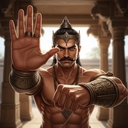
The saṃyutta on the five powers.
They are the same five as the faculties but seen as unshakable.
Faith and vigor and remembering and samādhi and wisdom.
Developed depending on seclusion they slant towards nirvana.
The Ganges similes are run through in order.
Then assiduity and hard work and searches and floods.
The chapters are then repeated a second time over.
+SN 51 Iddhipāda Saṃyutta:
Connected Discourses on the Bases for Spiritual Power
Connected Discourses on the Bases for Spiritual Power
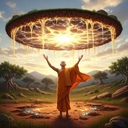
The saṃyutta on the four bases for psychic power.
Enthusiasm and vigor and mind and inquiry with active effort.
Developed, they lead to every kind of psychic power.
At the Cāpāla shrine the Buddha says one who developed them could live an aeon.
Ānanda misses the hint and Māra makes his appeal.
Moggallāna shakes the Stilt Longhouse with his toe.
A body full of energy is as light as a ball of wool.
An iron ball heated all day floats on the water.
+SN 52 Anuruddha Saṃyutta:
Connected Discourses with Anuruddha
Connected Discourses with Anuruddha
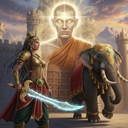
Anuruddha is asked what he developed to gain the divine eye.
His answer every time is the four ways of remembering.
By developing them he sees a thousand world systems.
He describes what he does in private with them.
Partly developed and fully developed are distinguished.
Illness does not invade a mind kept in the four rememberings.
He is content with any robe and any lodging.
He was a stream-enterer before he had the divine eye.
+SN 53 Jhāna Saṃyutta:
Connected Discourses on the Jhānas
Connected Discourses on the Jhānas
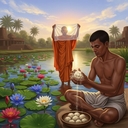
The saṃyutta on the four jhānas.
Secluded from sensual pleasures and unskillful qualities.
The whole formula is given for each of the four in turn.
They are developed depending on seclusion and fading away.
The Ganges slants east and so does a monk who develops them.
Assiduity and hard work and searches and floods give the chapters.
The pattern matches the other repetition series exactly.
+SN 54 Ānāpāna Saṃyutta:
Connected Discourses on Breathing
Connected Discourses on Breathing
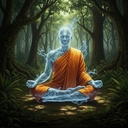
The saṃyutta on remembering of breathing.
Developed and cultivated it is peaceful and sublime.
It stops unskillful thoughts the moment they arise.
The sixteen steps are given in full.
The Buddha spent a rains in this meditation himself.
It is the noble abiding and the Tathāgata abiding.
Ariṭṭha practises it in a way that leaves out most of it.
Kappina sits without swaying because of it.
It fulfils the four rememberings and then the awakening factors.
+SN 55 Sotāpatti Saṃyutta:
Connected Discourses on Stream-Entry
Connected Discourses on Stream-Entry
The saṃyutta on stream-entry.
Four factors make a stream-enterer.
Experiential confidence in the Buddha and Dharma and Saṅgha.
Then the ethical conduct loved by the noble ones.
Whoever has them can declare their own attainment with the mirror of Dharma.
Judge others as you would judge yourself at Bamboo Gate.
A thousand nuns and the people of Kapilavatthu are taught here.
Streams of merit that cannot be measured.
A tree that slants east falls east when it is cut.
+SN 56 Sacca Saṃyutta:
Connected Discourses on the Truths
Connected Discourses on the Truths
The saṃyutta on the four noble truths.
Develop samādhi, because one with samādhi understands them.
The first sermon at Isipatana is here.
The two extremes and the middle way and the three phases and twelve aspects.
Koṇḍañña understands and the earth-gods pass the news upward.
The leaves in the hand against the leaves in the whole forest.
A cliff-edge fall is nothing beside falling into the dark.
The blind turtle and the yoke show how rare a human birth is.
The dirt on a fingernail against the great earth.
Every effort should be made to understand these four.