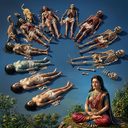
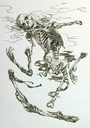
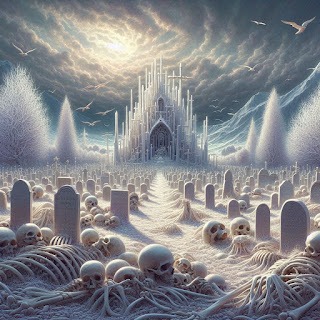
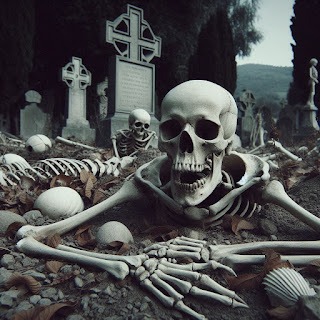
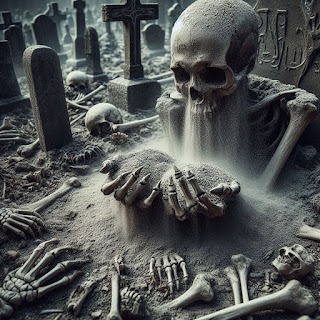
SN 46.57 Aṭṭhika: 💀☠️ Skeleton-(perception/sañña)
SN 46.59 Vinīlaka: 🧟🏿 black-and-blue-[corpse]
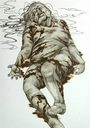
SN 46.60 Vicchiddaka: 🕸️🧟 fissured-[corpse]
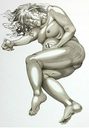
SN 46.61 Uddhumātaka: 🧟🏻♀️ bloated-[corpse]
+Nine stages of corpse decomposition
all
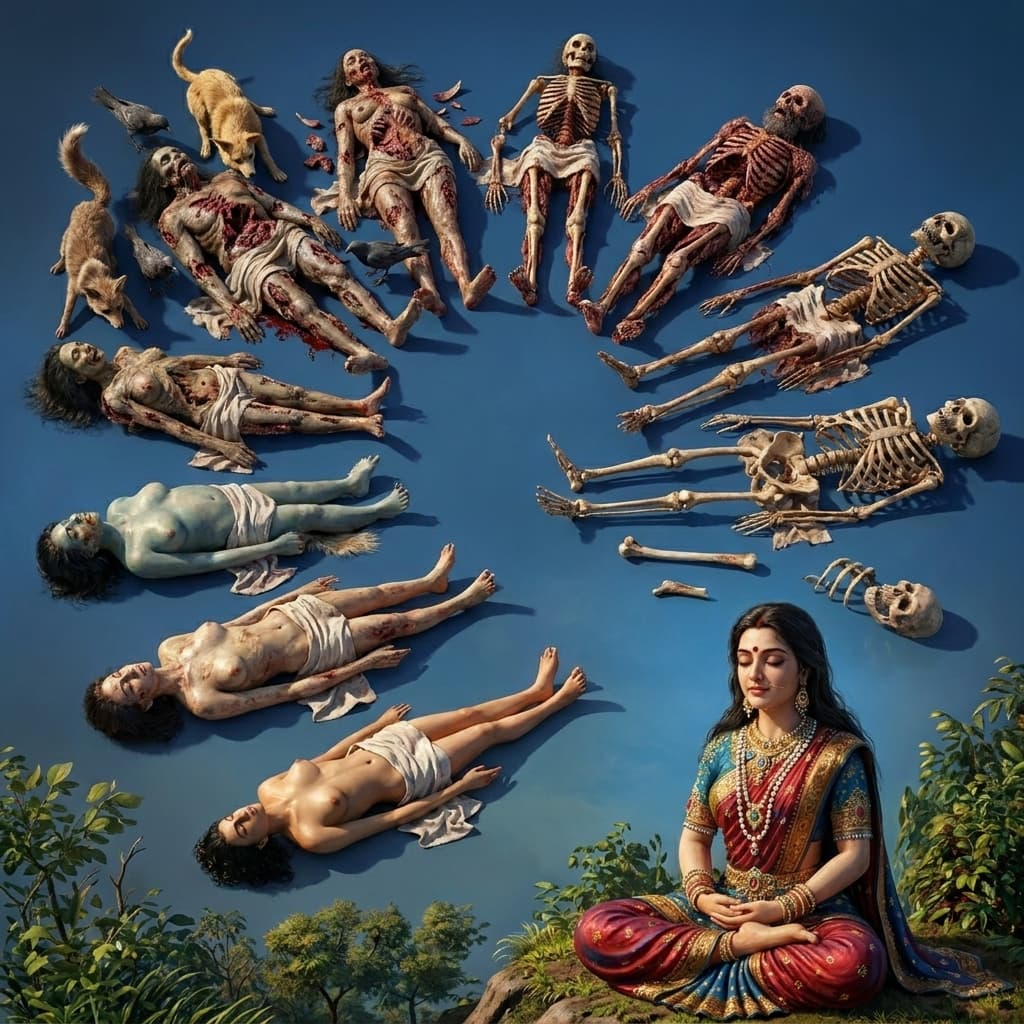
9siv⚰️: Kāy'-ānu-passanā-nava-sivathika-pabba
body contemplation of 9 charnel ground section
+(1) first 3 days, bloated, black, fester
all
| Puna caparaṁ, bhikkhave, bhikkhu seyyathāpi |
Furthermore, suppose a monk |
|
| passeyya sarīraṁ sivathikāya chaḍḍitaṁ |
were to see a corpse discarded in a charnel ground. |
|
| ekāhamataṁ vā dvīhamataṁ vā tīhamataṁ vā uddhumātakaṁ vinīlakaṁ vipubbakajātaṁ. |
And it had been dead for one, two, or three days, bloated, livid, and festering. |
|
| So imameva kāyaṁ upasaṁharati: |
They’d compare it with their own body: |
|
| ‘ayampi kho kāyo |
‘This body is also |
|
| evaṁdhammo |
subject to the same natural Dharma laws, |
|
| evaṁbhāvī |
will have the same fate, |
|
| evaṁanatīto’ti. |
and cannot avoid this.’ |
|
+(refrain: 4sp is done with 4 jhānas level of quality: Sati’paṭṭhāna = Jhāna)
| tassa evaṃ appamattassa ātāpino pahitattassa viharato |
As they live like this, assiduous, ardent [in right effort], and resolute, |
|
| ye gehasitā sara-saṅkappā te pahīyanti. |
Any household memories-and-resolves are abandoned. |
|
| tesaṃ pahānā |
And with their abandoning, |
|
| ajjhattam-eva cittaṃ |
Internally - his mind |
|
| san-tiṭṭhati san-nisīdati |
gathers and settles, |
|
| ekodi hoti samādhiyati. |
is singular [in focus], undistractible-and-lucid [in the four jhānas]. |
|
| evaṃ, bhikkhave, bhikkhu kāyagatā-satiṃ bhāveti. |
This is how a monk remembers [and applies ☸Dharma] while immersed in the body. |
|
+(2) devoured by many kinds of animals
all
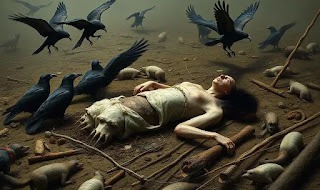
| Puna caparaṁ, bhikkhave, bhikkhu seyyathāpi |
Furthermore, suppose a monk |
|
| passeyya sarīraṁ sivathikāya chaḍḍitaṁ |
were to see a corpse discarded in a charnel ground. |
|
| kākehi vā khajjamānaṁ |
being devoured by crows, |
|
| kulalehi vā khajjamānaṁ |
hawks, |
|
| gijjhehi vā khajjamānaṁ |
vultures, |
|
| kaṅkehi vā khajjamānaṁ |
herons, |
|
| sunakhehi vā khajjamānaṁ |
hounds, |
|
| byagghehi vā khajjamānaṁ |
tigers, |
|
| dīpīhi vā khajjamānaṁ |
leopards, |
|
| siṅgālehi vā khajjamānaṁ |
jackals, |
|
| vividhehi vā pāṇakajātehi khajjamānaṁ. |
and many kinds of little creatures. |
|
| So imameva kāyaṁ upasaṁharati: |
They’d compare it with their own body: |
|
| ‘ayampi kho kāyo |
‘This body is also |
|
| evaṁdhammo |
subject to the same natural Dharma laws, |
|
| evaṁbhāvī |
will have the same fate, |
|
| evaṁanatīto’ti. |
and cannot avoid this.’ |
|
+(elided refrain: 4sp is done with 4 jhānas level of quality: Sati’paṭṭhāna = Jhāna)
| Tassa evaṁ appamattassa …pe… evampi, bhikkhave, bhikkhu kāyagatāsatiṁ bhāveti. |
They live assidulously, doing this exercise with 4 jhānas quality of samādhi... |
|
+(3) skeleton, flesh, blood, sinews
all
| Puna caparaṁ, bhikkhave, bhikkhu seyyathāpi |
Furthermore, suppose a monk |
|
| passeyya sarīraṁ sivathikāya chaḍḍitaṁ |
were to see a corpse discarded in a charnel ground. |
|
| aṭṭhikasaṅkhalikaṁ samaṁsalohitaṁ nhārusambandhaṁ …pe… |
a skeleton with flesh and blood, held together by sinews … |
|
| So imameva kāyaṁ upasaṁharati: |
They’d compare it with their own body: |
|
| ‘ayampi kho kāyo |
‘This body is also |
|
| evaṁdhammo |
subject to the same natural Dharma laws, |
|
| evaṁbhāvī |
will have the same fate, |
|
| evaṁanatīto’ti. |
and cannot avoid this.’ |
|
+(elided refrain: 4sp is done with 4 jhānas level of quality: Sati’paṭṭhāna = Jhāna)
| Tassa evaṁ appamattassa …pe… evampi, bhikkhave, bhikkhu kāyagatāsatiṁ bhāveti. |
They live assidulously, doing this exercise with 4 jhānas quality of samādhi... |
|
+(4) skeleton no flesh, blood, sinews
all
| Puna caparaṁ, bhikkhave, bhikkhu seyyathāpi |
Furthermore, suppose a monk |
|
| passeyya sarīraṁ sivathikāya chaḍḍitaṁ |
were to see a corpse discarded in a charnel ground. |
|
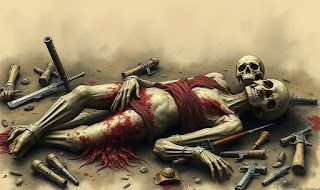
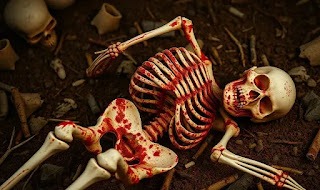
| Aṭṭhikasaṅkhalikaṁ nimaṁsalohitamakkhitaṁ nhārusambandhaṁ …pe… |
A skeleton without flesh but smeared with blood, and held together by sinews … |
|
| So imameva kāyaṁ upasaṁharati: |
They’d compare it with their own body: |
|
| ‘ayampi kho kāyo |
‘This body is also |
|
| evaṁdhammo |
subject to the same natural Dharma laws, |
|
| evaṁbhāvī |
will have the same fate, |
|
| evaṁanatīto’ti. |
and cannot avoid this.’ |
|
+(elided refrain: 4sp is done with 4 jhānas level of quality: Sati’paṭṭhāna = Jhāna)
| Tassa evaṁ appamattassa …pe… evampi, bhikkhave, bhikkhu kāyagatāsatiṁ bhāveti. |
They live assidulously, doing this exercise with 4 jhānas quality of samādhi... |
|
+(5) skeleton, sinews
all
| Puna caparaṁ, bhikkhave, bhikkhu seyyathāpi |
Furthermore, suppose a monk |
|
| passeyya sarīraṁ sivathikāya chaḍḍitaṁ |
were to see a corpse discarded in a charnel ground. |
|
| Aṭṭhikasaṅkhalikaṁ apagatamaṁsalohitaṁ nhārusambandhaṁ …pe… |
A skeleton rid of flesh and blood, held together by sinews … |
|
| So imameva kāyaṁ upasaṁharati: |
They’d compare it with their own body: |
|
| ‘ayampi kho kāyo |
‘This body is also |
|
| evaṁdhammo |
subject to the same natural Dharma laws, |
|
| evaṁbhāvī |
will have the same fate, |
|
| evaṁanatīto’ti. |
and cannot avoid this.’ |
|
+(elided refrain: 4sp is done with 4 jhānas level of quality: Sati’paṭṭhāna = Jhāna)
| Tassa evaṁ appamattassa …pe… evampi, bhikkhave, bhikkhu kāyagatāsatiṁ bhāveti. |
They live assidulously, doing this exercise with 4 jhānas quality of samādhi... |
|
+(6) bones scattered all directions
all
| Puna caparaṁ, bhikkhave, bhikkhu seyyathāpi |
Furthermore, suppose a monk |
|
| passeyya sarīraṁ sivathikāya chaḍḍitaṁ |
were to see a corpse discarded in a charnel ground. |
|
| Aṭṭhikāni apagatasambandhāni disā vidisā vikkhittāni, |
Bones rid of sinews scattered in every direction. |
|
| aññena hatthaṭṭhikaṁ |
Here a hand-bone, |
|
| aññena pādaṭṭhikaṁ |
there a foot-bone, |
|
| aññena gopphakaṭṭhikaṁ |
here an ankle bone, |
|
| aññena jaṅghaṭṭhikaṁ |
there a shin-bone, |
|
| aññena ūruṭṭhikaṁ |
here a thigh-bone, |
|
| aññena kaṭiṭṭhikaṁ |
there a hip-bone, |
|
| aññena phāsukaṭṭhikaṁ |
here a rib-bone, |
|
| aññena piṭṭhiṭṭhikaṁ |
there a back-bone, |
|
| aññena khandhaṭṭhikaṁ |
here an arm-bone, |
|
| aññena gīvaṭṭhikaṁ |
there a neck-bone, |
|
| aññena hanukaṭṭhikaṁ |
here a jaw-bone, |
|
| aññena dantaṭṭhikaṁ |
there a tooth, |
|
| aññena sīsakaṭāhaṁ. |
here the skull. … |
|
| So imameva kāyaṁ upasaṁharati: |
They’d compare it with their own body: |
|
| ‘ayampi kho kāyo |
‘This body is also |
|
| evaṁdhammo |
subject to the same natural Dharma laws, |
|
| evaṁbhāvī |
will have the same fate, |
|
| evaṁanatīto’ti. |
and cannot avoid this.’ |
|
+(elided refrain: 4sp is done with 4 jhānas level of quality: Sati’paṭṭhāna = Jhāna)
| Tassa evaṁ appamattassa …pe… evampi, bhikkhave, bhikkhu kāyagatāsatiṁ bhāveti. |
They live assidulously, doing this exercise with 4 jhānas quality of samādhi... |
|
+(7) white bones
all
| Puna caparaṁ, bhikkhave, bhikkhu seyyathāpi |
Furthermore, suppose a monk |
|
| passeyya sarīraṁ sivathikāya chaḍḍitaṁ |
were to see a corpse discarded in a charnel ground. |
|
| aṭṭhikāni setāni saṅkhavaṇṇapaṭibhāgāni …pe… |
White bones, the color of shells … |
|
| So imameva kāyaṁ upasaṁharati: |
They’d compare it with their own body: |
|
| ‘ayampi kho kāyo |
‘This body is also |
|
| evaṁdhammo |
subject to the same natural Dharma laws, |
|
| evaṁbhāvī |
will have the same fate, |
|
| evaṁanatīto’ti. |
and cannot avoid this.’ |
|
+(elided refrain: 4sp is done with 4 jhānas level of quality: Sati’paṭṭhāna = Jhāna)
| Tassa evaṁ appamattassa …pe… evampi, bhikkhave, bhikkhu kāyagatāsatiṁ bhāveti. |
They live assidulously, doing this exercise with 4 jhānas quality of samādhi... |
|
+(8) pile of bones
all
| Puna caparaṁ, bhikkhave, bhikkhu seyyathāpi |
Furthermore, suppose a monk |
|
| passeyya sarīraṁ sivathikāya chaḍḍitaṁ |
were to see a corpse discarded in a charnel ground. |
|
| Aṭṭhikāni puñjakitāni terovassikāni …pe… |
Decrepit bones, heaped in a pile … |
|
| So imameva kāyaṁ upasaṁharati: |
They’d compare it with their own body: |
|
| ‘ayampi kho kāyo |
‘This body is also |
|
| evaṁdhammo |
subject to the same natural Dharma laws, |
|
| evaṁbhāvī |
will have the same fate, |
|
| evaṁanatīto’ti. |
and cannot avoid this.’ |
|
+(elided refrain: 4sp is done with 4 jhānas level of quality: Sati’paṭṭhāna = Jhāna)
| Tassa evaṁ appamattassa …pe… evampi, bhikkhave, bhikkhu kāyagatāsatiṁ bhāveti. |
They live assidulously, doing this exercise with 4 jhānas quality of samādhi... |
|
+(9) powdered rotten bones
all
| Puna caparaṁ, bhikkhave, bhikkhu seyyathāpi |
Furthermore, suppose a monk |
|
| passeyya sarīraṁ sivathikāya chaḍḍitaṁ |
were to see a corpse discarded in a charnel ground. |
|
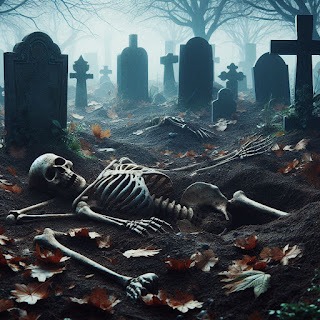
| Aṭṭhikāni pūtīni cuṇṇakajātāni. |
Bones rotted and crumbled to powder. |
|
| So imameva kāyaṁ upasaṁharati: |
They’d compare it with their own body: |
|
| ‘ayampi kho kāyo |
‘This body is also |
|
| evaṁdhammo |
subject to the same natural Dharma laws, |
|
| evaṁbhāvī |
will have the same fate, |
|
| evaṁanatīto’ti. |
and cannot avoid this.’ |
|
+(refrain: 4sp is done with 4 jhānas level of quality: Sati’paṭṭhāna = Jhāna)
| tassa evaṃ appamattassa ātāpino pahitattassa viharato |
As they live like this, assiduous, ardent [in right effort], and resolute, |
|
| ye gehasitā sara-saṅkappā te pahīyanti. |
Any household memories-and-resolves are abandoned. |
|
| tesaṃ pahānā |
And with their abandoning, |
|
| ajjhattam-eva cittaṃ |
Internally - his mind |
|
| san-tiṭṭhati san-nisīdati |
gathers and settles, |
|
| ekodi hoti samādhiyati. |
is singular [in focus], undistractible-and-lucid [in the four jhānas]. |
|
| evaṃ, bhikkhave, bhikkhu kāyagatā-satiṃ bhāveti. |
This is how a monk remembers [and applies ☸Dharma] while immersed in the body. |
|
❧