👑😶 ariyo tuṇhī-bhāvo
Noble Silence-condition
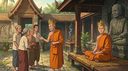
+1 – in contrast to (vocal) silence
silence as implicit consent appears very frequently like this:
| adhivāsesi bhagavā tuṇhībhāvena | Venerable Sāriputta consented by silence. |
+2 – STED 👑😶 ariyo vā tuṇhī-bhāvo
all
+2.1 – SN 21.1 (V&V could not be visual nimitta here, clearly thinking and evaluation)
| ♦ āyasmā mahāmoggallāno etadavoca — | Ven. Mahā Moggallāna said, | |
| “idha mayhaṃ, āvuso, rahogatassa paṭisallīnassa | "Friends, once as I was withdrawn in seclusion, | |
| evaṃ cetaso parivitakko udapādi — | this train of thought arose to my awareness, | |
| ‘ariyo tuṇhībhāvo, ariyo tuṇhībhāvoti vuccati. | '"Noble silence, noble silence," it is said. | |
| katamo nu kho ariyo tuṇhībhāvo’ti? | But what is noble silence?' | |
| tassa mayhaṃ āvuso, etadahosi — | Then the thought occurred to me, |
+2.2 – (STED second jhāna = noble silence)
| ‘idha bhikkhu vitakkavicārānaṃ vūpasamā | 'There is the case where a monk, with the stilling of directed thoughts & evaluations, | |
| ajjhattaṃ sampasādanaṃ | [1] enters & remains in the second jhāna: | |
| cetaso ekodibhāvaṃ | rapture & pleasure born of concentration, | |
| avitakkaṃ avicāraṃ | unification of awareness | |
| samādhijaṃ pītisukhaṃ | free from directed thought & evaluation — | |
| dutiyaṃ jhānaṃ upasampajja viharati. | internal assurance. | |
| ayaṃ vuccati ariyo tuṇhībhāvo’ti. | This is called noble silence.' |
+3 – incontrovertible proof V&V = thinking and evaluation
In VRJ👻 (vism.
redefinition of jhana) first jhāna and also BRJ👻,
you can't feel the pain of mosquito bites,
you can't hear mosquitoes buzzing,
you can't open your mouth to say, "I wish that mosquito could go away."
You can't think, "I wish that mosquito would go away."
So why didn't the Buddha call first jhāna noble silence then?
Why is the entry bar at 2nd jhāna?
This is more incontrovertible proof that V&V (vitakka & vicara)
must mean thinking and evaluation/pondering/consideration,
not
"initial mind thought of a bright visual nimitta and sustained mind glued to the nimitta"
In first EBT jhāna, it's possible for the thought to arise,
"I wish that mosquito could go away."
(that thought not connected with dhamma and your samadhi nimitta of 4sp would knock you out of first jhana).
It's also possible to have the thought,
"may that mosquito be well and happy."
This thought being right intention, right view,
connected with dhamma, is perfectly legal and expected to happen in first jhāna V&V.
But you can't open your mouth and say,
"go away mosquito."
(SN 36.11), since the energetic shift to flap your vocal cords would
disturb the consolidated internal energy pervasion that characterizes the piti sukha of first jhāna.
This is why it's not noble silence until second jhāna.
And this is why V&V are vaci-sankhara speech fabrications (MN 44).
The thoughts of what you're thinking about saying before you actually say it.
V&V of VRJ is just perceptions and attention to luminosity,
nothing to do with noble silence of not speaking and not thinking thoughts that you might speak.
This is also further evidence for walking while in jhāna.
If monks are told that they should either only be talking about dhamma or in noble silence,
in most of those scenarios, they're not sitting with their eyes closed.
They're standing or walking around with eyes open.
+4 – Every sutta reference to 👑😶 noble silence
all
+4.1 – AN 8.2 oral tradition, gradual samadhi, j2 noble silence in all postures
| Āraddhavīriyo viharati akusalānaṃ dhammānaṃ pahānāya, kusalānaṃ dhammānaṃ upasampadāya, thāmavā daḷhaparakkamo anikkhittadhuro kusalesu dhammesu. | They live with energy roused up for giving up unskillful qualities and gaining skillful qualities. They’re strong, staunchly vigorous, not slacking off when it comes to developing skillful qualities. | |
| Ayaṃ, bhikkhave, chaṭṭho hetu chaṭṭho paccayo ādibrahmacariyikāya paññāya appaṭiladdhāya paṭilābhāya, paṭiladdhāya bhiyyobhāvāya vepullāya bhāvanāya pāripūriyā saṃvattati. | This is the sixth cause. | |
| Saṅghagato kho pana anānākathiko hoti atiracchānakathiko. | When in the Saṅgha they don’t engage in motley talk or unworthy talk. | |
| Sāmaṃ vā dhammaṃ bhāsati paraṃ vā ajjhesati ariyaṃ vā tuṇhībhāvaṃ nātimaññati. | Either they talk on Dhamma, or they invite someone else to do so, or they respect noble silence. | |
| Ayaṃ, bhikkhave, sattamo hetu sattamo paccayo ādibrahmacariyikāya paññāya appaṭiladdhāya paṭilābhāya, paṭiladdhāya bhiyyobhāvāya vepullāya bhāvanāya pāripūriyā saṃvattati. | This is the seventh cause. | |
| Pañcasu kho pana upādānakkhandhesu udayabbayānupassī viharati: | They meditate observing rise and fall in the five grasping aggregates. | |
| ‘iti rūpaṃ, iti rūpassa samudayo, iti rūpassa atthaṅgamo; | ‘Such is form, such is the origin of form, such is the ending of form. |
+4.2 – AN 9.4 Either talk on Dhamma, or noble silence
| Atha kho bhagavā āyasmantaṃ nandakaṃ sārajjamānarūpaṃ viditvā āyasmantaṃ nandakaṃ etadavoca: | Then the Buddha, knowing that Nandaka was embarrassed, said to him: | |
| “sādhu sādhu, nandaka. | “Good, good, Nandaka! | |
| Etaṃ kho, nandaka, tumhākaṃ patirūpaṃ kulaputtānaṃ saddhāya agārasmā anagāriyaṃ pabbajitānaṃ, yaṃ tumhe dhammiyā kathāya sannisīdeyyātha. | It’s appropriate for people from good families like you, who have gone forth in faith from the lay life to homelessness, to sit together for a Dhamma talk. | |
| Sannipatitānaṃ vo, nandaka, dvayaṃ karaṇīyaṃ— | When you’re sitting together you should do one of two things: | |
| dhammī vā kathā ariyo vā tuṇhībhāvo. | discuss the teachings or keep noble silence. |
+4.3 – KN Ud 2.2 Either talk on Dhamma, or noble silence
| ♦ “idha, bhante, amhākaṃ pacchābhattaṃ piṇḍapātapaṭikkantānaṃ upaṭṭhānasālāyaṃ sannisinnānaṃ sannipatitānaṃ ayamantarākathā udapādi — ‘ko nu kho, āvuso, imesaṃ dvinnaṃ rājūnaṃ mahaddhanataro vā mahābhogataro vā mahākosataro vā mahāvijitataro vā mahāvāhanataro vā mahabbalataro vā mahiddhikataro vā mahānubhāvataro vā rājā vā māgadho seniyo bimbisāro, rājā vā pasenadi kosalo’ti? ayaṃ kho no, bhante, antarākathā vippakatā, atha bhagavā anuppatto”ti. | “Just now, lord, after the meal, on returning from our alms round, we were sitting gathered here at the assembly hall when this discussion arose: ‘Friends, which of these two kings has greater wealth, greater possessions, the greater treasury, the larger realm, the greater stock of riding animals, the greater army, greater power, greater might: King Seniya Bimbisāra of Magadha or King Pasenadi of Kosala?’ This was the discussion that had come to no conclusion when the Blessed One arrived.” | |
| ♦ “na khvetaṃ, bhikkhave, tumhākaṃ patirūpaṃ kulaputtānaṃ saddhā agārasmā anagāriyaṃ pabbajitānaṃ yaṃ tumhe evarūpiṃ kathaṃ katheyyātha. sannipatitānaṃ vo, bhikkhave, dvayaṃ karaṇīyaṃ — dhammī vā kathā ariyo vā tuṇhībhāvo”ti. | “It isn’t proper, monks, that sons of good families, on having gone forth out of faith from home to the homeless life, should talk on such a topic. When you have gathered you have two duties: either Dhamma-talk or noble silence.”1 | |
| ♦ atha kho bhagavā etamatthaṃ viditvā tāyaṃ velāyaṃ imaṃ udānaṃ udānesi — | Then, on realizing the significance of that, the Blessed One on that occasion exclaimed: | |
| ♦ “yañca kāmasukhaṃ loke, yañcidaṃ diviyaṃ sukhaṃ. | Any sensual bliss in the world, | |
| ♦ taṇhakkhayasukhassete, kalaṃ nāgghanti soḷasin”ti. dutiyaṃ. | any heavenly bliss, | |
| isn’t worth one sixteenth-sixteenth | ||
| of the bliss of the ending of craving. |
+4.4 – KN Ud 3.8 Either talk on Dhamma, or noble silence, monks were sitting after meal
KN Ud, 3. nandavaggo, 8. piṇḍapātikasuttaṃ (KN 3.28),
para.
6 ⇒
| “na khvetaṃ, bhikkhave, tumhākaṃ patirūpaṃ kulaputtānaṃ saddhā agārasmā anagāriyaṃ pabbajitānaṃ yaṃ tumhe evarūpiṃ kathaṃ katheyyātha. sannipatitānaṃ vo, bhikkhave, dvayaṃ karaṇīyaṃ — dhammī vā kathā ariyo vā tuṇhībhāvo””ti. |
+4.5 – KN Ud 3.9 Either talk on Dhamma, or noble silence, monks were talking about craft skills
KN Ud, 3. nandavaggo, 9. sippasuttaṃ (KN 3.29),
para.
6 ⇒
| “na khvetaṃ, bhikkhave, tumhākaṃ patirūpaṃ kulaputtānaṃ saddhā agārasmā anagāriyaṃ pabbajitānaṃ yaṃ tumhe evarūpiṃ kathaṃ katheyyātha. sannipatitānaṃ vo, bhikkhave, dvayaṃ karaṇīyaṃ — dhammī vā kathā ariyo vā tuṇhībhāvo””ti. |
+4.6 – KN Thag 14.1 with metta, 7sb, avitakka
| Mettacittañca bhāvemi, | I develop a mind of love, | |
| abyāpajjarato sadā. | always delighting in harmlessness. | |
| Asaṃhīraṃ asaṃkuppaṃ, | Unfaltering, unshakable, | |
| cittaṃ āmodayāmahaṃ; | I gladden the mind. | |
| Brahmavihāraṃ bhāvemi, | I develop the divine meditation, | |
| akāpurisasevitaṃ. | which sinners do not cultivate. | |
| Avitakkaṃ samāpanno, | Having entered a meditation state without thought, | |
| sammāsambuddhasāvako; | a disciple of the Buddha | |
| Ariyena tuṇhībhāvena, | is at that moment blessed | |
| upeto hoti tāvade. | with noble silence. |
+4.7 – KN Thag sariputta avitakka samadhi and noble silence
KN Th, 17. tiṃsanipāto, 2. sāriputtattheragāthā (KN 8.259),
para.
57 ⇒
ariyena tuṇhībhāvena, upeto hoti tāvade.
+4.8 – MN 26 Either talk on Dhamma, or noble silence, monks were talking about Buddha
| “kāya nuttha, bhikkhave, etarahi kathāya sannisinnā? | “monks, what were you sitting talking about just now? | |
| Kā ca pana vo antarākathā vippakatā”ti? | What conversation was unfinished?” | |
| “Bhagavantameva kho no, bhante, ārabbha dhammī kathā vippakatā, atha bhagavā anuppatto”ti. | “Sir, our unfinished discussion on the teaching was about the Buddha himself when the Buddha arrived.” | |
| “Sādhu, bhikkhave. | “Good, monks! | |
| Etaṃ kho, bhikkhave, tumhākaṃ patirūpaṃ kulaputtānaṃ saddhā agārasmā anagāriyaṃ pabbajitānaṃ yaṃ tumhe dhammiyā kathāya sannisīdeyyātha. | It’s appropriate for people from good families like you, who have gone forth in faith from the lay life to homelessness, to sit together and talk about the teaching. | |
| Sannipatitānaṃ vo, bhikkhave, dvayaṃ karaṇīyaṃ— | When you’re sitting together you should do one of two things: | |
| dhammī vā kathā, ariyo vā tuṇhībhāvo. | discuss the teachings or keep noble silence. | |
+4.9 – SA 501 is the agama parallel to SN 21.1
SA 501🔗 where moggallana gives offiicial STED for noble silence = second jhana