
EBPedia
Collection of important pāḷi EBT terms.
+Misc.
* Also contains English → Pāli glossary
* serves as lucid24.org subject index of wikipedia style research articles with copious EBT sutta links.
* All Pāli and English words alphabetized in English word order (closest matching pali diacritical removed for sorting purpose).
CPED: concise pāli english dictionary.
PED: PTS's pāli english dictionary.
Gls🕮 (obsolete - will incorporate into article soon. Who needs so many segregated sections when digital search on a single page makes things so much easier?)
+0
+1
+2
+3

+4


4dht (dhātu) = 4 dhātu = 4 elements/properties, rūpa is defined as this. 🌎💩🌊🌀🌪🔥. some suttas expand 4dht to 5 or 6 elements

4j🌕 = 4 jhānas 🌕
🔗🔊 Pali:
4 meditations (or absorptions)
4 core meditations = a-subha 🧟, 1.🤝🤗 metta, 16🌬️😤 breath meditation, a-nicca sañña.

4sp = 4 sati-'paṭṭhāna = 4 remembrance establishings.
+5
5👑abi️ = 5 ariya bhavita indriya = Noble one's developed faculties, 5 masteries of perception, ariya iddhi superpower
5bal👊️ = 5 bala = 5 powers (of 37bp)
5ind🖐️ = 5 indriya = 5 faculties (of 37bp):
5k = 5 khandha = 5 aggregates
5kg = panca kāma-guṇā = 5 sensuality strings
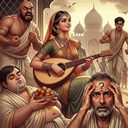
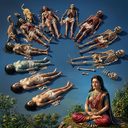
5uk = 5 upādāna khandha = 5 clinging aggregates
+6
+7

+8

+9
10ds: dasa saññā (ten perceptions): starting with asubha
10ksn 10 kasinas (totality)
11 eleven: 11x5uk, 11ada, these go to eleven
12ps = 12 paṭicca sam-uppāda = 12 (links of) Dependent co-origination
12psn = 12 ps, nirodha = cessation of 12 (links of) Dependent co-origination


32 body parts: In Theravada EBT, it's 31 body parts, not 32. Later Theravada adds the 'brain' to make the list 32 for some reason. See 31asb🧟.
32 marks of the great man: Not a Buddhist thing. Probably imported into Buddhism to claim superiority over religions that value this phenomena.

+A
a, an (prefix): have four main semantic functions: negative, privative, invertive and idiomatic.
abhi-dhamma: Has some EBT strata within its 7 books, but mostly is its own separate religion with ideas incompatible with EBT.
abhijjhā: avarice, greed, covetousness.
abhi-nandana: to delight, relish, enjoy.
agga: 1. supreme, 2. place, 3. mountain peak 🗻; see related terms under Ek'agga
Ajahn Lee Dhammadharo:
Craft of the Heart🔗: first book he wrote, like an intro catalog.
Keeping the Breath in Mind🔗: masterpiece on breath meditation.
Ajahn Mun Biography: Ajahn Mun Biography🔗 - Venerable Ācariya Mun Bhūridatta Thera, A Spiritual Biography
Ānānda: joy, bliss. 🔗orgasmic rapture in early vedic use.
Ānā-pāna-s-sati: See 16🌬️😤: in breath - out breath - remembering.
A-nimitta samādhi: sign-less samādhi.
āneñja: imperturbable. usually referring to 4th jhana j4🌕 āneñja⚡, or first 2 formless attainments.
anidassana: unmanifest, featureless, without surface, "invisible" works in some contexts.
📖 Anuruddha Threshold: Searching for the sustainable limit of how much sleep and food are actually needed.

a-p-pamāda 🐘🐾
APS = Ānā-pānā Sati = Inhaling-exhaling Remembering; 😤
APSS = Ānāpānā Sati Samādhi = Inhaling-exhaling Remembering for Undistractable-Lucidity
Ariya = noble. Can be referring to any of the 4 attainments of stream entry, once returner, or non-returner, or arahant. 🔗📝.
Ariya-savaka = noble one's disciple. One who hears/learns the teachings of a noble one, but is not necessarily a noble one themself. LBT Commentary erroneously claims ariya-savaka is at least a stream-enterer.
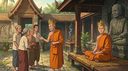
ariyo tuṇhī-bhāvo 👑😶
noble silence. Not mere vocal silence — the second jhāna, where vitakka & vicāra (thinking & evaluation) have ceased. SN 21.1
a-sekha = see Ariya 3. an arahant who no longer needs training of a trainee (sekha), since they are not being liable to rebirth (SN 48.53), and they have direct experience with 5ind🖐️ resulting in the culmination of that.
ASND 🌕🌟
āloka saññaṃ -> ñāṇa dassana = 🌤 🌣 Luminosity Perception -> knowledge & vision. That is, luminosity, visual light that you see with your eyes closed in meditation is used as the primary object of the samādhi practice. When developed to mastery along with 4j and 4ip, then the 6ab, manifestations of ñāṇa dassana (Knowledge and Vision), are easily obtainable. Charge up 4th jhana so you got super bright light any time day or night 🕐 -- 🕑 -- 🕒 -- 🕓 -- 🕔 -- 🕕 -- 🕖 -- 🕗 -- 🕘 -- 🕙 -- 🕚 -- 🕛
a-saṅkhata: un-fabricated, un-conditioned-thing. see Saṅ-khārā.
a-subha 🧟: un-attractive, non-beautiful. In meditation context usually referring to 31asb🧟.
Āsava: asinine-inclinations, effluent (Ṭhānissaro Bhikkhu), taint (b.bodhi).
attha, aṭṭha: sense, meaning, import (of a word), denotation, signification 🔗📝
āyatana: sphere; region; sense-organ; position. (nt.) 6aya = 👁 👂 👃 👅 👆 💭
+B
Bāhiya: disciple famous for most quickly attaining arahantship after hearing, ”...the seen shall be merely the seen, the heard shall be merely the heard..."
Bhikkhu Bodhi: famous American monk, translated pali sutta pitaka into English.
Bhante Gunaratana: famous Sri Lankan monk, formerly followed Abhidhamma and VRJ👻 but has amended his views on jhāna and now teaches it according to EBT.
BIF = (B)iological (I)mperative (F)ailure.
Bhikkhu Bodhi-esque🔗: 2025 AI line-by-line English rendering of the Pāḷi, in the style of Bhikkhu Bodhi — now published at s.4nt.org. Trust the Pāḷi source, not the English.
brahma: a class of deity in the one of the higher deva worlds.
Brahma-cariya: living the holy life [of ☸Dharma], which includes celibacy/chastity [mental and physical].
Brahma-Vihāra: divine-abiding: See 4bv☮️.
Buddha: An awakened being. Also see bodhi, arahant. In EBT, term reserved usually for Gotama the Buddha.
Buddha images/artwork:
+C
caṅkama 🚶 : walking meditation, jhana all 4 postures
Chah🔗: Ajahn Chah
citta : [nt.] mind; thought; (m.), name of a month:
March-April. (adj.), variegated; manifold; beautiful. (nt.), a painting;
picture.
coherence and internal consistency: standards by which we can accept or discard interpretations of text.
com·punc·tion: Ṭhānissaro Bhikkhu transl. of ottappa: fear and dread of the results of moral wrong-doing. See details section of article for difference between British and American defn.
crying: is there crying in Buddhism? Can arahants cry?
conviction: Ṭhānissaro Bhikkhu transl. of saddha
cult: 🔗📝Notes. Intolerance of free inquiry and criticism, blind devotion to charismatic leaders, supressing critical thinking, these are problems in science and all religions, not just the classic pejorative 'cult'.
+D
all
+dhamma .. dharma:
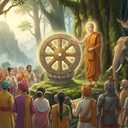
☸Dhamma-anu-dhamma☸📐
☸Dhamma-anu-passana 🐘
☸Dhamma-cakkhu: Dharma eye, attainment of which signals stream entry. See 🔗essay by Ṭhānissaro Bhikkhu.
☸Dhammaṃ-👂sutvā
☸Dhamma-💭🕵️vicaya-sam-bojjhaṅgaṃ
☸Dhamma-vitakka 💭
🔬detailed analysis.
☸Dharma, dharma
dhātu: element, property. see 4dht (dhātu), the four great elements. (nt.)
dīpa: lamp, light lamp; light [√dīp + a]
dīpa: land; island; continent; peninsula; lit. two waters [dvi + āpa]
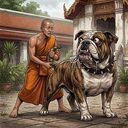

+E
eating 🍲🍴🥣: proper way of eating
EBT = Early Buddhist Teachings. (or Texts, but in the first 500 years it was an oral tradition with no books)
EBT timeline: time line of important events in EBT history.

effluent: liquid waste or sewage discharged into a river or sea, Ṭhānissaro Bhikkhu's transl. for Āsava.
Ekodi, ekodi-bhavā: transcended into singularity
ek[ī/i]-bhāva, ekī-bhavati: see related terms under Ek'agga
ekatta: solitude. see related terms under Ek'agga
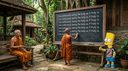
eminently-useful
in an oral tradition, favor the interpretation of Dhamma that is exceedingly useful over one that is merely legitimate.
em☸jis: explanation of their usage and meaning.
Evañhi Vo Sikkhitabbaṃ: Thus Should You Train Yourselves. Comprehensive collection of all occurences of that important training injunction.

also see: 🔗📚 free Dhamma book makers, please make EPUB versions: PDF's are a horrendous nuisance to read
+F
faith: a poor translation choice for saddha. Earned-trust, provisional-trust is more accurate.
fart💨: flatus, pass gas, flatulence, break wind.
FAQ:Frequently Asked Questions
fermentation: Along with 'effluent', two words Ṭhānissaro Bhikkhu uses to render Āsava.
fetter: see Saṃyojana
FIB: (F)ooled by the (I)mperative of (B)iology

FITD
(F)oot (I)n (T)he (D)oor — commit to something so easy you can’t fail, let it become habit, and your own momentum extends it.
FLIPT = Fast Learning Intuitive Pali Translation
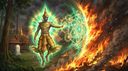
Fortune favors the virtuous
collection of true stories of karma and consequence.
+G
gaṅgā : [f.] river; the Ganges.
gaṅgātīra : [nt.] riverbank.
gaṅgādvāra : [nt.] mouth of a river.
gaṅgādhāra : [m.] a river-basin.
gaṅgāpāra : [nt.] further bank of a river.
gaṅgāsota : [m.] river-stream; torrent.
gaṅgeyya : [adj.] belonging to the Ganges.
gaccha : [m.] a plant; a shrub.
gacchati : [gam + a] goes; moves; walks.
gacchanta : [pr.p. of gacchati] going; moving; walking.
gacchamāna : [pr.p. of gacchati] going; moving; walking.
gacchi : [aor. of gacchati] went; moved; walked.

+H
hearing in jhāna, samādhi: You can 👂 hear sounds in the 4 jhānas. Which samādhis are silent? 🔗📝

hiri: shame and resistance toward wrong-doing
HOL 🍂: Handful Of Leaves Principle.
hope: (Ṭhānissaro Bhikkhu wrote:) read recently someone saying that Buddhism doesn’t have a word for hope, but it actually has two: the noun, āsā, and the verb, paṭikankhati. And the Dhamma is as hopeful a teaching as you can imagine: It teaches that there is a sure way out of all the disappointments of life.
+I
identity — sakkāya
illness & medicine: relevant suttas
imperturbable: (āneñja) usually referring to 4th jhana j4🌕 āneñja⚡, or first 2 formless attainments.
inconstant* — anicca
insight — vipassanā
intellect — manas
intent — citta
In the Buddha's Words: An open source version of Bhikkhu Bodhi's book which maps out an ordered structure for the entire Buddhist path.
I only teach dukkha: "I only teach dukkha and its cessation." See HOL 🍂
+J
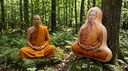
Jhāna, ni-j-jhāna: meditation.
jhāna all the time: see 24/7 samādhi any posture, any activity, any time is jhāna time.
jhāna-heavy: see definition within jhāna-lite.
🔗Jhāna Blocked by LBT Chauvinism, grooming the gullible: How to recognize their tactics, escape, and rebuild a better practice.
Jhāna-constipation ⛜🌊: A condition where one is practicing the method of attaining Jhāna correctly, but energy channels are partially blocked.
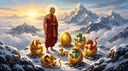
jhāna force, and equation: quantitative analysis of jhānic force.
jhāna-lite: Pejorative, derogatory characterization of EBT jhāna practitioners.
jhāna (and samādhi) similes: a collection of sutta ref's.
Jhānitator 🤴👸 Arahant Maker: minute by minute step by step path to Arahantship.
JST🥪: (J)hāna (S)andwich (T)heorem.
judgment: only Buddha or someone like him qualified to judge the attainment level of his disciples, AN 6.44.
+K

kāma 2: “It's only as hard as you make it” — a reference manual and toolkit for overcoming and destroying lust for the five cords of sensual pleasure. See also kāma.
kamma: (sanskrit) Karma: action, work, deed

kamma-k-khayā: karma that ends karma
karoti (verb): do, act, work (see Kamma)
kasiṇa: totality. 🔗articles
kāya: 1) physical body, 2) group, 3) collection of things
Keeping the Breath in Mind🔗: breath meditation manual by by Ajaan Lee Dhammadharo (Phra Suddhidhammaraṅsī Gambhīramedhācariya)
kāya-gatā-sati 🏃: body-immersed-remembering.
kāya-sakkhī: body witness: means you personally experienced, not heard about or imagined.
kāya-saṅ-khāra: bodily co-activities, such as breath, postures, bodily movement. Also see 16🌬️😤 glosses for passadhi kaya sankhara.
kāyena phusitvā: see kāya-sakkhī, means you personally experienced, not heard about or imagined.
kāyena sacchi-karaṇīyā: truths that should be realized with the body [direct personal experience, not hearsay or imagination]. AN 4.189 and DN 33 (just a repeat of AN 4.189) states that it is 8 vimokkha that should be realized.
khama: (adj.) see khanti
khamati: (verb) see khanti
khanti: patient-endurance, forbearance, tolerance, forgiveness.
+L
last will and testament: 🔗to my younger self
lay people: lay men, lay women, try to get laid. Renunciants have renounced that.
lucid: the English word behind lucid24.org, and the Pāḷi terms it matches — a-p-pamāda 🐘🐾, S&S🐘💭, ☂️🌄, yathā-bhūtaṃ.
+M
macro'ing: macro cosmic orbit exercises
mahā-bhūta: see 4dht (dhātu), the four great elements. (nt.)
majjhima-patipada: middle-path.
manta: pāli for mantra.
mantra: word or phrase vocally or mentally recited to aid in samādhi and sati remembering particular Dharmas
maraṇa-s-sati 💀: death remembrance
meditation timer: 🔗📝notes,tools
merit, meritorious deeds: see puñña
Method of Dhyāna: Kumārajīva “The Essential Explanation of The Method of Dhyāna” 禪法要解
Metta ☮️: Friendly-kindness. Antonym: byāpāda (ill-will). syn: abyāpāda (good-will). metta derived from mitta (friend). See 1.🤝🤗

Mitta: friend. 🔗all suttas with 'mitta' in title
mudita: rejoicing in skillful Dharmas.
+N
√ñā: know. 🔗📝
nāga: 1) giant. 2) dragon. 3) arahant.
nāma-kāya: name-body: collection of mental factors, defined same as nāma in 12ps, see SN 12.2. 🔗all sutta referring to nāma-kāya
na ca sa-saṅkhāra-niggayha-vārita-gato: no forced restraint of defilements, a description of a purified 4th jhana that's capable of realizing 6ab ⚡☸.
nibbāna 🚫🔥: nirvāṇa (sanskrit) Nirvana (english): see ☸4nt → §3. Dukkha-nirodhaṃ for detailed treatment.
1. awakening, enlightenment, realization of arahant, defilements destroyed, no longer subject to rebirth.
2. ordinary daily life usage: extinguishment of a fire, quenching of thirst, cooling.
ni-j-jhāna: jhāna means 'meditation' with singular focus. ni-j-jhāna is nearly synonymous.
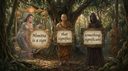
niraya: masc. hell; hell realm; lit. no good fortune [nir + √i + *a]

noble silence 👑😶
ariyo tuṇhī-bhāvo. Not mere vocal silence — the second jhāna, where vitakka & vicāra (thinking & evaluation) have ceased. SN 21.1
No Man's Land ☠️: a very bad place. don't go there, exit immediately.
NWBH: Not What But How. Pronounced, "NWhaBuH". Trying hard isn't enough, details matter.
+O
only dukkha: "I only teach dukkha and its cessation." See HOL 🍂
oral tradition: suttas and Buddha's teaching designed to work with this kind of learnning and transmission. Modern ways of learning miss out on a lot.
ottappa: fear and dread of the results of moral wrong-doing. Ṭhānissaro Bhikkhu transl. 'compunction'.
+P
pahitatto: resolute.
in suttas with "appamatto ātāpī pahitatto": assiduous, ardent, resolute
pajānāti: (verb) (he) discerns. See sampajano def. in S&S🐘💭 for sutta usage examples.
paṇīta: exquisite. all refs to etaṃ santaṃ etaṃ paṇītaṃ (this is peaceful, this is exquisite)
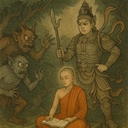
par for the Buddha: he redefines terms to a much higher standard. ->
pari-mukha: entrance, mouth, face, general spatial area in front.
pasāda: confidence, purity, serenity, bright... 🔗📝
pasanna: see pasāda

🔗paṭisambhidā: (fem) penetrating insight (into); analytical knowledge (of); discriminating understanding (of)
PDF: public document format, or (P)aper (D)estroys (F)orests. 🔗📚 free Dhamma book makers, please make EPUB versions: PDF's are a horrendous nuisance to read
Pe: In the suttas, "...pe..." is an abbreviation for "Peyyāla" (elided text)
Peta: (ghosts) dead, departed, the departed spirit.
Peyyāla: elided text, like 'etc.'
Physics of Jhāna: POJ


Pīti
Rapture (primarily mental factor piti-manassa). Same in 7sb as it is in 4j. Pīti in contrast to other happy factors.
plain language: (also called plain writing or plain English) is communication your audience can understand the first time they read or hear it. see 🔗plain language guidelines
puñña: merit, meritorious deeds.
pun: a form of word play that exploits multiple meanings of a term. 🔗save the puns
+Q
quality: A word many translators like to use for dhamma.
+R
rebirth : born into another being after physical death.
reincarnation: see rebirth.
Rule of 48: RDA of daily exercises.
rūpa: 4 great elements, physical body, visible form
+S
sabba: all, every, entirety.
sabba saṅkhāra samatho: all co-activities stilled (one of the ways Buddha describes nirvana).
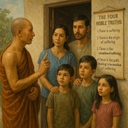
sa-k-kāya: identity. MN 44 says sakkāya is explained through appropriation (upādāna) of the five aggregates (khandhā), hence - identity as five aggregates.
samādahaṃ cittaṃ: undistractify-&-lucidify the mind. Make the mind undistractable and lucid. Bring mind into samādhi.
samādhi: undistractible-lucidity. See 👑8☸ →

samādhi all the time: 24/7 samādhi any posture, any activity, any time is jhāna time.
samāhitaṃ cittaṃ: a mind that has been undistractifed-&-lucidified. A mind that has been brought into a state of samādhi.
samatha: stilling (of); serenity (of); calming (of); settling (of); peace (of).
Saṁvega: Inspired with spiritual emotion, often accompanied by a sense of urgency. (Ṭhānissaro Bhikkhu defn.-) A sense of chastened dismay over the meaninglessness and futility of life as it is ordinarily lived, combined with a strong sense of urgency in looking for a way out.
Saṅ-khārā: co-activities, co-doings, fabrications, conditioned-things.
saṅkhata: fabricated, conditioned-thing. see Saṅ-khārā.
sanskrit: (abbreviation is Skt.) an ancient Indo-European language of India, in which the Hindu scriptures and classical Indian epic poems are written and from which many northern Indian (Indic) languages are derived.
santa: peaceful. all refs to etaṃ santaṃ etaṃ paṇītaṃ (this is peaceful, this is exquisite)
Saṃyojana: Fetter, bond.
sappurisa: person of integrity, good person.
sarīra: physical body, corpse
sekha = see Ariya 4. a trainee who has attained at least stream entry, once returner, or non-returner, but is not yet an arahant.
skt.: abbreviation for sanskrit.
sleep😴: proper way of sleeping.
SLUMP🌄👁: Simplified Language (of) Universal Meditation Principles. A glossary of meditation terms to help non Buddhists to differentiate between EBT and general meditation principles.
slurp🥤: (new English word borrowed from Programming language) a key word or phrase that incorporates a formula or teaching detailed elsewhere in EBT
SP-FLUENT: translation style that includes useful details in square brackets [ ] interpolated from related suttas.
Stillness Flowing🔗: Ajahn Chah Biography.
subha: attractive, beautiful, shining.
sukha: pleasure, pleasant, happy, bliss
subverbal: mental co-activities (citta Saṅ-khārā) that underly thoughts you think V&V💭 before you say them out loud (vāca).
su-gata: well-gone: Freq. Ep. of the Buddha.
+T
taint: B. Nanamoli and Bhikkhu Bodhi's transl. for Āsava.
Ṭhānissaro Bhikkhu: Famous American Monk, known for EBT books and translations.
theme — nimitta
Thera: Elders. see Thera-vāda.
Thera-vāda: Elders' - sayings. Southern Buddhism.

tranquility — (b.than) samatha. Other translators might refer to passaddhi.
transcendent — lokuttara
transmigration: see rebirth.
truth: radical acceptance of truth, personal bias, objectivity, honesty, aligning with truth
+U
🏃📐 ujuṃ kāyaṃ: straightened body (term that appears in sutta passages on meditative postures)
unbinding: B. Thanissaro's translation of nibbāna.
unfabricated: a-saṅkhata

upasika kee nanayon (Up.K.Nanayon🔗): famous Thai Woman teacher from 20th century.
🛆👁 Upekkha: equanimous-observation in 🌕Jhānas, ☀️7sb, ☮️4bv
upekkha-sukha: a nonsensical term created by abhidhamma to differentiate sukha of 3rd jhana from the first 2 jhanas.
+V
Vācā 💬 🗣 (f.) = vocalization, vocalized speech 🗣, speech 💬 . [Vedic vāk (vāc˚) voice, Lat. vox=voice]
vacī-saṅ-khāro = vocalization-co-activities, see MN 44, the thoughts you think before you say them out loud. Equivalent to V&V💭.
vāda: sayings, theory, creed. see Thera-vāda.
Vangīsa Thera: Arahant famous for skill in spontaneous verse and poetry.
Vīmaṃsā💭🕵️: discrimination, inquiring, 4th iddhipada, 4ip 🌕⚡.
Viññāṇaṃ anidassanaṃ: see anidassana: consciousness unmanifest, featureless, without surface.
vi-passana: clear-seeing, insightful-seeing.

V&V disamb. = disambiguation of vitakka & vicāra
1. seclusion; solitude; detachment; disengagement. 2. discrimination; understanding; true knowledge.
vossagga: release.
vow: strong binding committment.
🔗📝 LLSS vows (limited liability)

+W
wacky: Adjective: Ludicrous, foolish.
Wag the ☸Dharma: dharma should be subservient to Dharma, not the other way.
wakeful, wakefulness: see jāgara
warm fuzzies: feelings of happiness, contentment, or sentimentality

+X
X-axis: The horizontal axis in a plane coordinate system
+Y
🔗Yatv-ādhi-karaṇamenaṃ: because of having done that
Yogi hacks: Tricks to save time, be more efficient to leave more time for Dharma.
yoniso: wise attention, mental activity tracing the source of things
Youth is wasted on the young.
+Z
zen: Japanese transliteration of jhāna.