🏃📐 ujuṃ kāyaṃ
ujuṃ kāyaṃ paṇidhāya: maintaining correct spine in both standing and sitting
+0 – SN 54.3 Suddhika: (0. preliminary steps to 16🌬️😤)
| [0.1] 🏞️ arañña-gato vā | [0.1] 🏞️ (to the) wilderness-(he)-went, or | |
| 🌲 rukkha-mūla-gato vā | 🌲 (to the) tree-root-(he)-went, or | |
| 🏕️ suññā-(a)gāra-gato vā | 🏕️ (to the) empty-dwelling-(he)-went, ** | |
| [0.2] nisīdati | [0.2] sits down | |
| [0.3] 🧘 pallaṅkaṃ ābhujitvā | [0.3] 🧘 (into)-cross-leg-posture (he)-bends, | |
| [0.4] 🏃📐 ujuṃ kāyaṃ paṇidhāya | [0.4] 🏃📐 straightened body (he)-aspires (to), | |
| [0.5] 🌬️😤 pari-mukhaṃ satiṃ upaṭṭhapetvā. | [0.5] 🌬️😤 Near-(the)-mouth, remembrance he-establishes. | |
| [0.6] 🐘 So sato-va assasati, | [0.6] 🐘 He, Always-a-rememberer, breathes in; | |
| Sato-va passasati | Always-a-rememberer, breathes out. |
For emphasis, I've numbered the steps that occur
in the sutta instructions that occur
right before 16 steps of 16 APS proper
(digham va assassanto...).
+1 – Introduction
all
[0.4] 🏃📐 ujuṃ kāyaṃ paṇidhāya
[0.4] 🏃📐 straightened body (he)-aspires (to),
This really important instruction in 16 APS (breath meditation),
is often misunderstood and overlooked.
+1.1 – Misunderstanding #1
Straightened body is just a preliminary prerequisite
before actually doing proper sitting meditation.
You just check it once before you start 16 APS,
and then check that off your list.
before actually doing proper sitting meditation.
You just check it once before you start 16 APS,
and then check that off your list.
Actually, especially once you can do jhāna easily
and have developed the automatic habit of doing passaddhi
(pacification, relaxation) at all times,
all postures,
you'll realize through your own experience,
especially when you attempt long sitting meditation sessions,
that this instruction to straighten the body
actually needs to be checked quite frequently
while you're doing 16 APS.
For example, try doing 16 APS standing instead of sitting.
Unless you've entered an arupa samādhi while doing 16 APS,
you've unconsciously at pretty frequent intervals,
checked whether your body was straight and balanced.
If you didn't your body would sway and lean and even fall over.
This very important instruction AFAIK
doesn't get any detailed commentary in the EBT itself.
And there are very important details you'll have to know
to preserve good spinal health,
especially if you follow many popular Theravada traditions
like Burmese lineages that place great value
on doing long sitting sessions, and ignoring body pain to do so.
+2 – Problem: good posture (neutral spine) curves often get flattened and strained
all
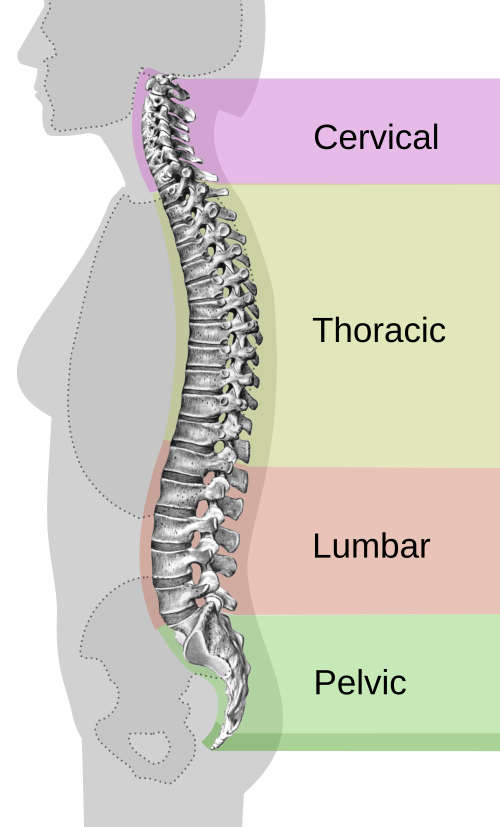
+2.1 – when changing from standing posture to cross leg floor sitting posture
This is because back and leg muscles,
tendons, tissue, are too tight.
So when the legs are bent at the waist
at a 90 degree angle to the spine,
you lose the proper concave curve in the lumbar lower back area.
The spinal vertebrae there straighten up,
or even go from concave to the opposite convex curve!
This is really bad, and you won't be able to sit for long
(not just in a session, but for long term meditation practice in years)
before injuring your lower back from compressing the spine,
and getting drowsy after a while
from diminished circulation of blood and qi.
+2.2 – What's the solution?
1. yoga, taiji, qigong, other good mobility and pliability exercises
done daily to soften tight tissue in the whole body,
especially back and legs.
2. proper posture and alignment at all times,
whether standing, sitting, walking, driving a car,
eating sitting at a table, reading a book.
3. proper pacification/relaxation of whole body.
Even if you do #1 and #2 correctly,
if you have tight areas of the body accumulated from your life
that have not been dissolved or soften sufficiently from exercise yet,
it will be difficult to accomplish correct spinal posture
when you transition from standing to sitting cross legged.
So you need to make adjustments,
instead of sitting 90 degrees between legs and spine,
you'll need to sit on a higher seat,
to increase the angle between legs and spine to be more than 90 degrees.
+3 – 1. yoga, taiji, qigong, other good mobility and pliability exercises done daily
+4 – 2. proper posture and alignment at all times
all
whether standing, sitting, walking, driving a car,
eating sitting at a table, reading a book.

for full lotus posture, and cross leg seating in general:
spinal vertebrae needs to be effortlessly stacked up
on top of each other, including skull and bai hui point
(that little indention near the middle of the top of your head),
lining up vertically with tail bone hui ying point (near tail bone),
see diagram above.
+4.1 – how to test for correct posture
A. knees and lower legs are firmly contacting the ground,
not hovering and wobbling
because of tight hip and leg tissue pulling it up off the ground.
If your knee(s) and lower leg(s) are hovering,
you need to need to elevate spine sufficiently
by sitting on a high enough cushion
opening the angle between your legs and spine (side view)
to more than 90 degrees.
As your daily yoga and exercise program soften you up,
you can gradually decrease height of cushion.
B. The neutral spine (good posture),
with the spring like curves on the vertebrae
needs to be the same whether you're standing or sitting.
So if you lose your spinal curves when you sit,
then even if you passed the test (A) above
for solid leg and knee base with firm contact on the ground,
again you'll need to elevate your height with a seat cushion.
Especially check your lumbar curve,
by comparing standing up backed up against the wall,
how much of your finger and hand you can slide through
between the wall and your hand,
verses when you're sitting down.
+5 – 3. proper pacification/relaxation of whole body
all
This is a further refinement on the posture correctness test from #2.
The obvious test is, if at the beginning of the sit (cross legged)
you have correct posture, and at the end of a long sit (1,
2, 3 hours),
you still have correct posture, without any pain,
discomfort,
tired muscles resulting from using too much force
to maintain "correct" posture,
then you have good posture
and proper passaddhi / pacification/ relaxation of the body.
In other words, your bai hui point (near top of head),
hui yin point (near tailbone) are vertically lined up,
and the vertebrae are stacked up effortlessly and balanced,
so it you don't have to engage your core /abdominal muscles
(if you're leaning body backwards slightly),
or engage your back muscles (if you're leaning forward slightly).
+5.1 – Test out cervical low back relaxation
In both sitting and standing.
A. lean your body slightly forward.
place your hands on your back muscles and feel how tight they are.
Now lean it back until you're straight,
and then leaning backwards.
Notice how the back muscles become as soft as tofu or soy milk.
B. conversely, place your hands on your belly area.
Lean backward, and notice how the further back you go
the abdominal muscles get tighter and tighter.
Now lean forward and notice
when the belly and abdominal muscles become relaxed
and soft like tofu or soy milk.
C. Now do micro movements,
subtle leaning forward and backward,
until both your belly abdominal and back muscles
remain soft like tofu or soy milk.
Probably most of us have some postural imperfections,
and won't be able to do this perfectly.
But we should get in a habit of doing this test on ourselves
at least once a day to check our progress.
D. After you've normalized with a correct posture,
and you're skilled at step 3 of 16APS
(sensitive to subtle sensation of every cell of your entire body,
including tissue near spine),
you won't have to use your hands to check for softness,
you can just scan with your mind
to confirm tofu or soy milk like softness.
+5.2 – Test the neck (cervical vertebrae)
all
In the modern lifestyle,
with the horribly non ergonomic way most kids in school
sit at a desk to read/write and study,
and people at the office work at a desk in front of a computer,
to people in their leisure time slouching into a couch
slumping in a bad posture to watch television,
or people craning their head down to stare at their cel phone all day,
the neck area for most people
has devolved into a craning forward wrong posture,
compared to the neutral spine (correct posture)
where bai hui point on top of head,
lines up vertically with hui yin (near tailbone).
The problem is so bad people's perception of what
"normal"
correct neck and head position relative to the neutral spine,
is skewed, so when they stand or sit in meditation,
they don't have an accurate kinaesthetic feel
for what "correct neck and spine" posture is.
In other words, in sitting meditation most people,
even after deliberately trying to establish correct posture
of spine and neck, will still be in a slumped,
head craning forward posture,
but it feels "normal" and "correct".
So until you do enough exercise and posture fixing
to establish a correct normal,
you will probably have to use a few external aids
to check your neck and spine alignment.
Some ideas:
1) keep mirror next to where you sit,
big/long enough to see your neck and good portion of your upper torso
relative to vertical reference point like wall,
and/or horizontal reference point like floor.
2) use portable digital camera
and take a picture of yourself from the side.
3) sit in a location where you back is very close
to being in full contact with the wall,
for example your tail bone is one inch away.
Then when you want to check alignment,
you lean back towards the wall
and make contact with the back of your head.
Then you can mentally calibrate that
and get a sense of what perpendicular and vertical correct alignment
should feel like (approximately).
+§2.1 – Test neck cervical softness front, back, sides
Use the analagous A & B & C tests you did
in the previous section testing your belly/abs and lower back
by placing your hands on them
and confirming the muscle, tendons,
are soft like tofu or better yet soy milk.
tip: if your neck is still tight
even after you've correctly lined up and balanced alignment,
the tension is just accumulated chronic knots
you'll have to work out with accupressure,
massage, exercise.
As people get older, the sides of their neck get super tight.
This is because when we walk and go through daily life
physical movement, we use those side neck muscles
to keep our head from rotating left to right
(to keep our vision steady and not jerking around).
❧
+5.3 – The real test of passadhi
Now the real test of passadhi/pacification is
if you get pīti/sukha (bliss factors) of jhāna.
If your mind and body are not truly pacified,
jhāna won't happen.
For example, those who use too much physical force
to maintain correct posture,
maybe not to the point of getting fatigued or sore after a long sit,
but enough to hinder kāya (body) pacification
enough to prevent jhāna from happening.
For example, those with western military ram rod straight posture mentality,
or Indian yoga forcefully opened chest (jutting out) and ribcage,
you'll know you're using too much force
if it blocks you from the full power of pīti sukha bliss
that you can get in a completely relaxed posture like lying down,
or floating in the water.
If you're body if fully relaxed,
you'll feel that qi isn't hindered from flowing smoothly
down your head through your throat, chest,
to belly.
❧
+6 – Strange Paradox
There are expert master meditators,
who can do 4 jhānas, and arupa samadhi attainments,
yet in their old age,
perhaps from over zealously sitting too long in a single session
and ignoring body pain,
develop debilitating back injuries from cross leg sitting,
partially paralyzed extremities, and other problems.
Don't let that happen to you.
Take good care of your body.
Don't think "oh I'll just do an arupa samadhi to escape body pain
if it ever gets that bad."
If you injure your body sufficiently,
you'll most likely lose your ability to do arupa samadhi!
+7 – Misc. Notes
without mirror
lean back until abdominal muscles slightly engage/tighten.
pelvic tilt down
increase concave curve of lumbar region
pull chin inwards
while keeping head level
(head not tilted up or down)
gaze is parallel to ground,
to get concave curve of cervical neck area,
and line up bai hui with hui yin
thoracic area
double elbox strike back to open rib cage,
shoulders
or spread arms wide and push back
standing and walking meditation
never lock knees, always 5 bows of body
walking meditation
walk down hills sideways with kung fu shuffle,
(sideways version of cat step protocol)
with 5 bows and no locked knees,
to prevent knee and back injury
perpetual motion
driving 8 hours on road, always doing flying cat cow and turtling.
never lean back and rest of back of chair,
always hold yourself up
eating: every bite, lean in to avoid food spilling,
then straighten up
get rid of couch.
chair postures
tree hugger, arms on table
to learn what fully relaxed arms and shoulders can feel like
relaxed chair full lotus
in floor FLT, my legs and belly heat up
like luxury car heated seat warmer.
+8 – Questions and Response
Re: Maintaining correct spine in both standing and sitting (dhammawheel, Mon Jul 15, 2019)
While sitting still, making no intentional movement,
various latent tendencies start to manifest themselves.
Pain rises and the habit to react by moving asserts itself.
When not intentionally moving,
instead (of moving) correctly understanding
continuously equanimously observing the pain,
the four noble truths unfold.
There's situations where that applies,
but what my article is addressing, and this is really important,
is that even highly skilled expert meditators,
if they don't have correct posture,
if they sit many hours a day regularly and for long sessions
(1, 2, 3, 4 ...
hours at a time),
are going to develop deformed spine,
debilitating pain and health problems later in life.
Especially if they dogmatically cling to a view
that all pain can just be safely ignored and observed equanimously.
Until one has sustainable correct balanced posture
(effortlessly maintained for entire long sit),
one will have to forcibly check their posture frequently
during meditation.
Also, with skilled jhana meditators,
you can start off with a correct posture
and perfect spinal slignment in a sitting session,
but the warping of your posture and spine
can happen so subtly and gradually over time
you don't even realize your slightly leaning forward or backward,
or slouching, or your head is craning forward
or tilting down or sideways at some weird angle.
Until all of ones qi channels are open,
subtle imbalances will slowly but gradually warp your posture
during the sit.
So if you start a sit in correct posture,
and you end the sit in a wrong posture,
you need to deliberately check your posture during the sit
frequently enough to become aware of that and adjust.
+9 – Related
Diguju: dīgha (long) breath + ujuṃ (straightened) body
— the how-to for this step.
🔗lucid24 blog article: the source of everything above.
— the how-to for this step.
🔗lucid24 blog article: the source of everything above.