👑 8☸ → 8🌄 Sammā Samādhi
righteous undistractible-lucidity
| “katamo ca, bhikkhave, sammā-samādhi? | What **, *********, is right-undistractable-lucidity? | |
| 🚫💑 vivicc’eva kāmehi … | Judiciously-secluded from sensuality and wrong Dharmas, … | |
| 🌘 paṭhamaṃ jhānaṃ upasampajja viharati. … | he attains and lives in first jhāna (j1🌘). … | |
| 🌗 dutiyaṃ jhānaṃ upasampajja viharati. … | he attains and lives in second jhāna (j2🌗). … | |
| 🌖 tatiyaṃ jhānaṃ upasampajja viharati. … | he attains and lives in third jhāna (j3🌖). … | |
| 👁🐘 Upekkhā-sati-pārisuddhiṃ | his equanimous observation and his remembering [and application of relevant ☸Dharma] is purified. | |
| 🌕 catutthaṃ jhānaṃ upasampajja viharati | he attains and lives in fourth jhāna (j4🌕). |

+0 – 4 jhānas are sammā samādhi
all
| 🚫💑 vivicc’eva kāmehi … | Judiciously-secluded from sensuality and wrong Dharmas, … | |
| 🌘 paṭhamaṃ jhānaṃ upasampajja viharati. … | he attains and lives in first jhāna (j1🌘). … | |
| 🌗 dutiyaṃ jhānaṃ upasampajja viharati. … | he attains and lives in second jhāna (j2🌗). … | |
| 🌖 tatiyaṃ jhānaṃ upasampajja viharati. … | he attains and lives in third jhāna (j3🌖). … | |
| 👁🐘 Upekkhā-sati-pārisuddhiṃ | his equanimous observation and his remembering [and application of relevant ☸Dharma] is purified. | |
| 🌕 catutthaṃ jhānaṃ upasampajja viharati | he attains and lives in fourth jhāna (j4🌕). | |
JST🥪 1.3 code phrases that mean "do 4 jhānas"
+STED 4 jhānas 🌕
+features in
4j🌕 = j1🌘 + j2🌗 + j3🌖 + j4🌕
4j🌕 = j1🌘 + j2🌗 + j3🌖 + j4🌕
j1🌘: V&V💭
Pīti😁
Sukha🙂
j2🌗: Ekodi-bhava 🌄, ariyo vā tuṇhī-bhāvo = noble silence 👑😶
j3🌖: S&S🐘💭 sati & sam-pajāno, Upekkha (7🛆👁), pleasurable abiding here and now
j4🌕: Upekkha (7🛆👁), aneñja (imperturbability)
+
+
+
j2🌗: Ekodi-bhava 🌄, ariyo vā tuṇhī-bhāvo = noble silence 👑😶
j3🌖: S&S🐘💭 sati & sam-pajāno, Upekkha (7🛆👁), pleasurable abiding here and now
j4🌕: Upekkha (7🛆👁), aneñja (imperturbability)
+j🌕: 4 jhānas ⊜ equivalent factors
all
+4 –
4j🌕 = j1🌘 + j2🌗 + j3🌖 + j4🌕
=
5bal👊️ → 4🌄 =
5ind🖐️ → 4🌄 =
7sb☀️ → 6🌄 =
👑8☸ → 8🌄 =
samādhi in 3 ways
STED 4j🌕 = 4 jhānas 🌕
j1🌘 = paṭhamaṃ jhānaṃ = First Jhāna
j2🌗 = dutiyaṃ jhānaṃ = Second Jhāna
j3🌖 = tatiyaṃ jhānaṃ = Third Jhāna
j4🌕 = catutthaṃ jhānaṃ = Fourth Jhāna
5bal👊️ → 4🌄 = samādhi-bala
5ind🖐️ → 4🌄 = samādhi-indriyam
7sb☀️ → 6🌄 = samādhi-sam-bojjh-aṅga, undistractible-lucidity-awakening-factor
👑8☸ → 8🌄 = sammā-samādhi, right undistractible-lucidity
samādhi in 3 ways = samādhi in 3 ways
3rd jhāna + ASND 🌕🌟 = j4🌕 āneñja⚡ imperturbable 4th jhāna = 4ip 🌕⚡ → 6ab ⚡☸
j1🌘 = paṭhamaṃ jhānaṃ = First Jhāna
j2🌗 = dutiyaṃ jhānaṃ = Second Jhāna
j3🌖 = tatiyaṃ jhānaṃ = Third Jhāna
j4🌕 = catutthaṃ jhānaṃ = Fourth Jhāna
5bal👊️ → 4🌄 = samādhi-bala
5ind🖐️ → 4🌄 = samādhi-indriyam
7sb☀️ → 6🌄 = samādhi-sam-bojjh-aṅga, undistractible-lucidity-awakening-factor
👑8☸ → 8🌄 = sammā-samādhi, right undistractible-lucidity
samādhi in 3 ways = samādhi in 3 ways
3rd jhāna + ASND 🌕🌟 = j4🌕 āneñja⚡ imperturbable 4th jhāna = 4ip 🌕⚡ → 6ab ⚡☸
+j🌕: 4 jhānas central repository
Most of the information on 4 jhānas will be collected in
👑8☸ →
8🌄 = sammā-samādhi, right undistractible-lucidity. The equivalent 4j factor pages will focus on how they differ from sammā-samādhi
❧
+1 – The essence of Sammā Samādhi
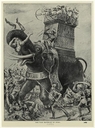
• The elephant is sati ("mindful"). Always remembers what ☸Dharma he needs to do, never forgets.
• The rider/mahout is the wise gate keeper from AN 7.67 🏰, the frontier fortress.
• elephant & rider = S&S🐘💭 = sati & sampajāno = remembering & lucid-discerning
• Together, they are resilient (khamo), can patiently endure any kind of horrifying trauma.
AN 5.139 : “And how is a king’s elephant resilient to ...fearful sights... horrible smells ... terrifying sounds ... physical pain ...? ... having gone into battle, he is pierced by a flight of arrows, two flights, three flights, four flights, five flights of arrows, but he doesn’t falter or faint, he steels himself and engages in the battle...
• That resilience 🌄🐘🛡️🏹 (khamo) is the defining characteristic of samādhi. Not "stillness". Pacification and serenity are important nutriments of samādhi, but they are not equivalent to it.
• There are many 'samādhi suttas' in the EBT, but only one sutta titled "sammā samādhi" AN 5.113. Its central focus is Khamo/resilience, not "stillness".
• Samādhi is not a trance, not a state where you can't think, can not act, and not form an intention.
• Samādhi is dynamic. It can appear quiescent, but it's poised and alert, not in a frozen trance. When you're in samādhi, you may appear very still, but you ready.
• Ready, on a moment's notice, to fight the āsavās and break through to nirvana.
• Samādhi is the pinnacle 🌄 of lucidity, of mental power. AN 5.113 : “possesssing five-of-these qualities, (a) monk [is] capable (of) dwelling in righteous-undistractable-lucidity, Which five? (a) monk is resilient to forms, sounds, odors, tastes, and tactile-objects, ...
• The rider/mahout is the wise gate keeper from AN 7.67 🏰, the frontier fortress.
• elephant & rider = S&S🐘💭 = sati & sampajāno = remembering & lucid-discerning
• Together, they are resilient (khamo), can patiently endure any kind of horrifying trauma.
AN 5.139 : “And how is a king’s elephant resilient to ...fearful sights... horrible smells ... terrifying sounds ... physical pain ...? ... having gone into battle, he is pierced by a flight of arrows, two flights, three flights, four flights, five flights of arrows, but he doesn’t falter or faint, he steels himself and engages in the battle...
• That resilience 🌄🐘🛡️🏹 (khamo) is the defining characteristic of samādhi. Not "stillness". Pacification and serenity are important nutriments of samādhi, but they are not equivalent to it.
• There are many 'samādhi suttas' in the EBT, but only one sutta titled "sammā samādhi" AN 5.113. Its central focus is Khamo/resilience, not "stillness".
• Samādhi is not a trance, not a state where you can't think, can not act, and not form an intention.
• Samādhi is dynamic. It can appear quiescent, but it's poised and alert, not in a frozen trance. When you're in samādhi, you may appear very still, but you ready.
• Ready, on a moment's notice, to fight the āsavās and break through to nirvana.
• Samādhi is the pinnacle 🌄 of lucidity, of mental power. AN 5.113 : “possesssing five-of-these qualities, (a) monk [is] capable (of) dwelling in righteous-undistractable-lucidity, Which five? (a) monk is resilient to forms, sounds, odors, tastes, and tactile-objects, ...
+2 – Samādhi in broad ☂️, and specific types
all
☂️🌄: broad umbrella term, many nuances
jhāna and samādhi similes: a collection of sutta ref's.
4j🌕 ≈ 4sp🐘 jhāna and satipaṭṭhāna interpenetrate each other
JST🥪 1.3 code phrases that mean "do 4 jhānas"
Also see noble silence 👑😶
🔬 Detailed research on role of 🌄 Ek'aggatā,
Ekodi in Jhānas
+ Special states
A-nimitta samādhi, A-nimitta ceto-vimutti: Sign-less samādhi, sign-less mind-liberation
Ap-paṇihita:(un-directed) samādhi
na ca sa-saṅkhāra-niggayha-vārita-gato: no forced restraint of defilements, a description of a purified 4th jhana that's capable of realizing 6ab ⚡☸.
An article surveying all passages eventually.
+3 – ⛔samādhi + Jhāna that deviates from EBT
+4 – Disambiguation: learner's jhāna, impure jhāna, ⛔wrong jhāna is still called "jhāna"
all
+Non Buddhists doing 4 jhānas
They didn’t learn 4 jhānas from Buddha
AN 4.123 once returner reborn in brahma realm corresponding to 4j,
ordinary person low rebirth
AN 4.124 only nonreturner, not non buddhist can be reborn in pure abode with 4j
AN 5.192.2 - (brahmin equal to a god: does 4j🌕)
DN 1.3.2.5 mistaken belief that nibbana realized upon attaining any of four jhāna
DN 17.5 non buddhist king doing four jhānas,
four brahma vihāras, reborn in brahma realm
Snp 5.1.12 16 brahmins asking Buddha how to nirvana with their jhāna and formless attainments
MN 36.3 Buddha recalls accidental first jhāna experience as boy,
before he was a Buddhist!
MN 79.10 - (is there a world of perfect happiness?
A path to it?)
SN 35.132 With Lohicca: union with Brahma, using jhāna (pre Buddhist)
+5 – ✅EBT compliant interpretations of jhāna + samādhi
all
+EBT compliance in Jhāna
all
+EBT compliant Jhāna commentaries
all
+Thanissaro Bhikkhu
All of his books are free,
all of his views on Jhāna are EBT compliant: http://www.dhammatalks.org
+Bhante Henepola Gunaratana
Should we come out of Jhāna to practice Vipassanā?
Beyond Mindfulness in Plain English (from wisdom pub)
His older published books and writings on Jhāna follow Vism.
and is NOT EBT compliant, so beware!
+Non EBT commentaries
KN Pe: Peṭakopadesa (pitaka disclosure): everything interesting it says about jhāna & samādhi
Dhyāna Samādhi Sutra chapter on 4 jhānas,
4 arupa attainments, levitation
+6 – vipassana insight while in Jhāna
all
+suttas with explicit vipassana while in jhānas (and/or formless perception attainments)
AN 4.41.4.3 glossing S&S🐘💭 sati + sampajāno doing vipassana from 3rd and 4th jhāna formula.
This is included as part of all 7 perception attainments in MN 111.
AN 4.41.4.4 Taking S&S all the way to arahantship,
destroying Āsavas.
This is done in AN 9.36, MN 52, etc.
and this seems to be emphasizing it's a common experience for
meditators to expect 4 jhānas and samādhi to have impurities can interrupt one while one is in jhāna.
AN 9.36 realize nirvana while doing vipassana in 4 jhānas and seven perception attainments,
or after emerging from 8th and 9th
AN 9.41 the types of subverbal impurities that can occur while one is in 4 jhānas and 9 attainments.
AN 11.16 doing vipassana while in 4 jhānas, 7 perception attainments,
4bv☮️ brahmaviharas with sampajāno/pajānāti and upekkha,
become arahant or nonreturner
DN 21.0.2 Buddha in jhāna hears musician, does worldly vipassana analyzing structure of poem.
EA 12.1🔗 satipaṭṭhāna sutta of the Mahāsaṅghika EBT school has 7sb☀️ and 4j🌕 jhānas actively developed within Dhamma-anupassana,
rather than passively examined from outside of jhāna as in Theravāda.
MA-bdk 205🔗 is ∥MN 64 ∥AN 9.36 vipassana and realize arahantship while in 4 jhānas and 7 perception attainments
4bv☮️ brahma viharas, and first 3 formless attainments
MN 111 vipassana while in 4 jhānas and seven perception attainments,
or after emerging from 8th and 9th
MN 121.6 doing vipassana in formless attainments
MN 121.8 doing vipassana with animitta samādhi connected to all 6 senses of body
MN 121.9 attaining arahantship while in animitta samādhi
MN 122.3.3 vipassana from animitta samādhi or 4 jhānas
MN 122.10 you should observe rise and fall of 5uk aggregates,
from animitta samādhi or 4 jhānas
MN 125.3.10 4sp🐘 can do vipassana with no kāma-vitakka/thoughts of sensuality = first jhāna
examine 3 types of vedana at beginning of sutta
SN 4.25 shortly after he awakened Māra’s daughters question Buddha about vipassana in jhāna
+suttas with *almost* explicit vipassana while in jhānas
These sutta references require you validate one little detail
before concluding they function as the previous explicit list.
even Abhidhamma calls that 4 or 5 jhānas.
MN 19.3.1.5 (code phrase for “attempt 4 jhānas”),
must be doing vipassana to remove evil thoughts and replace with good thoughts to get into first jhāna.
In principle this is same as AN 9.41, impure first jhāna being purified.
using 5 ways to remove distracting thoughts and perceptions.
MN 78 right effort must be doing vipassana to do it's job of recognizing and removing unskillful Dharmas
MN 78.5.2 - (akusalā saṅkappā cease in first jhāna)
MN 78.5.3 - (right effort does the work of removing akusalā saṅkappā within,
and prior to first jhāna)
MN 78.6.2.0 – (that means kusalā saṅkappā are active in 1st jhāna!
MN 78.6.3 - (right effort removes kusala sankappa from first jhāna resulting in no V&V of 2nd jhāna)
MN 119.1.4 – (31asb: asubha, 31 body parts).
MN 119.1.5 – (Four elements)
MN 119.1.6 – (9siv: 9 cemetary contemplations)
SN 47.4 newly ordained, trainee, arahant, all do satipaṭṭhāna simultaneously with 4 jhānas quality
SN 47.10 purifying 1st and higher jhāna with samādhi in 3 ways,
even Abhidhamma calls that 4 or 5 jhānas.
+AN 1 suttas explicitly doing vipassana in jhāna, or something requiring mental complexity comparable
”fingersnap jhāna” = having jhāna for the time it takes to snap fingers
AN 1.53 (cultivate metta for fingersnap of jhāna)
AN 1.54 (develop metta for fingersnap of jhāna)
AN 1.55 (pay attention to metta for fingersnap of jhāna)
AN 1.406 (develop right effort 1/4 for fingersnap of jhāna)
AN 1.407 (develop right effort 2/4 for fingersnap of jhāna)
AN 1.408 (develop right effort 3/4 for fingersnap of jhāna)
AN 1.409 (develop right effort 4/4 for fingersnap of jhāna)
AN 1.465 (asubha/foulness for fingersnap of jhāna)
AN 1.466 (death for fingersnap of jhāna)
AN 1.467 (repulsive food for fingersnap of jhāna)
AN 1.468 (dissatisfaction with world for fingersnap of jhāna)
AN 1.469 (impermanence for fingersnap of jhāna)
AN 1.470 (suffering in impermanence for fingersnap of jhāna)
AN 1.471 (not self in suffering for fingersnap of jhāna)
AN 1.472 (abandoning for fingersnap of jhāna)
AN 1.473 (dispassion for fingersnap of jhāna)
AN 1.474 (cessation for fingersnap of jhāna)
AN 1.475 (impermanence for fingersnap of jhāna)
AN 1.476 (not self for fingersnap of jhāna)
AN 1.477 (death for fingersnap of jhāna)
AN 1.478 (repulsive food for fingersnap of jhāna)
AN 1.479 (dissatisfied with world for fingersnap of jhāna)
AN 1.480 (💀☠️ Skeleton for fingersnap of jhāna)
AN 1.481 (🐛🧟 worm-infested for fingersnap of jhāna)
AN 1.482 (🧟black-and-blue-[corpse] for fingersnap of jhāna)
AN 1.483 (🕸️🧟 fissured-[corpse] for fingersnap of jhāna)
AN 1.484 (🧟 bloated-[corpse] for fingersnap of jhāna)
AN 1.485 (recall Buddha for fingersnap of jhāna)
AN 1.486 (recall Dhamma for fingersnap of jhāna)
AN 1.487 (recall Sangha for fingersnap of jhāna)
AN 1.488 (recall sīla for fingersnap of jhāna)
AN 1.489 (recall generosity for fingersnap of jhāna)
AN 1.490 (recall devas for fingersnap of jhāna)
AN 1.492 (maraṇa-s-sati 💀 for fingersnap of jhāna)
AN 1.493 (kāya-gatā-sati 🏃 for fingersnap of jhāna)
AN 1.494 (recall peace for fingersnap of jhāna)
❧
+4 – Jhānas: Where insight 👁 happens
all
V&V💭: thinking & evaluation
S&S🐘💭: remembering & lucid-discerning
4 Jhānas🌕 ≈ 4 Satipaṭṭhāna🐘 | ☂️🌄 nuance and range of samādhi
🛆👁 Upekkha in the Jhānas, 7sb, 4bv. : Equanimous-observation 👁 powered by samādhi 🌄
+ What are samādhi-nimittas?
samādhi-nimitta are the 4sp : sati remembers Dhamma,
nimittas are Dhammas fed into the 7sb machine.
+related
etaṃ santaṃ etaṃ paṇītaṃ (this is peaceful, this is exquisite)
❧
+7 – The 4 jhānas have 7☀️ factors. Not 5
+9 – Formless attainments 🗸👻
all
These are not explicitly defined under Sammā Samādhi.
STED smd5👻 ākāsā-nañcā-(a)yatanaṃ: Space-infinitude-dimension
STED smd6👻 viññāṇañcā-(a)yatanaṃ: Consciousness-infinitude-dimension
STED smd7👻 ākiñcaññā-(a)yatanaṃ: Nothingness-dimension
STED smd8👻 Neva-saññā-nāsaññā-(a)yatanaṃ: Neither-perception-nor-non-perception-dimension
STED smd9👻 Saññā-vedayita-nirodhaṃ: Perception-feeling-cessation
8 vimokkha include smd 5-9, as well as 2 other formless attainments and one slot for four jhānas.
8 abhi-bh-āyatana give more variations for the first 3 of the 8 vimokkha.
+ 🛇👻 The four Jhānas are not formless samādhi attainments
Not formless means you have physical body 🗸🏃♀️ awareness, you can feel leg pain, you can hear sounds.
In 3rd and 4th jhāna, the sense of the body may subjectively be experienced as increasingly subtle, fading out.
But if you can no longer hear sounds, can not kinaesthetically locate where your hands, feet, head are,
have no sense of direction of up and down, then you've crossed over into formless samādhi 👻.
You are no longer in the four jhānas.
• rūpa is not a-rūpa, 4 jhānas operate in rūpa: You think that would be obvious, but it's not a well understood point,
thanks to late Theravada propaganda redefining 4 jhānas as formless (see VRJ👻 and BRJ👻).
• In the 4 jhānas, the body kāya is physical 🗸🏃♀️,
and feelings (vedana) by default originate and are experienced from the physical 🗸🏃♀️
• If you can feel leg pain and mosquito bites in the 4 jhānas, then ...
• hearing in jhāna👂🌄: You can hear sounds in the 4 jhānas. Which samādhis are silent?
• If you can walk and do the jhānas in all 4 postures, then obviously you must have body awareness and can't be in a formless samādhi.
• smd5👻 ākāsā-nañcā-(a)yatanaṃ: if you study the terms in the space infinitude dimension formula for patigha sañña and nanatta sañña,
it's clear that it must mean in the four jhānas one is sensitive to the physical anatomical body.
full details here: Goldcraft 9.1.5.10
In 3rd and 4th jhāna, the sense of the body may subjectively be experienced as increasingly subtle, fading out.
But if you can no longer hear sounds, can not kinaesthetically locate where your hands, feet, head are,
have no sense of direction of up and down, then you've crossed over into formless samādhi 👻.
You are no longer in the four jhānas.
• rūpa is not a-rūpa, 4 jhānas operate in rūpa: You think that would be obvious, but it's not a well understood point,
thanks to late Theravada propaganda redefining 4 jhānas as formless (see VRJ👻 and BRJ👻).
• In the 4 jhānas, the body kāya is physical 🗸🏃♀️,
and feelings (vedana) by default originate and are experienced from the physical 🗸🏃♀️
• If you can feel leg pain and mosquito bites in the 4 jhānas, then ...
• hearing in jhāna👂🌄: You can hear sounds in the 4 jhānas. Which samādhis are silent?
• If you can walk and do the jhānas in all 4 postures, then obviously you must have body awareness and can't be in a formless samādhi.
• smd5👻 ākāsā-nañcā-(a)yatanaṃ: if you study the terms in the space infinitude dimension formula for patigha sañña and nanatta sañña,
it's clear that it must mean in the four jhānas one is sensitive to the physical anatomical body.
full details here: Goldcraft 9.1.5.10
+Jhāna 24/7 all the time, all postures + activities
all
+Jhāna 24/7 all the time (to extent possible), all postures + activities
Also see noble silence 👑😶
+44 – misc.
Jhāna-constipation ⛜🌊: jhāna constipation and blocked passaddhi.
Samādhi group, integration of specialized terms , translation issue and how they fit together
🧘🐢 Full Lotus Turtle - A comprehensive guide to sitting meditation postures
on the wall, do I have bias, integrity,
or none at all?