+MN 119 kāyagatā-sati:
body-immersed-remembering
all
body-immersed-remembering
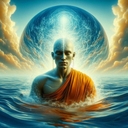
+Opening
| Evaṁ me sutaṁ— | So I have heard. | 如是我闻。 |
| ekaṁ samayaṁ bhagavā sāvatthiyaṁ viharati jetavane anāthapiṇḍikassa ārāme. | At one time the Buddha was staying near Sāvatthī in Jeta’s Grove, Anāthapiṇḍika’s monastery. | 一时,佛陀住在舍卫城祇树给孤独园。 |
| Atha kho sambahulānaṁ bhikkhūnaṁ pacchābhattaṁ piṇḍapātapaṭikkantānaṁ upaṭṭhānasālāyaṁ sannisinnānaṁ sannipatitānaṁ ayamantarākathā udapādi: | Then after the meal, on return from almsround, several monks sat together in the assembly hall and this discussion came up among them. | 饭后,从化缘回来,几位比丘坐在集会堂里,他们之间谈论起来。 |
| “acchariyaṁ, āvuso, abbhutaṁ, āvuso. | “It’s incredible, reverends, it’s amazing, | “诸位大德,真是不可思议,真是奇妙啊, |
| Yāvañcidaṁ tena bhagavatā jānatā passatā arahatā sammāsambuddhena kāyagatāsati bhāvitā bahulīkatā mahapphalā vuttā mahānisaṁsā”ti. | how the Blessed One, who knows and sees, the perfected one, the fully awakened Buddha has said that rememberfulness of the body, when developed and cultivated, is very fruitful and beneficial.” | 那位知者、见者,那位圆满者,那位完全觉悟的佛陀,竟然说身念处如果得到发展和修习,会非常硕果累累,非常有益。” |
| Ayañca hidaṁ tesaṁ bhikkhūnaṁ antarākathā vippakatā hoti, atha kho bhagavā sāyanhasamayaṁ paṭisallānā vuṭṭhito yena upaṭṭhānasālā tenupasaṅkami; | But their conversation was left unfinished. | 但他们的谈话尚未结束。 |
| upasaṅkamitvā paññatte āsane nisīdi. | Then the Buddha came out of retreat and went to the assembly hall. | 然后,佛陀从禅定中出来,前往集会堂。 |
| Nisajja kho bhagavā bhikkhū āmantesi: | He sat on the seat spread out and addressed the monks, | 他坐在铺好的座位上,对比丘们说: |
| “kāya nuttha, bhikkhave, etarahi kathāya sannisinnā, | “monks, what were you sitting talking about just now? | “比丘们,你们刚才坐着谈论什么呢? |
| kā ca pana vo antarākathā vippakatā”ti? | What conversation was left unfinished?” | 什么谈话没有结束?” |
| “Idha, bhante, amhākaṁ pacchābhattaṁ piṇḍapātapaṭikkantānaṁ upaṭṭhānasālāyaṁ sannisinnānaṁ sannipatitānaṁ ayamantarākathā udapādi: ‘acchariyaṁ, āvuso, abbhutaṁ, āvuso. Yāvañcidaṁ tena bhagavatā jānatā passatā arahatā sammāsambuddhena kāyagatāsati bhāvitā bahulīkatā mahapphalā vuttā mahānisaṁsā’ti. Ayaṁ kho no, bhante, antarākathā vippakatā, atha bhagavā anuppatto”ti. |
So the monks told him what they had been talking about. | 于是比丘们将他们谈论的内容告诉了他。 |
+119.1 – (kāya-gatā-sati: body immersed remembrance, first 6 same as in MN 10 except with jhāna concurrent)
all
| ♦ 154. “kathaṃ bhāvitā ca, bhikkhave, kāyagatāsati kathaṃ bahulīkatā mahapphalā hoti mahānisaṃsā? | (The Blessed One said:) “And how is remembering [and applying Dharma] while immersed in the body developed, how is it pursued, so as to be of great fruit & great benefit? | (世尊说:)“身念处如何发展,如何修行,才能带来巨大的果报和巨大的利益呢? |
+§1.1 – (first 4 steps of 16🌬️😤)
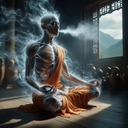
| idha, bhikkhave, bhikkhu | “There is the case where a monk | “有一种情况,一位比丘 |
| [0.1] 🏞️ arañña-gato vā | [0.1] has gone to the wilderness, or | [0.1] 已前往荒野,或 |
| 🌲 rukkha-mūla-gato vā | to a root of a tree, or | 前往树根下,或 |
| 🏕️ suññā-(a)gāra-gato vā | to an empty dwelling. | 前往空屋。 |
| [0.2] nisīdati | [0.2] They sit down, | [0.2] 他们坐下, |
| [0.3] 🧘 pallaṅkaṃ ābhujitvā | [0.3] bending into a cross leg posture, | [0.3] 弯曲成盘腿姿势, |
| [0.4] 🏃📐 ujuṃ kāyaṃ paṇidhāya | [0.4] straightening the body. | [0.4] 端正身体。 |
| [0.5] 🌬️😤 pari-mukhaṃ satiṃ upaṭṭhapetvā. | [0.5] They establish remembrance [of ☸Dharma] in front [, making Dharma their main focus]. | [0.5] 他们在面前建立对[☸法]的忆念[,使法成为他们的主要焦点]。 |
| [0.6] 🐘 So sato-va assasati, | [0.6] Always remembering [and applying ☸Dharma], he breathes in. | [0.6] 始终忆念[并应用☸法],他吸气。 |
| Sato-va passasati | Always “mindful” of [and applying ☸Dharma], he breathes out. | 始终"正念"于[并应用☸法],他呼气。 |
| Dīghaṃ vā assasanto ‘dīghaṃ assasāmī’ti pajānāti, | (1a) When breathing in long, he discerns that: 'I am breathing in long.' | (1a) 当吸气长时,他辨知:'我正在吸气长。' |
| dīghaṃ vā passasanto ‘dīghaṃ passasāmī’ti pajānāti; | (1b) When breathing out long, he discerns that: 'I am breathing out long.' | (1b) 当呼气长时,他辨知:'我正在呼气长。' |
| rassaṃ vā assasanto ‘rassaṃ assasāmī’ti pajānāti, | (2a) When breathing in short, he discerns that: 'I am breathing in short.' | (2a) 当吸气短时,他辨知:'我正在吸气短。' |
| rassaṃ vā passasanto ‘rassaṃ passasāmī’ti pajānāti; | (2b) When breathing out short, he discerns that: 'I am breathing out short.' | (2b) 当呼气短时,他辨知:'我正在呼气短。' |
| 🏃 ‘sabba-kāya-p-paṭisaṃvedī assasissāmī’ti sikkhati, | (3a) They train themselves, [thinking]: 'I will breathe in sensitive to the entire [physical] body.’ | (3a) 他们训练自己,[想着]:'我将吸气时感知整个[物质]身体。' |
| 🏃 ‘sabba-kāya-p-paṭisaṃvedī passasissāmī’ti sikkhati; | (3b) They train themselves, [thinking]: 'I will breathe out sensitive to the entire [physical] body.’ | (3b) 他们训练自己,[想着]:'我将呼气时感知整个[物质]身体。' |
| 🌊🏃 ‘passambhayaṃ kāya-saṅkhāraṃ assasissāmī’ti sikkhati, | (4a) They train themselves, [thinking]: 'I will breathe in pacifying bodily co-activities [which underlie what we experience as a physical body]. | (4a) 他们训练自己,[想着]:'我将吸气时平息身体共同活动[这是我们体验为物质身体的基础]。 |
| 🌊🏃 ‘passambhayaṃ kāya-saṅkhāraṃ passasissāmī’ti sikkhati. | (4b) They train themselves, [thinking]: 'I will breathe out pacifying bodily co-activities [which underlie what we experience as a physical body]. | (4b) 他们训练自己,[想着]:'我将呼气时平息身体共同活动[这是我们体验为物质身体的基础]。 |
| tassa evaṃ appamattassa ātāpino pahitattassa viharato | As they live like this, assiduous, ardent [in right effort], and resolute, | 他的生活勤奋、精进(于正精进)和坚定。 |
| ye gehasitā sara-saṅkappā te pahīyanti. | Any household memories-and-resolves are abandoned. | 任何家庭的记忆和决心都被舍弃了。 |
| tesaṃ pahānā | And with their abandoning, | 随着它们的舍弃, |
| ajjhattam-eva cittaṃ | Internally - his mind | 内在,他的心 |
| san-tiṭṭhati san-nisīdati | gathers and settles, | 聚集和安定, |
| ekodi hoti samādhiyati. | is singular [in focus], undistractible-and-lucid [in the four jhānas]. | 是单一的(专注),不散乱而明晰。 |
| evaṃ, bhikkhave, bhikkhu kāyagatā-satiṃ bhāveti. | This is how a monk remembers [and applies ☸Dharma] while immersed in the body. | 这就是比丘在沉浸于(身体)中时忆念(并运用佛法)的方式。 |
❧
+§1.2 – (Four postures)
| Puna caparaṁ, bhikkhave, bhikkhu | Furthermore, when a monk | 此外,当比丘 |
| gacchanto vā ‘gacchāmī’ti pajānāti, | is walking they discern that ‘I am walking’. | 行走时,他知道“我正在行走”。 |
| ṭhito vā ‘ṭhitomhī’ti pajānāti, | When standing they discern that ‘I am standing’. | 站立时,他知道“我正在站立”。 |
| nisinno vā ‘nisinnomhī’ti pajānāti, | When sitting they discern that ‘I am sitting’. | 坐下时,他知道“我正在坐下”。 |
| sayāno vā ‘sayānomhī’ti pajānāti. | And when lying down they discern that ‘I am lying down’. | 躺下时,他知道“我正在躺下”。 |
| Yathā yathā vā panassa kāyo paṇihito hoti tathā tathā naṁ pajānāti. | Whatever posture their body is in, they discern that. | 无论身体处于何种姿势,他都知道。 |
| tassa evaṃ appamattassa ātāpino pahitattassa viharato | As they live like this, assiduous, ardent [in right effort], and resolute, | 他的生活勤奋、精进(于正精进)和坚定。 |
| ye gehasitā sara-saṅkappā te pahīyanti. | Any household memories-and-resolves are abandoned. | 任何家庭的记忆和决心都被舍弃了。 |
| tesaṃ pahānā | And with their abandoning, | 随着它们的舍弃, |
| ajjhattam-eva cittaṃ | Internally - his mind | 内在,他的心 |
| san-tiṭṭhati san-nisīdati | gathers and settles, | 聚集和安定, |
| ekodi hoti samādhiyati. | is singular [in focus], undistractible-and-lucid [in the four jhānas]. | 是单一的(专注),不散乱而明晰。 |
| evaṃ, bhikkhave, bhikkhu kāyagatā-satiṃ bhāveti. | This is how a monk remembers [and applies ☸Dharma] while immersed in the body. | 这就是比丘在沉浸于(身体)中时忆念(并运用佛法)的方式。 |
+§1.3 – (3. S&S remembering and lucid-discerning)
| ♦ “puna caparaṃ, bhikkhave, bhikkhu | “And further, | “再者, |
| Abhik-kante paṭik-kante | when going out and coming back | 出行与归来时, |
| Sam-pajāna-kārī hoti, | he does that with lucid-discerning. | 他以清醒的觉知而行。 |
| ālokite vilokite | When Looking-ahead (and) looking-aside, | 向前看与向旁看时, |
| Sam-pajāna-kārī hoti, | he does that with lucid-discerning. | 他以清醒的觉知而行。 |
| samiñjite pasārite | when bending and extending (his limbs), | 弯曲与伸展(肢体)时, |
| Sam-pajāna-kārī hoti, | he does that with lucid-discerning. | 他以清醒的觉知而行。 |
| Saṅghāṭi-patta-cīvara-dhāraṇe | when bearing the outer robe, bowl and robes; | 披着外衣、持钵与着衣时, |
| Sam-pajāna-kārī hoti, | he does that with lucid-discerning. | 他以清醒的觉知而行。 |
| asite pīte khāyite sāyite | when eating, drinking, chewing, and tasting; | 饮食、咀嚼与品味时, |
| Sam-pajāna-kārī hoti, | he does that with lucid-discerning. | 他以清醒的觉知而行。 |
| Uccāra-passāva-kamme | when urinating and defecating; | 大小便时, |
| Sam-pajāna-kārī hoti, | he does that with lucid-discerning. | 他以清醒的觉知而行。 |
| gate ṭhite | when walking, standing, | 行走、站立、 |
| nisinne sutte | sitting, lying down, | 坐着、躺卧、 |
| jāgarite bhāsite tuṇhībhāve | waking, speaking, and keeping silent, | 醒来、说话与保持沉默时, |
| Sam-pajāna-kārī hoti, | he does that with lucid-discerning. | 他以清醒的觉知而行。 |
| tassa evaṃ appamattassa ātāpino pahitattassa viharato | As they live like this, assiduous, ardent [in right effort], and resolute, | 他的生活勤奋、精进(于正精进)和坚定。 |
| ye gehasitā sara-saṅkappā te pahīyanti. | Any household memories-and-resolves are abandoned. | 任何家庭的记忆和决心都被舍弃了。 |
| tesaṃ pahānā | And with their abandoning, | 随着它们的舍弃, |
| ajjhattam-eva cittaṃ | Internally - his mind | 内在,他的心 |
| san-tiṭṭhati san-nisīdati | gathers and settles, | 聚集和安定, |
| ekodi hoti samādhiyati. | is singular [in focus], undistractible-and-lucid [in the four jhānas]. | 是单一的(专注),不散乱而明晰。 |
| evaṃ, bhikkhave, bhikkhu kāyagatā-satiṃ bhāveti. | This is how a monk remembers [and applies ☸Dharma] while immersed in the body. | 这就是比丘在沉浸于(身体)中时忆念(并运用佛法)的方式。 |
❧
+§1.4 – (31asb: asubha, 31 body parts)
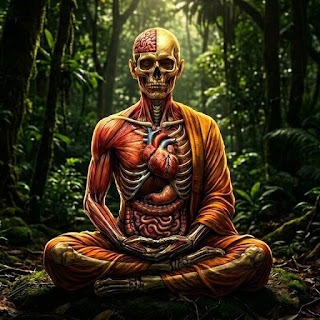
| ♦ “puna caparaṃ, bhikkhave, bhikkhu | “And further, the monk [does this practice]: | |
| Imam-eva kāyaṃ | In this very body, | 就在這個身體當中, |
| uddhaṃ pāda-talā | from the base of the feet | 從腳底 |
| adho kesa-matthakā | to the hair on top of the head, | 到頭頂的髮, |
| Taca-pariyantaṃ | all enclosed in skin | 整個被皮膚包覆, |
| pūraṃ nāna-p-pakārassa A-sucino | and filled with many kinds of impure things. | 充滿了各種不淨之物。 |
| paccavekkhati: | they equanimously-observe that: | 他們平靜地觀察到: |
| ‘atthi imasmiṃ kāye | "In this body there are | 「這個身體裡有 |
| kesā lomā nakhā dantā taco, | Head hairs, body hairs, nails, teeth, skin, | 頭髮、體毛、指甲、牙齒、皮膚, |
| maṃsaṃ nhāru aṭṭhi aṭṭhi-miñjaṃ vakkaṃ, | flesh, sinews, bones, bone-marrow, kidneys, | 肌肉、筋腱、骨骼、骨髓、腎臟, |
| hadayaṃ yakanaṃ kilomakaṃ pihakaṃ papphāsaṃ, | heart, liver, flesh and organ membranes, spleen, lungs, | 心臟、肝臟、肌膜與器官薄膜、脾臟、肺臟, |
| antaṃ antaguṇaṃ udariyaṃ karīsaṃ, | intestines, intestine membrane, stomach mush, feces, | 腸子、腸膜、胃中食糜、糞便, |
| pittaṃ semhaṃ pubbo lohitaṃ sedo medo, | bile, phlegm, pus, blood, sweat, fat, | 膽汁、痰液、膿、血液、汗水、脂肪, |
| assu vasā kheḷo siṅghāṇikā lasikā muttan’ti. | tears, skin-oil, saliva, snot, fluid in the joints, urine." | 眼淚、皮脂、唾液、鼻涕、關節液、尿液。」 |
| Seyyathāpi, bhikkhave, | It’s as if there were | 就好比有一個 |
| ubhatomukhā putoḷi | a bag with openings at both ends, | 兩端開口的袋子, |
| pūrā nānāvihitassa dhaññassa, | filled with various kinds of grains, | 裡面裝滿了各種穀物, |
| seyyathidaṁ—sālīnaṁ vīhīnaṁ muggānaṁ | such as fine rice, wheat, mung beans, | 例如精米、小麥、綠豆、 |
| māsānaṁ tilānaṁ taṇḍulānaṁ. | peas, sesame, and ordinary rice. | 豌豆、芝麻,以及普通稻米。 |
| Tamenaṁ cakkhumā puriso muñcitvā paccavekkheyya: | And a person with clear eyes were to open it and examine the contents: | 一個眼力清晰的人打開它,察看裡面的東西: |
| ‘ime sālī ime vīhī ime muggā | ‘These grains are fine rice, these are wheat, these are mung beans, | 「這些是精米,這些是小麥,這些是綠豆, |
| ime māsā ime tilā ime taṇḍulā’ti. | these are peas, these are sesame, and these are ordinary rice.’ | 這些是豌豆,這些是芝麻,這些是普通稻米。」 |
| evameva kho, bhikkhave, bhikkhu | In the same way, | |
| Imam-eva kāyaṃ | In this very body, | 就在這個身體當中, |
| uddhaṃ pāda-talā | from the base of the feet | 從腳底 |
| adho kesa-matthakā | to the hair on top of the head, | 到頭頂的髮, |
| Taca-pariyantaṃ | all enclosed in skin | 整個被皮膚包覆, |
| pūraṃ nāna-p-pakārassa A-sucino | and filled with many kinds of impure things. | 充滿了各種不淨之物。 |
| paccavekkhati: | they equanimously-observe that: | 他們平靜地觀察到: |
| ‘atthi imasmiṃ kāye | "In this body there are | 「這個身體裡有 |
| kesā lomā nakhā dantā taco, | Head hairs, body hairs, nails, teeth, skin, | 頭髮、體毛、指甲、牙齒、皮膚, |
| maṃsaṃ nhāru aṭṭhi aṭṭhi-miñjaṃ vakkaṃ, | flesh, sinews, bones, bone-marrow, kidneys, | 肌肉、筋腱、骨骼、骨髓、腎臟, |
| hadayaṃ yakanaṃ kilomakaṃ pihakaṃ papphāsaṃ, | heart, liver, flesh and organ membranes, spleen, lungs, | 心臟、肝臟、肌膜與器官薄膜、脾臟、肺臟, |
| antaṃ antaguṇaṃ udariyaṃ karīsaṃ, | intestines, intestine membrane, stomach mush, feces, | 腸子、腸膜、胃中食糜、糞便, |
| pittaṃ semhaṃ pubbo lohitaṃ sedo medo, | bile, phlegm, pus, blood, sweat, fat, | 膽汁、痰液、膿、血液、汗水、脂肪, |
| assu vasā kheḷo siṅghāṇikā lasikā muttan’ti. | tears, skin-oil, saliva, snot, fluid in the joints, urine." | 眼淚、皮脂、唾液、鼻涕、關節液、尿液。」 |
| tassa evaṃ appamattassa ātāpino pahitattassa viharato | As they live like this, assiduous, ardent [in right effort], and resolute, | 他的生活勤奋、精进(于正精进)和坚定。 |
| ye gehasitā sara-saṅkappā te pahīyanti. | Any household memories-and-resolves are abandoned. | 任何家庭的记忆和决心都被舍弃了。 |
| tesaṃ pahānā | And with their abandoning, | 随着它们的舍弃, |
| ajjhattam-eva cittaṃ | Internally - his mind | 内在,他的心 |
| san-tiṭṭhati san-nisīdati | gathers and settles, | 聚集和安定, |
| ekodi hoti samādhiyati. | is singular [in focus], undistractible-and-lucid [in the four jhānas]. | 是单一的(专注),不散乱而明晰。 |
| evaṃ, bhikkhave, bhikkhu kāyagatā-satiṃ bhāveti. | This is how a monk remembers [and applies ☸Dharma] while immersed in the body. | 这就是比丘在沉浸于(身体)中时忆念(并运用佛法)的方式。 |
❧
+§1.5 – (Four elements)

| ♦ “puna caparaṃ, bhikkhave, bhikkhu imameva kāyaṃ yathāṭhitaṃ yathāpaṇihitaṃ dhātuso paccavekkhati — ‘atthi imasmiṃ kāye pathavīdhātu āpodhātu tejodhātu vāyodhātū’ti. | “And further, the monk contemplates this very body—however it stands, however it is disposed—in terms of properties: ‘In this body there is the earth property, the liquid property, the fire property, & the wind property.’ | “再者,比丘观察这具身体——无论它如何站立,如何安置——就其特性而言:‘在这具身体里有地大、水大、火大和风大。’ |

| ♦ “seyyathāpi, bhikkhave, dakkho goghātako vā goghātakantevāsī vā gāviṃ vadhitvā catumahāpathe VAR bilaso vibhajitvā VAR nisinno assa; | Just as a dexterous butcher or his apprentice, having killed a cow, would sit at a crossroads cutting it up into pieces, | 正如一个熟练的屠夫或他的学徒,宰杀一头牛后,会坐在十字路口将其切成块, |
| evameva kho, bhikkhave, bhikkhu imameva kāyaṃ yathāṭhitaṃ yathāpaṇihitaṃ dhātuso paccavekkhati — ‘atthi imasmiṃ kāye pathavīdhātu āpodhātu tejodhātu vāyodhātū’ti. | the monk contemplates this very body—however it stands, however it is disposed—in terms of properties: ‘In this body there is the earth property, the liquid property, the fire property, & the wind property.’ | 比丘观察这具身体——无论它如何站立,如何安置——就其特性而言:‘在这具身体里有地大、水大、火大和风大。’ |
| tassa evaṃ appamattassa ātāpino pahitattassa viharato | As they live like this, assiduous, ardent [in right effort], and resolute, | 他的生活勤奋、精进(于正精进)和坚定。 |
| ye gehasitā sara-saṅkappā te pahīyanti. | Any household memories-and-resolves are abandoned. | 任何家庭的记忆和决心都被舍弃了。 |
| tesaṃ pahānā | And with their abandoning, | 随着它们的舍弃, |
| ajjhattam-eva cittaṃ | Internally - his mind | 内在,他的心 |
| san-tiṭṭhati san-nisīdati | gathers and settles, | 聚集和安定, |
| ekodi hoti samādhiyati. | is singular [in focus], undistractible-and-lucid [in the four jhānas]. | 是单一的(专注),不散乱而明晰。 |
| evaṃ, bhikkhave, bhikkhu kāyagatā-satiṃ bhāveti. | This is how a monk remembers [and applies ☸Dharma] while immersed in the body. | 这就是比丘在沉浸于(身体)中时忆念(并运用佛法)的方式。 |
+§1.6 – (9siv: Nine stages of corpse decomposition)
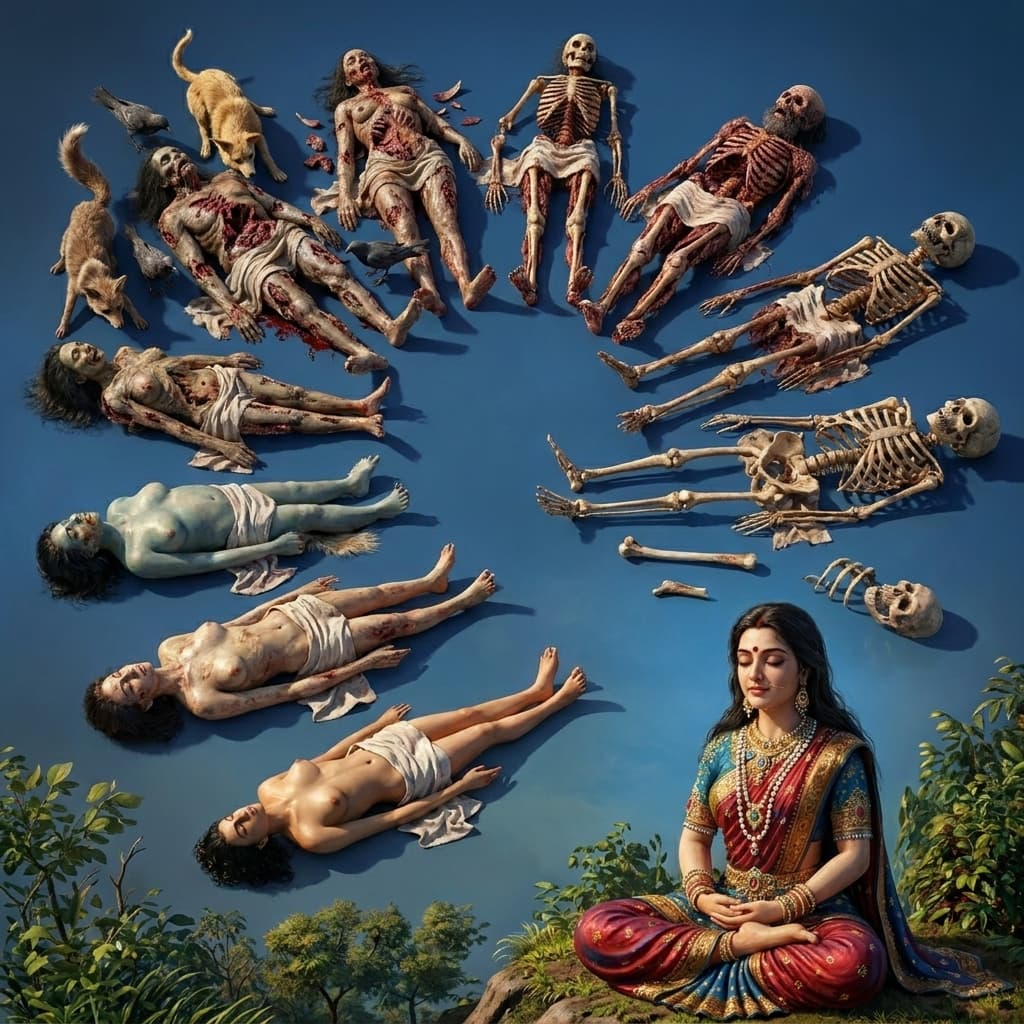
9siv⚰️: Kāy'-ānu-passanā-nava-sivathika-pabba
body contemplation of 9 charnel ground section
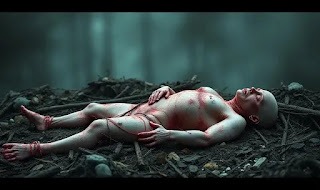
| Puna caparaṁ, bhikkhave, bhikkhu seyyathāpi | Furthermore, suppose a monk | 再者,假設有一位修行者 |
| passeyya sarīraṁ sivathikāya chaḍḍitaṁ | were to see a corpse discarded in a charnel ground. | 看見了一具被丟棄在墓地的屍體, |
| ekāhamataṁ vā dvīhamataṁ vā tīhamataṁ vā uddhumātakaṁ vinīlakaṁ vipubbakajātaṁ. | And it had been dead for one, two, or three days, bloated, livid, and festering. | 這具屍體已死去一天、兩天或三天,腫脹、發青、腐臭。 |
| So imameva kāyaṁ upasaṁharati: | They’d compare it with their own body: | 他就拿自己的身體來對照: |
| ‘ayampi kho kāyo | ‘This body is also | 「這個身體也一樣, |
| evaṁdhammo | subject to the same natural Dharma laws, | 同樣受制於自然規律, |
| evaṁbhāvī | will have the same fate, | 將會有同樣的結局, |
| evaṁanatīto’ti. | and cannot avoid this.’ | 無法避免這一切。」 |
| tassa evaṃ appamattassa ātāpino pahitattassa viharato | As they live like this, assiduous, ardent [in right effort], and resolute, | 他的生活勤奋、精进(于正精进)和坚定。 |
| ye gehasitā sara-saṅkappā te pahīyanti. | Any household memories-and-resolves are abandoned. | 任何家庭的记忆和决心都被舍弃了。 |
| tesaṃ pahānā | And with their abandoning, | 随着它们的舍弃, |
| ajjhattam-eva cittaṃ | Internally - his mind | 内在,他的心 |
| san-tiṭṭhati san-nisīdati | gathers and settles, | 聚集和安定, |
| ekodi hoti samādhiyati. | is singular [in focus], undistractible-and-lucid [in the four jhānas]. | 是单一的(专注),不散乱而明晰。 |
| evaṃ, bhikkhave, bhikkhu kāyagatā-satiṃ bhāveti. | This is how a monk remembers [and applies ☸Dharma] while immersed in the body. | 这就是比丘在沉浸于(身体)中时忆念(并运用佛法)的方式。 |
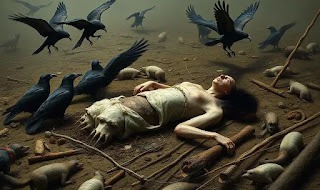
| Puna caparaṁ, bhikkhave, bhikkhu seyyathāpi | Furthermore, suppose a monk | 再者,假設有一位修行者 |
| passeyya sarīraṁ sivathikāya chaḍḍitaṁ | were to see a corpse discarded in a charnel ground. | 看見了一具被丟棄在墓地的屍體, |
| kākehi vā khajjamānaṁ | being devoured by crows, | 正被烏鴉啄食, |
| kulalehi vā khajjamānaṁ | hawks, | 被鷹啄食, |
| gijjhehi vā khajjamānaṁ | vultures, | 被禿鷲啄食, |
| kaṅkehi vā khajjamānaṁ | herons, | 被蒼鷺啄食, |
| sunakhehi vā khajjamānaṁ | hounds, | 被狗啃食, |
| byagghehi vā khajjamānaṁ | tigers, | 被老虎撕咬, |
| dīpīhi vā khajjamānaṁ | leopards, | 被豹子撕咬, |
| siṅgālehi vā khajjamānaṁ | jackals, | 被豺狼啃食, |
| vividhehi vā pāṇakajātehi khajjamānaṁ. | and many kinds of little creatures. | 以及被各種小動物侵食。 |
| So imameva kāyaṁ upasaṁharati: | They’d compare it with their own body: | 他就拿自己的身體來對照: |
| ‘ayampi kho kāyo | ‘This body is also | 「這個身體也一樣, |
| evaṁdhammo | subject to the same natural Dharma laws, | 同樣受制於自然規律, |
| evaṁbhāvī | will have the same fate, | 將會有同樣的結局, |
| evaṁanatīto’ti. | and cannot avoid this.’ | 無法避免這一切。」 |
| Tassa evaṁ appamattassa …pe… evampi, bhikkhave, bhikkhu kāyagatāsatiṁ bhāveti. | They live assiduously, doing this exercise with 4 jhānas quality of samādhi... | 他們勤奮地修行,以具備四禪品質的定力,進行這個練習…… |
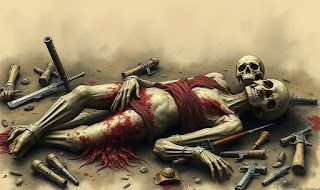
| Puna caparaṁ, bhikkhave, bhikkhu seyyathāpi | Furthermore, suppose a monk | 再者,假設有一位修行者 |
| passeyya sarīraṁ sivathikāya chaḍḍitaṁ | were to see a corpse discarded in a charnel ground. | 看見了一具被丟棄在墓地的屍體, |
| aṭṭhikasaṅkhalikaṁ samaṁsalohitaṁ nhārusambandhaṁ …pe… | a skeleton with flesh and blood, held together by sinews … | 是一副帶有肉與血、由筋腱連接的骨骼…… |
| So imameva kāyaṁ upasaṁharati: | They’d compare it with their own body: | 他就拿自己的身體來對照: |
| ‘ayampi kho kāyo | ‘This body is also | 「這個身體也一樣, |
| evaṁdhammo | subject to the same natural Dharma laws, | 同樣受制於自然規律, |
| evaṁbhāvī | will have the same fate, | 將會有同樣的結局, |
| evaṁanatīto’ti. | and cannot avoid this.’ | 無法避免這一切。」 |
| Tassa evaṁ appamattassa …pe… evampi, bhikkhave, bhikkhu kāyagatāsatiṁ bhāveti. | They live assiduously, doing this exercise with 4 jhānas quality of samādhi... | 他們勤奮地修行,以具備四禪品質的定力,進行這個練習…… |
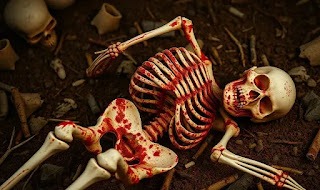
| Puna caparaṁ, bhikkhave, bhikkhu seyyathāpi | Furthermore, suppose a monk | 再者,假設有一位修行者 |
| passeyya sarīraṁ sivathikāya chaḍḍitaṁ | were to see a corpse discarded in a charnel ground. | 看見了一具被丟棄在墓地的屍體, |
| Aṭṭhikasaṅkhalikaṁ nimaṁsalohitamakkhitaṁ nhārusambandhaṁ …pe… | A skeleton without flesh but smeared with blood, and held together by sinews … | 是一副沒有肉但沾著血、由筋腱連接的骨骼…… |
| So imameva kāyaṁ upasaṁharati: | They’d compare it with their own body: | 他就拿自己的身體來對照: |
| ‘ayampi kho kāyo | ‘This body is also | 「這個身體也一樣, |
| evaṁdhammo | subject to the same natural Dharma laws, | 同樣受制於自然規律, |
| evaṁbhāvī | will have the same fate, | 將會有同樣的結局, |
| evaṁanatīto’ti. | and cannot avoid this.’ | 無法避免這一切。」 |
| Tassa evaṁ appamattassa …pe… evampi, bhikkhave, bhikkhu kāyagatāsatiṁ bhāveti. | They live assiduously, doing this exercise with 4 jhānas quality of samādhi... | 他們勤奮地修行,以具備四禪品質的定力,進行這個練習…… |

| Puna caparaṁ, bhikkhave, bhikkhu seyyathāpi | Furthermore, suppose a monk | 再者,假設有一位修行者 |
| passeyya sarīraṁ sivathikāya chaḍḍitaṁ | were to see a corpse discarded in a charnel ground. | 看見了一具被丟棄在墓地的屍體, |
| Aṭṭhikasaṅkhalikaṁ apagatamaṁsalohitaṁ nhārusambandhaṁ …pe… | A skeleton rid of flesh and blood, held together by sinews … | 是一副既無肉又無血、由筋腱連接的骨骼…… |
| So imameva kāyaṁ upasaṁharati: | They’d compare it with their own body: | 他就拿自己的身體來對照: |
| ‘ayampi kho kāyo | ‘This body is also | 「這個身體也一樣, |
| evaṁdhammo | subject to the same natural Dharma laws, | 同樣受制於自然規律, |
| evaṁbhāvī | will have the same fate, | 將會有同樣的結局, |
| evaṁanatīto’ti. | and cannot avoid this.’ | 無法避免這一切。」 |
| Tassa evaṁ appamattassa …pe… evampi, bhikkhave, bhikkhu kāyagatāsatiṁ bhāveti. | They live assiduously, doing this exercise with 4 jhānas quality of samādhi... | 他們勤奮地修行,以具備四禪品質的定力,進行這個練習…… |

| Puna caparaṁ, bhikkhave, bhikkhu seyyathāpi | Furthermore, suppose a monk | 再者,假設有一位修行者 |
| passeyya sarīraṁ sivathikāya chaḍḍitaṁ | were to see a corpse discarded in a charnel ground. | 看見了一具被丟棄在墓地的屍體, |
| Aṭṭhikāni apagatasambandhāni disā vidisā vikkhittāni, | Bones rid of sinews scattered in every direction. | 骨骼失去了筋腱的連結,散落各處。 |
| aññena hatthaṭṭhikaṁ | Here a hand-bone, | 這裡一塊手骨, |
| aññena pādaṭṭhikaṁ | there a foot-bone, | 那裡一塊腳骨, |
| aññena gopphakaṭṭhikaṁ | here an ankle bone, | 這裡一塊踝骨, |
| aññena jaṅghaṭṭhikaṁ | there a shin-bone, | 那裡一塊脛骨, |
| aññena ūruṭṭhikaṁ | here a thigh-bone, | 這裡一塊大腿骨, |
| aññena kaṭiṭṭhikaṁ | there a hip-bone, | 那裡一塊髖骨, |
| aññena phāsukaṭṭhikaṁ | here a rib-bone, | 這裡一塊肋骨, |
| aññena piṭṭhiṭṭhikaṁ | there a back-bone, | 那裡一塊脊椎骨, |
| aññena khandhaṭṭhikaṁ | here an arm-bone, | 這裡一塊手臂骨, |
| aññena gīvaṭṭhikaṁ | there a neck-bone, | 那裡一塊頸骨, |
| aññena hanukaṭṭhikaṁ | here a jaw-bone, | 這裡一塊下顎骨, |
| aññena dantaṭṭhikaṁ | there a tooth, | 那裡一顆牙齒, |
| aññena sīsakaṭāhaṁ. | here the skull. … | 這裡一個頭蓋骨…… |
| So imameva kāyaṁ upasaṁharati: | They’d compare it with their own body: | 他就拿自己的身體來對照: |
| ‘ayampi kho kāyo | ‘This body is also | 「這個身體也一樣, |
| evaṁdhammo | subject to the same natural Dharma laws, | 同樣受制於自然規律, |
| evaṁbhāvī | will have the same fate, | 將會有同樣的結局, |
| evaṁanatīto’ti. | and cannot avoid this.’ | 無法避免這一切。」 |
| Tassa evaṁ appamattassa …pe… evampi, bhikkhave, bhikkhu kāyagatāsatiṁ bhāveti. | They live assiduously, doing this exercise with 4 jhānas quality of samādhi... | 他們勤奮地修行,以具備四禪品質的定力,進行這個練習…… |

| Puna caparaṁ, bhikkhave, bhikkhu seyyathāpi | Furthermore, suppose a monk | 再者,假設有一位修行者 |
| passeyya sarīraṁ sivathikāya chaḍḍitaṁ | were to see a corpse discarded in a charnel ground. | 看見了一具被丟棄在墓地的屍體, |
| aṭṭhikāni setāni saṅkhavaṇṇapaṭibhāgāni …pe… | White bones, the color of shells … | 白骨,顏色如貝殼…… |
| So imameva kāyaṁ upasaṁharati: | They’d compare it with their own body: | 他就拿自己的身體來對照: |
| ‘ayampi kho kāyo | ‘This body is also | 「這個身體也一樣, |
| evaṁdhammo | subject to the same natural Dharma laws, | 同樣受制於自然規律, |
| evaṁbhāvī | will have the same fate, | 將會有同樣的結局, |
| evaṁanatīto’ti. | and cannot avoid this.’ | 無法避免這一切。」 |
| Tassa evaṁ appamattassa …pe… evampi, bhikkhave, bhikkhu kāyagatāsatiṁ bhāveti. | They live assiduously, doing this exercise with 4 jhānas quality of samādhi... | 他們勤奮地修行,以具備四禪品質的定力,進行這個練習…… |
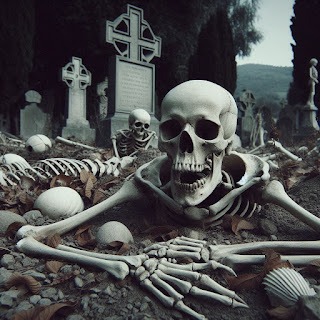
| Puna caparaṁ, bhikkhave, bhikkhu seyyathāpi | Furthermore, suppose a monk | 再者,假設有一位修行者 |
| passeyya sarīraṁ sivathikāya chaḍḍitaṁ | were to see a corpse discarded in a charnel ground. | 看見了一具被丟棄在墓地的屍體, |
| Aṭṭhikāni puñjakitāni terovassikāni …pe… | Decrepit bones, heaped in a pile … | 朽骨,堆積成堆…… |
| So imameva kāyaṁ upasaṁharati: | They’d compare it with their own body: | 他就拿自己的身體來對照: |
| ‘ayampi kho kāyo | ‘This body is also | 「這個身體也一樣, |
| evaṁdhammo | subject to the same natural Dharma laws, | 同樣受制於自然規律, |
| evaṁbhāvī | will have the same fate, | 將會有同樣的結局, |
| evaṁanatīto’ti. | and cannot avoid this.’ | 無法避免這一切。」 |
| Tassa evaṁ appamattassa …pe… evampi, bhikkhave, bhikkhu kāyagatāsatiṁ bhāveti. | They live assiduously, doing this exercise with 4 jhānas quality of samādhi... | 他們勤奮地修行,以具備四禪品質的定力,進行這個練習…… |

| Puna caparaṁ, bhikkhave, bhikkhu seyyathāpi | Furthermore, suppose a monk | 再者,假設有一位修行者 |
| passeyya sarīraṁ sivathikāya chaḍḍitaṁ | were to see a corpse discarded in a charnel ground. | 看見了一具被丟棄在墓地的屍體, |
| Aṭṭhikāni pūtīni cuṇṇakajātāni. | Bones rotted and crumbled to powder. | 骨骼腐爛,碎成粉末。 |
| So imameva kāyaṁ upasaṁharati: | They’d compare it with their own body: | 他就拿自己的身體來對照: |
| ‘ayampi kho kāyo | ‘This body is also | 「這個身體也一樣, |
| evaṁdhammo | subject to the same natural Dharma laws, | 同樣受制於自然規律, |
| evaṁbhāvī | will have the same fate, | 將會有同樣的結局, |
| evaṁanatīto’ti. | and cannot avoid this.’ | 無法避免這一切。」 |
| tassa evaṃ appamattassa ātāpino pahitattassa viharato | As they live like this, assiduous, ardent [in right effort], and resolute, | 他的生活勤奋、精进(于正精进)和坚定。 |
| ye gehasitā sara-saṅkappā te pahīyanti. | Any household memories-and-resolves are abandoned. | 任何家庭的记忆和决心都被舍弃了。 |
| tesaṃ pahānā | And with their abandoning, | 随着它们的舍弃, |
| ajjhattam-eva cittaṃ | Internally - his mind | 内在,他的心 |
| san-tiṭṭhati san-nisīdati | gathers and settles, | 聚集和安定, |
| ekodi hoti samādhiyati. | is singular [in focus], undistractible-and-lucid [in the four jhānas]. | 是单一的(专注),不散乱而明晰。 |
| evaṃ, bhikkhave, bhikkhu kāyagatā-satiṃ bhāveti. | This is how a monk remembers [and applies ☸Dharma] while immersed in the body. | 这就是比丘在沉浸于(身体)中时忆念(并运用佛法)的方式。 |
❧
+§1.7 – (4 jhānas + similes)
all
+§7.1 – (first jhāna ↔ bathman making ball of soap powder)
| “puna caparaṃ, bhikkhave, bhikkhu | Furthermore, | 再者, |
| 🚫💑 vivicc’eva kāmehi | Judiciously-secluded from desire for five cords of sensual pleasures, | 谨慎地远离对五欲之乐的贪欲 |
| 🚫😠 vivicca a-kusalehi dhammehi | Judiciously-secluded from unskillful ☸Dharmas, | 谨慎地远离不善巧的法, |
| (V&V💭) sa-vitakkaṃ sa-vicāraṃ | with directed-thought and evaluation [of those verbal ☸Dharma thoughts], | 以正思维和观察【那些言说的法语】, |
| 😁🙂 viveka-jaṃ pīti-sukhaṃ | with [mental] rapture and [physical] pleasure born from judicious-seclusion, | 以及由谨慎远离而生的【心意】狂喜和【身体】快乐, |
| 🌘 paṭhamaṃ jhānaṃ upasampajja viharati. | he attains and lives in first jhāna. | 他证得并安住于初禅。 |
| So | They | 他们 |
| imameva kāyaṃ vivekajena pītisukhena abhisandeti parisandeti paripūreti parippharati, | drench, steep, fill, and spread their body with mental-joy and pleasure born of seclusion. | 以离欲所生的喜乐浸透、浸润、充满、遍布全身。 |
| nāssa kiñci sabbāvato kāyassa vivekajena pītisukhena apphuṭaṃ hoti. | There’s no part of the body that’s not spread with mental-joy and pleasure born of seclusion. | 身体没有一处不被离欲所生的喜乐遍布。 |
| Seyyathāpi, bhikkhave, | It’s like when | 这就像 |
| dakkho nhāpako vā nhāpakantevāsī vā kaṃsathāle nhānīyacuṇṇāni ākiritvā udakena paripphosakaṃ paripphosakaṃ sanneyya, | an expert bathroom attendant or their apprentice pours bath powder into a bronze dish, sprinkling it little by little with water. | 一位专业的浴室服务员或他的学徒将沐浴粉倒入铜盘中,一点一点地洒水。 |
| sāyaṃ nhānīyapiṇḍi snehānugatā snehaparetā santarabāhirā phuṭā snehena, na ca paggharaṇī; | They knead it until the ball of bath powder is soaked and saturated with moisture, spread through inside and out; yet no moisture oozes out. | 他们揉搓,直到沐浴粉团被水分浸透、饱和,内外皆遍布;但没有水分渗出。 |
| evameva kho, bhikkhave, bhikkhave, | In the same way, a monk | 同样地,一位比丘 |
| imameva kāyaṃ vivekajena pītisukhena abhisandeti parisandeti paripūreti parippharati, | drenches, steeps, fills, and spreads their body with mental-joy and pleasure born of seclusion. | 以离欲所生的喜乐浸透、浸润、充满、遍布全身。 |
| nāssa kiñci sabbāvato kāyassa vivekajena pītisukhena apphuṭaṃ hoti. | There’s no part of the body that’s not spread with mental-joy and pleasure born of seclusion. | 身体没有一处不被离欲所生的喜乐遍布。 |
| tassa evaṃ appamattassa ātāpino pahitattassa viharato | As they live like this, assiduous, ardent [in right effort], and resolute, | 他的生活勤奋、精进(于正精进)和坚定。 |
| ye gehasitā sara-saṅkappā te pahīyanti. | Any household memories-and-resolves are abandoned. | 任何家庭的记忆和决心都被舍弃了。 |
| tesaṃ pahānā | And with their abandoning, | 随着它们的舍弃, |
| ajjhattam-eva cittaṃ | Internally - his mind | 内在,他的心 |
| san-tiṭṭhati san-nisīdati | gathers and settles, | 聚集和安定, |
| ekodi hoti samādhiyati. | is singular [in focus], undistractible-and-lucid [in the four jhānas]. | 是单一的(专注),不散乱而明晰。 |
| evaṃ, bhikkhave, bhikkhu kāyagatā-satiṃ bhāveti. | This is how a monk remembers [and applies ☸Dharma] while immersed in the body. | 这就是比丘在沉浸于(身体)中时忆念(并运用佛法)的方式。 |
❧
+§7.2 – (second jhāna ↔ lake with spring)
| “puna caparaṃ, bhikkhave, bhikkhu | again, monks, a monk | 再者,比丘们,一位比丘 |
| Vitakka-vicārānaṃ vūpasamā | with the subsiding of directed-thought and evaluation [of those verbal ☸Dharma thoughts], | 随着寻与伺[对这些言语化佛法思想的寻思与评估]的平息, |
| ajjhattaṃ sam-pasādanaṃ | with internal purity and self-confidence, | 内心纯净且自信, |
| 🌄 cetaso ekodi-bhāvaṃ | his mind becomes singular in focus. | 他的心变得专一。 |
| 🚫(V&V💭) a-vitakkaṃ a-vicāraṃ | Without directed-thought and evaluation, [mental processing is now subverbal,] | 无寻无伺,[心理处理现已转为非语言形式,] |
| 🌄😁🙂 samādhi-jaṃ pīti-sukhaṃ | [mental] rapture and [physical] pleasure is born from undistractible-lucidity, | 由不乱的明觉产生[心理]喜与[身体]乐, |
| 🌗 dutiyaṃ jhānaṃ upasampajja viharati. | he attains and lives in second jhāna. | 他成就并安住于二禅。 |
| So | In the same way, a monk | 同样地,一位比丘 |
| imameva kāyaṃ samādhijena pītisukhena abhisandeti parisandeti paripūreti parippharati, | drenches, steeps, fills, and spreads their body with mental-joy and pleasure born of undistractible-lucidity. | 以不散乱明晰所生的喜乐浸透、浸润、充满、遍布全身。 |
| nāssa kiñci sabbāvato kāyassa samādhijena pītisukhena apphuṭaṃ hoti. | There’s no part of the body that’s not spread with mental-joy and pleasure born of undistractible-lucidity. | 身体没有一处不被不散乱明晰所生的喜乐遍布。 |
| Seyyathāpi, bhikkhave, | It’s like | 这就像 |
| udakarahado gambhīro ubbhidodako | a deep lake fed by spring water. | 一个由泉水滋养的深湖。 |
| tassa nevassa puratthimāya disāya udakassa āyamukhaṃ, | There’s no inlet to the east, | 没有东、 |
| na dakkhiṇāya disāya udakassa āyamukhaṃ, | west, | 西、 |
| na pacchimāya disāya udakassa āyamukhaṃ, | north, | 北、 |
| na uttarāya disāya udakassa āyamukhaṃ, | or south, | 南的入水口, |
| devo ca na kālena kālaṃ sammādhāraṃ anuppaveccheyya. | and no rainfall to replenish it from time to time. | 也没有雨水不时补充。 |
| Atha kho tamhāva udakarahadā sītā vāridhārā ubbhijjitvā tameva udakarahadaṃ sītena vārinā abhisandeyya parisandeyya paripūreyya paripphareyya, | But the stream of cool water welling up in the lake drenches, steeps, fills, and spreads throughout the lake. | 但湖中涌出的凉水流浸透、浸润、充满、遍布整个湖泊。 |
| nāssa kiñci sabbāvato udakarahadassa sītena vārinā apphuṭaṃ assa. | There’s no part of the lake that’s not spread through with cool water. | 湖泊没有一处不被凉水遍布。 |
| Evameva kho, bhikkhave, bhikkhu | In the same way, a monk | 同样地,一位比丘 |
| imameva kāyaṃ samādhijena pītisukhena abhisandeti parisandeti paripūreti parippharati, | drenches, steeps, fills, and spreads their body with mental-joy and pleasure born of undistractible-lucidity. | 以不散乱明晰所生的喜乐浸透、浸润、充满、遍布全身。 |
| nāssa kiñci sabbāvato kāyassa samādhijena pītisukhena apphuṭaṃ hoti. | There’s no part of the body that’s not spread with mental-joy and pleasure born of undistractible-lucidity. | 身体没有一处不被不散乱明晰所生的喜乐遍布。 |
| tassa evaṃ appamattassa ātāpino pahitattassa viharato | As they live like this, assiduous, ardent [in right effort], and resolute, | 他的生活勤奋、精进(于正精进)和坚定。 |
| ye gehasitā sara-saṅkappā te pahīyanti. | Any household memories-and-resolves are abandoned. | 任何家庭的记忆和决心都被舍弃了。 |
| tesaṃ pahānā | And with their abandoning, | 随着它们的舍弃, |
| ajjhattam-eva cittaṃ | Internally - his mind | 内在,他的心 |
| san-tiṭṭhati san-nisīdati | gathers and settles, | 聚集和安定, |
| ekodi hoti samādhiyati. | is singular [in focus], undistractible-and-lucid [in the four jhānas]. | 是单一的(专注),不散乱而明晰。 |
| evaṃ, bhikkhave, bhikkhu kāyagatā-satiṃ bhāveti. | This is how a monk remembers [and applies ☸Dharma] while immersed in the body. | 这就是比丘在沉浸于(身体)中时忆念(并运用佛法)的方式。 |
❧
+§7.3 – (third jhāna ↔ lotus fully submerged in pool)
| “puna caparaṃ, bhikkhave, bhikkhu | again, monks, a monk | 再者,比丘们,一位比丘 |
| 🚫😁 pītiyā ca virāgā | With [mental] rapture fading, | 随着[心理]喜的淡去, |
| 👁 upekkhako ca viharati | he lives equanimously observing [☸Dharmas with subverbal mental processing]. | 他安住于舍,观察着[以非语言的心理处理观察诸法]。 |
| (S&S🐘💭) sato ca sam-pajāno, | remembering [and applying relevant ☸Dharma], he lucidly discerns. | 忆持[并应用相关的佛法],他明觉地分辨。 |
| 🙂🚶 sukhañca kāyena paṭi-saṃ-vedeti, | He experiences pleasure with the [physical] body. | 他以[身体]肉身经历着乐。 |
| yaṃ taṃ ariyā ācikkhanti — | The Noble Ones praise this [stage of jhāna in particular because they expect this to be the normal state of the average monk in all postures at all times]: | 众圣者赞叹此[禅定阶段,因其预期这应是普通僧侣在一切威仪、一切时刻的常态]: |
| ‘upekkhako satimā sukha-vihārī’ti | "He lives happily with pleasure, Equanimously observing and remembering [to engage in relevant ☸Dharma]." | “他安住于乐,具足舍与念[以参与相关的佛法]。” |
| 🌖 tatiyaṃ jhānaṃ upasampajja viharati. | he attains and lives in third jhāna. | 他成就并安住于三禅。 |
| So | They | 他们 |
| imameva kāyaṃ nippītikena sukhena abhisandeti parisandeti paripūreti parippharati, | drench, steep, fill, and spread their body with pleasure free of mental-joy. | 以无喜的快乐浸透、浸润、充满、遍布全身。 |
| nāssa kiñci sabbāvato kāyassa nippītikena sukhena apphuṭaṃ hoti. | There’s no part of the body that’s not spread with pleasure free of mental-joy. | 身体没有一处不被无喜的快乐遍布。 |
| Seyyathāpi, bhikkhave, | It’s like | 这就像 |
| uppaliniyaṃ vā paduminiyaṃ vā puṇḍarīkiniyaṃ vā appekaccāni uppalāni vā padumāni vā puṇḍarīkāni vā | a pool with blue water lilies, or pink or white lotuses. | 一个有蓝色睡莲,或粉色或白色荷花的池塘。 |
| udake jātāni udake saṃvaḍḍhāni udakānuggatāni antonimuggaposīni, | Some of them sprout and grow in the water without rising above it, thriving underwater. | 有些在水中萌芽生长,却不超出水面,在水下茁壮成长。 |
| tāni yāva caggā yāva ca mūlā sītena vārinā abhisannāni parisannāni paripūrāni paripphuṭāni, | From the tip to the root they’re drenched, steeped, filled, and soaked with cool water. | 从尖端到根部,它们都被凉水浸透、浸润、充满、渗透。 |
| nāssa kiñci sabbāvataṃ uppalānaṃ vā padumānaṃ vā puṇḍarīkānaṃ vā sītena vārinā apphuṭaṃ assa; | There’s no part of them that’s not soaked with cool water. | 没有一处不被凉水渗透。 |
| evameva kho, bhikkhave, bhikkhu | In the same way, a monk | 同样地,一位比丘 |
| imameva kāyaṃ nippītikena sukhena abhisandeti parisandeti paripūreti parippharati, | drenches, steeps, fills, and spreads their body with pleasure free of mental-joy. | 以无喜的快乐浸透、浸润、充满、遍布全身。 |
| nāssa kiñci sabbāvato kāyassa nippītikena sukhena apphuṭaṃ hoti. | There’s no part of the body that’s not spread with pleasure free of mental-joy. | 身体没有一处不被无喜的快乐遍布。 |
| tassa evaṃ appamattassa ātāpino pahitattassa viharato | As they live like this, assiduous, ardent [in right effort], and resolute, | 他的生活勤奋、精进(于正精进)和坚定。 |
| ye gehasitā sara-saṅkappā te pahīyanti. | Any household memories-and-resolves are abandoned. | 任何家庭的记忆和决心都被舍弃了。 |
| tesaṃ pahānā | And with their abandoning, | 随着它们的舍弃, |
| ajjhattam-eva cittaṃ | Internally - his mind | 内在,他的心 |
| san-tiṭṭhati san-nisīdati | gathers and settles, | 聚集和安定, |
| ekodi hoti samādhiyati. | is singular [in focus], undistractible-and-lucid [in the four jhānas]. | 是单一的(专注),不散乱而明晰。 |
| evaṃ, bhikkhave, bhikkhu kāyagatā-satiṃ bhāveti. | This is how a monk remembers [and applies ☸Dharma] while immersed in the body. | 这就是比丘在沉浸于(身体)中时忆念(并运用佛法)的方式。 |
❧
+§7.4 – (fourth jhāna ↔ man covered with white cloth)
| “puna caparaṃ, bhikkhave, bhikkhu | again, monks, a monk | 再者,比丘们,一位比丘 |
| sukhassa ca pahānā | With the abandoning of [physical] pleasure | 随着[身体]乐 |
| dukkhassa ca pahānā | and pain, | 与痛的断除, |
| pubbeva so-manassa-do-manassānaṃ atthaṅgamā | with the previous abandoning of elated and distressed mental states, | 以及先前忧与喜心态的消逝, |
| A-dukkham-a-sukhaṃ | experiencing [physical] sensations of neither pain nor pleasure, | 经历既非痛也非乐的[身体]感受, |
| 👁🐘 Upekkhā-sati-pārisuddhiṃ | his equanimous observation and his remembering [and application of relevant ☸Dharma] is purified. | 他在舍中的观察与忆持[及对相关佛法的应用]达到纯净。 |
| 🌕 catutthaṃ jhānaṃ upasampajja viharati | he attains and lives in fourth jhāna. | 他成就并安住于四禅。 |
| So | They | 他们 |
| imameva kāyaṁ parisuddhena cetasā pariyodātena pharitvā nisinno hoti, | sit spreading their body through with pure bright mind [that radiates translucent white luminosity]. | 以纯净明亮的心(散发着透明的白色光芒)遍布全身。 |
| nāssa kiñci sabbāvato kāyassa parisuddhena cetasā pariyodātena apphuṭaṁ hoti. | There’s no part of the body that’s not spread with pure bright mind [and transparent luminosity]. | 身体没有一处不被纯净明亮的心(和透明的光芒)遍布。 |
| Seyyathāpi, bhikkhave, | It’s like | 这就像 |
| puriso odātena vatthena sasīsaṃ pārupitvā nisinno assa, | someone sitting wrapped from head to foot with white cloth. | 有人从头到脚被白布包裹。 |
| nāssa kiñci sabbāvato kāyassa odātena vatthena apphuṭaṃ assa; | There’s no part of the body that’s not spread over with white cloth. | 身体没有一处不被白布覆盖。 |
| evameva kho, bhikkhave, bhikkhu | In the same way, they | 同样地,他们 |
| imameva kāyaṁ parisuddhena cetasā pariyodātena pharitvā nisinno hoti, | sit spreading their body through with pure bright mind [that radiates translucent white luminosity]. | 以纯净明亮的心(散发着透明的白色光芒)遍布全身。 |
| nāssa kiñci sabbāvato kāyassa parisuddhena cetasā pariyodātena apphuṭaṁ hoti. | There’s no part of the body that’s not spread with pure bright mind [and transparent luminosity]. | 身体没有一处不被纯净明亮的心(和透明的光芒)遍布。 |
| tassa evaṃ appamattassa ātāpino pahitattassa viharato | As they live like this, assiduous, ardent [in right effort], and resolute, | 他的生活勤奋、精进(于正精进)和坚定。 |
| ye gehasitā sara-saṅkappā te pahīyanti. | Any household memories-and-resolves are abandoned. | 任何家庭的记忆和决心都被舍弃了。 |
| tesaṃ pahānā | And with their abandoning, | 随着它们的舍弃, |
| ajjhattam-eva cittaṃ | Internally - his mind | 内在,他的心 |
| san-tiṭṭhati san-nisīdati | gathers and settles, | 聚集和安定, |
| ekodi hoti samādhiyati. | is singular [in focus], undistractible-and-lucid [in the four jhānas]. | 是单一的(专注),不散乱而明晰。 |
| evaṃ, bhikkhave, bhikkhu kāyagatā-satiṃ bhāveti. | This is how a monk remembers [and applies ☸Dharma] while immersed in the body. | 这就是比丘在沉浸于(身体)中时忆念(并运用佛法)的方式。 |
❧
+119.8 – (Fullness of Mind, similes of Māra not able to invade)
| ♦ 156. “yassa kassaci, bhikkhave, kāyagatāsati bhāvitā bahulīkatā, antogadhāvāssa VAR kusalā dhammā ye keci vijjābhāgiyā. seyyathāpi, bhikkhave, yassa kassaci mahāsamuddo cetasā phuṭo, antogadhāvāssa kunnadiyo yā kāci samuddaṅgamā; evameva kho, bhikkhave, yassa kassaci kāyagatāsati bhāvitā bahulīkatā, antogadhāvāssa kusalā dhammā ye keci vijjābhāgiyā. | “Monks, whoever develops & pursues remembering [and applying Dharma] while immersed in the body encompasses whatever skillful Dharmas are on the side of clear knowing. Just as whoever pervades the great ocean with his awareness encompasses whatever rivulets flow down into the ocean, in the same way, whoever develops & pursues remembering [and applying Dharma] while immersed in the body encompasses whatever skillful Dharmas are on the side of clear knowing. | “比丘们,凡是修习并追求身念处的人,就涵盖了所有属于清晰了知方面的善法。正如凡是意识遍及大海的人,就涵盖了所有流入大海的细流一样,同样地,凡是修习并追求身念处的人,就涵盖了所有属于清晰了知方面的善法。 |
| ♦ “yassa kassaci, bhikkhave, kāyagatāsati abhāvitā abahulīkatā, labhati tassa māro otāraṃ, labhati tassa māro ārammaṇaṃ VAR. | “In whomever remembering [and applying Dharma] while immersed in the body is not developed, not pursued, Māra gains entry, Māra gains a foothold. | “凡是身念处没有发展、没有修习的人,魔罗就能进入,魔罗就能立足。 |
| seyyathāpi, bhikkhave, puriso garukaṃ silāguḷaṃ allamattikāpuñje pakkhipeyya. taṃ kiṃ maññatha, bhikkhave, api nu taṃ garukaṃ silāguḷaṃ allamattikāpuñje labhetha otāran”ti? | “Suppose that a man were to throw a heavy stone ball into a pile of wet clay. What do you think, monks? Would the heavy stone ball gain entry into the pile of wet clay?” | “假设一个人将一块沉重的石球扔进一堆湿黏土中。你们认为如何,比丘们?这块沉重的石球会进入这堆湿黏土中吗?” |
| “evaṃ, bhante”. | “Yes, lord.” | “是的,世尊。” |
| “evameva kho, bhikkhave, yassa kassaci kāyagatāsati abhāvitā abahulīkatā, labhati tassa māro otāraṃ, labhati tassa māro ārammaṇaṃ. | “In the same way, in whomever remembering [and applying Dharma] while immersed in the body is not developed, not pursued, Māra gains entry, Māra gains a foothold. | “同样地,凡是身念处没有发展、没有修习的人,魔罗就能进入,魔罗就能立足。 |
| seyyathāpi, bhikkhave, sukkhaṃ kaṭṭhaṃ koḷāpaṃ VAR; atha puriso āgaccheyya uttarāraṇiṃ ādāya — ‘aggiṃ abhinibbattessāmi, tejo pātukarissāmī’ti. taṃ kiṃ maññatha, bhikkhave, api nu so puriso amuṃ sukkhaṃ kaṭṭhaṃ koḷāpaṃ uttarāraṇiṃ ādāya abhimanthento VAR aggiṃ abhinibbatteyya, tejo pātukareyyā”ti? | “Now, suppose that there were a dry, sapless piece of timber, and a man were to come along with an upper fire-stick, thinking, ‘I’ll light a fire. I’ll produce heat.’ What do you think? Would he be able to light a fire and produce heat by rubbing the upper fire-stick in the dry, sapless piece of timber?” | “现在,假设有一块干燥、没有汁液的木头,一个人拿着上火棒走过来,心想:‘我要点火。我要生热。’你们认为如何?他能通过摩擦上火棒在干燥、没有汁液的木头上点火生热吗?” |
| “evaṃ, bhante”. | “Yes, lord.” | “是的,世尊。” |
| “evameva kho, bhikkhave, yassa kassaci kāyagatāsati abhāvitā abahulīkatā, labhati tassa māro otāraṃ, labhati tassa māro ārammaṇaṃ. | “In the same way, in whomever remembering [and applying Dharma] while immersed in the body is not developed, not pursued, Māra gains entry, Māra gains a foothold. | “同样地,凡是身念处没有发展、没有修习的人,魔罗就能进入,魔罗就能立足。 |
| seyyathāpi, bhikkhave, udakamaṇiko ritto tuccho ādhāre ṭhapito; atha puriso āgaccheyya udakabhāraṃ ādāya. taṃ kiṃ maññatha, bhikkhave, api nu so puriso labhetha udakassa nikkhepanan”ti? | “Now, suppose that there were an empty, hollow water-pot set on a stand, and a man were to come along carrying a load of water. What do you think—would he get a place to put his water?” | “现在,假设有一个空心的水壶放在支架上,一个人提着一担水走过来。你们认为如何——他能找到地方放他的水吗?” |
| “evaṃ, bhante”. | “Yes, lord.” | “是的,世尊。” |
| “evameva kho, bhikkhave, yassa kassaci kāyagatāsati abhāvitā abahulīkatā, labhati tassa māro otāraṃ, labhati tassa māro ārammaṇaṃ”. | “In the same way, in whomever remembering [and applying Dharma] while immersed in the body is not developed, not pursued, Māra gains entry, Māra gains a foothold. | “同样地,凡是身念处没有发展、没有修习的人,魔罗就能进入,魔罗就能立足。 |
| ♦ 157. “yassa kassaci, bhikkhave, kāyagatāsati bhāvitā bahulīkatā, na tassa labhati māro otāraṃ, na tassa labhati māro ārammaṇaṃ. seyyathāpi, bhikkhave, puriso lahukaṃ suttaguḷaṃ sabbasāramaye aggaḷaphalake pakkhipeyya. taṃ kiṃ maññatha, bhikkhave, api nu so puriso taṃ lahukaṃ suttaguḷaṃ sabbasāramaye aggaḷaphalake labhetha otāran”ti? | “Now, in whomever remembering [and applying Dharma] while immersed in the body is developed, is pursued, Māra gains no entry, Māra gains no foothold. Suppose that a man were to throw a ball of string against a door panel made entirely of heartwood. What do you think? Would that light ball of string gain entry into that door panel made entirely of heartwood?” | “现在,凡是身念处得到发展、得到修习的人,魔罗就无法进入,魔罗就无法立足。假设一个人将一团绳球扔向一块完全由心材制成的门板。你们认为如何?那团轻巧的绳球会进入那块完全由心材制成的门板吗?” |
| “no hetaṃ, bhante”. | “No, lord.” | “不会,世尊。” |
| “evameva kho, bhikkhave, yassa kassaci kāyagatāsati bhāvitā bahulīkatā, na tassa labhati māro otāraṃ, na tassa labhati māro ārammaṇaṃ. | “In the same way, in whomever remembering [and applying Dharma] while immersed in the body is developed, is pursued, Māra gains no entry, Māra gains no foothold. | “同样地,凡是身念处得到发展、得到修习的人,魔罗就无法进入,魔罗就无法立足。 |
| seyyathāpi, bhikkhave, allaṃ kaṭṭhaṃ sasnehaṃ VAR; atha puriso āgaccheyya uttarāraṇiṃ ādāya — ‘aggiṃ abhinibbattessāmi, tejo pātukarissāmī’ti. taṃ kiṃ maññatha, bhikkhave, api nu so puriso amuṃ allaṃ kaṭṭhaṃ sasnehaṃ uttarāraṇiṃ ādāya abhimanthento aggiṃ abhinibbatteyya, tejo pātukareyyā”ti? | “Now, suppose that there were a wet, sappy piece of timber, and a man were to come along with an upper fire-stick, thinking, ‘I’ll light a fire. I’ll produce heat.’ What do you think? Would he be able to light a fire and produce heat by rubbing the upper fire-stick in the wet, sappy piece of timber?” | “现在,假设有一块湿润、有汁液的木头,一个人拿着上火棒走过来,心想:‘我要点火。我要生热。’你们认为如何?他能通过摩擦上火棒在湿润、有汁液的木头上点火生热吗?” |
| “no hetaṃ, bhante”. | “No, lord.” | “不能,世尊。” |
| “evameva kho, bhikkhave, yassa kassaci kāyagatāsati bhāvitā bahulīkatā, na tassa labhati māro otāraṃ, na tassa labhati māro ārammaṇaṃ. | “In the same way, in whomever remembering [and applying Dharma] while immersed in the body is developed, is pursued, Māra gains no entry, Māra gains no foothold. | “同样地,凡是身念处得到发展、得到修习的人,魔罗就无法进入,魔罗就无法立足。 |
| seyyathāpi, bhikkhave, udakamaṇiko pūro udakassa samatittiko kākapeyyo ādhāre ṭhapito; atha puriso āgaccheyya udakabhāraṃ ādāya. taṃ kiṃ maññatha, bhikkhave, api nu so puriso labhetha udakassa nikkhepanan”ti? | “Now, suppose that there were a water-pot set on a stand, full of water up to the brim so that crows could drink out of it, and a man were to come along carrying a load of water. What do you think? Would he get a place to put his water?” | “现在,假设有一个水壶放在支架上,水满了,乌鸦都能喝到水,一个人提着一担水走过来。你们认为如何?他能找到地方放他的水吗?” |
| “no hetaṃ, bhante”. | “No, lord.” | “不能,世尊。” |
| “evameva kho, bhikkhave, yassa kassaci kāyagatāsati bhāvitā bahulīkatā, na tassa labhati māro otāraṃ, na tassa labhati māro ārammaṇaṃ”. | “In the same way, in whomever remembering [and applying Dharma] while immersed in the body is developed, is pursued, Māra gains no entry, Māra gains no foothold. | “同样地,凡是身念处得到发展、得到修习的人,魔罗就无法进入,魔罗就无法立足。 |
❧
+119.9 – (An Opening to the Higher Knowledges, similes of tank full of water)
| ♦ 158. “yassa kassaci, bhikkhave, kāyagatāsati bhāvitā bahulīkatā, so yassa yassa abhiññāsacchikaraṇīyassa dhammassa cittaṃ abhininnāmeti abhiññāsacchikiriyāya, ta tatre sakkhibhabbataṃ pāpuṇāti sati satiāyatane. | “When anyone has developed & pursued remembering [and applying Dharma] while immersed in the body, then whichever of the six higher knowledges he turns his mind to know & realize, he can witness them for himself whenever there is an opening. | “当任何人修习并追求身念处时,无论他将心转向了解和证悟六神通中的哪一个,只要有机会,他都能亲身证得它们。 |
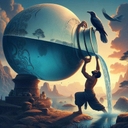
| seyyathāpi, bhikkhave, udakamaṇiko pūro udakassa samatittiko kākapeyyo ādhāre ṭhapito. tamenaṃ balavā puriso yato yato āviñcheyya, āgaccheyya udakan”ti? | “Suppose that there were a water jar, set on a stand, brimful of water so that a crow could drink from it. If a strong man were to tip it in any way at all, would water spill out?” | “假设有一个水罐,放在支架上,水满了,乌鸦都能喝到。如果一个强壮的人随意倾斜它,水会溢出来吗?” |
| “evaṃ, bhante”. | “Yes, lord.” | “是的,世尊。” |
| “evameva kho, bhikkhave, yassa kassaci kāyagatāsati bhāvitā bahulīkatā so, yassa yassa abhiññāsacchikaraṇīyassa dhammassa cittaṃ abhininnāmeti abhiññāsacchikiriyāya, tatra tatreva sakkhibhabbataṃ pāpuṇāti sati satiāyatane. | “In the same way, when anyone has developed & pursued remembering [and applying Dharma] while immersed in the body, then whichever of the six higher knowledges he turns his mind to know & realize, he can witness them for himself whenever there is an opening. | “同样地,当任何人修习并追求身念处时,无论他将心转向了解和证悟六神通中的哪一个,只要有机会,他都能亲身证得它们。 |
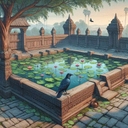
| seyyathāpi, bhikkhave, same bhūmibhāge caturassā pokkharaṇī VAR assa āḷibandhā pūrā udakassa samatittikā kākapeyyā. tamenaṃ balavā puriso yato yato āḷiṃ muñceyya āgaccheyya udakan”ti? | “Suppose there were a rectangular water tank—set on level ground, bounded by dikes—brimful of water so that a crow could drink from it. If a strong man were to loosen the dikes anywhere at all, would water spill out?” | “假设有一个矩形水箱——置于平地,有堤坝围住——水满了,乌鸦都能喝到。如果一个强壮的人随意松开堤坝,水会溢出来吗?” |
| “evaṃ, bhante”. | “Yes, lord.” | “是的,世尊。” |
| “evameva kho, bhikkhave, yassa kassaci kāyagatāsati bhāvitā bahulīkatā, so yassa yassa abhiññāsacchikaraṇīyassa dhammassa cittaṃ abhininnāmeti abhiññāsacchikiriyāya, tatra tatreva sakkhibhabbataṃ pāpuṇāti sati satiāyatane. | “In the same way, when anyone has developed & pursued remembering [and applying Dharma] while immersed in the body, then whichever of the six higher knowledges he turns his mind to know & realize, he can witness them for himself whenever there is an opening. | “同样地,当任何人修习并追求身念处时,无论他将心转向了解和证悟六神通中的哪一个,只要有机会,他都能亲身证得它们。 |

| seyyathāpi, bhikkhave, subhūmiyaṃ catu-mahā-pathe ājañña-ratho | “Suppose there were a chariot on level ground at four crossroads, | “假设一辆战车停在平地上的四岔路口, |
| yutto assa ṭhito odhasta-patodo; | harnessed to thoroughbreds, waiting with whips lying ready, | 套着良马,鞭子随时可用, |
| tamenaṃ dakkho yoggācariyo assa-damma-sārathi | so that a dexterous driver, a trainer of tamable horses, | 一位熟练的驾车者,一位驯马师, |
| abhiruhitvā vāmena hatthena rasmiyo gahetvā dakkhiṇena hatthena patodaṃ gahetvā | might mount and—taking the reins with his left hand and the whip with his right— | 可以登上,左手握缰,右手持鞭, |
| yen'-icchakaṃ yadicchakaṃ sāreyyāpi paccāsāreyyāpi; | drive out & back, to whatever place & by whichever road he liked; | 随意驾车出入,驶向任何地方,选择任何道路; |
| evameva kho, bhikkhave, | in the same way, | 同样地, |
| yassa kassaci kāyagatāsati bhāvitā bahulīkatā, | when anyone has developed & pursued remembering [and applying Dharma] while immersed in the body, | 当任何人修习并追求身念处时, |
| so yassa yassa abhiññāsacchikaraṇīyassa dhammassa cittaṃ abhininnāmeti abhiññā-sacchi-kiriyāya, | then whichever of the six higher knowledges he turns his mind to know & realize, | 无论他将心转向了解和证悟六神通中的哪一个, |
| tatra tatreva sakkhibhabbataṃ pāpuṇāti sati satiāyatane”. | he can witness them for himself whenever there is an opening. | 只要有机会,他都能亲身证得它们。 |
+119.10 – (10 benefits)
all
| ♦ 159. “kāyagatāya, bhikkhave, satiyā āsevitāya bhāvitāya bahulīkatāya yānīkatāya vatthukatāya anuṭṭhitāya paricitāya susamāraddhāya dasānisaṃsā pāṭikaṅkhā. | “Monks, for one in whom remembering [and applying Dharma] while immersed in the body is cultivated, developed, pursued, given a means of transport, given a grounding, steadied, consolidated, & well-undertaken, ten benefits can be expected. Which ten? | “比丘们,对于身念处得到培育、发展、追求、作为交通工具、作为基础、稳固、巩固和善加修习的人,可以期待十种利益。哪十种呢? |
+§10.1 – (Conquer displeasure and delight)
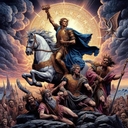
| a-rati-rati-saho hoti, | “[1] He conquers displeasure & delight, | “[1] 他战胜不悦和喜悦, |
| na ca taṃ arati sahati, | and displeasure does not conquer him. | 不悦不能战胜他。 |
| uppannaṃ aratiṃ abhibhuyya viharati. | He remains victorious over any displeasure that has arisen. | 他始终战胜任何已生起的不悦。 |
+§10.2 – (Conquer fear and dread)

| ♦ “bhaya-bherava-saho hoti, na ca taṃ bhayabheravaṃ sahati, uppannaṃ bhayabheravaṃ abhibhuyya viharati. | “[2] He conquers fear & dread, and fear & dread do not conquer him. He remains victorious over any fear & dread that have arisen. | “[2] 他战胜恐惧和害怕,恐惧和害怕不能战胜他。他始终战胜任何已生起的恐惧和害怕。 |
+§10.3 – (patiently-endures (khamo) cold, heat, hunger, mosquitoes ...)
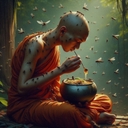
| ♦ “khamo hoti sītassa uṇhassa | “He patiently-endures cold, heat, | “他能忍受寒冷、炎热、 |
| jighacchāya pipāsāya | hunger, thirst, | 饥饿、口渴、 |
| ḍaṃsa-makasa-vāt’-ātapa-sarīsapa-samphassānaṃ | the touch of gadflies & mosquitoes, wind & sun & creeping things; | 蚊虫叮咬、风吹日晒和爬行动物; |
| dur-uttānaṃ dur-āgatānaṃ vacana-pathānaṃ, | to abusively uttered, un-welcome way of speaking; | 能忍受恶言恶语,不受欢迎的说话方式; |
| uppannānaṃ sārīrikānaṃ vedanānaṃ | he is the sort that can endure bodily feelings that, when they arise, | 他就是那种能忍受身体感受的人,当这些感受生起时, |
| dukkhānaṃ tibbānaṃ kharānaṃ | are painful, sharp, stabbing, | 是痛苦的、尖锐的、刺骨的、 |
| kaṭukānaṃ asātānaṃ amanāpānaṃ pāṇaharānaṃ | fierce, distasteful, disagreeable, deadly. | 剧烈的、令人不快的、不适的、致命的。 |
| adhivāsakajātiko hoti. | He is that patient type. | 他就是那种有耐心的人。 |
+§10.4 – (Attains 4j, jhānas easily)
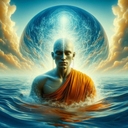
| ♦ “catunnaṃ jhānānaṃ ābhi-cetasikānaṃ | “[4] The four jhānas are heightened mental states | “[4] 四禅是更高的心境, |
| diṭṭha-dhamma-sukha-vihārānaṃ | providing a pleasant abiding in the here & now. | 在当下提供愉快的住处。 |
| nikāmalābhī hoti akicchalābhī akasiralābhī. | He can attain jhānas easily, at will, without trouble or difficulty. | 他能轻易、随心所欲、毫不费力地进入禅那。 |
+§10.5 – (6Ab#1: supernormal powers)
| so | They | 他们 |
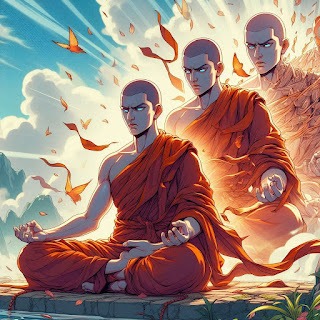
aneka-vihitaṃ iddhi-vidhaṃ pacc-anu-bhoti – |
wield many types of supernormal power. |
ekopi hutvā bahudhā hoti, |
being one, they make multiple copies of themselves. |
bahudhāpi hutvā eko hoti; |
Multiple copies transform back into one. |
āvi-bhāvaṃ, tiro-bhāvaṃ; |
They appear and disappear. |
tiro-kuṭṭaṃ tiro-pākāraṃ tiro-pabbataṃ |
They go unimpeded |
asajjamāno gacchati, |
through-walls, through-ramparts, through-mountains, |
seyyathāpi ākāse; |
as if through space; |
pathaviyāpi ummujja-nimujjaṃ karoti, |
They dive into the earth and emerge from it |
seyyathāpi udake; |
as if from water. |
udakepi abhijjamāne gacchati, |
They walk on water without sinking |
seyyathāpi pathaviyaṃ; |
As if on land. |
ākāsepi pallaṅkena kamati, |
They fly through space in a cross legged seating posture |
seyyathāpi pakkhī sakuṇo; |
like a bird with wings. |
imepi candima-sūriye |
With his own hands he touches and strokes |
evaṃ-mahiddhike evaṃ-mahānubhāve |
the moon and the sun, |
pāṇinā parimasati parimajjati; |
so mighty and powerful. |
yāva brahma-lokā-pi |
He exercises control of his body |
kāyena vasaṃ vatteti. |
even as far as the Brahma heavens. |
+§10.6 – (6Ab#2: divine ear)
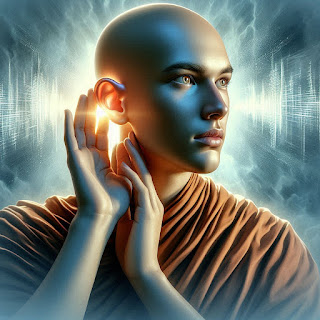
dibbāya sota-dhātuyā |
with the divine ear, |
visuddhāya atikkanta-mānusikāya |
which is purified and surpasses the hearing of humans, |
ubho sadde suṇāti – |
he hears both kinds of sound, |
dibbe ca mānuse ca, |
divine and human, |
dūre santike cā-ti. |
whether far or near. |
+§10.7 – (6Ab#3: mind reading)
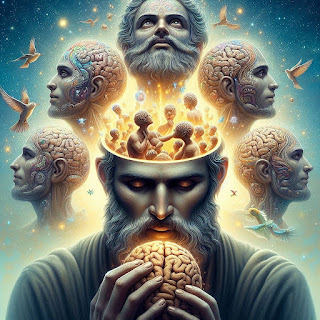
para-sattānaṃ para-puggalānaṃ |
They distinguish and discern |
cetasā ceto |
[the mentality] of other beings and individuals, |
paricca pajānāti. |
by using their own mind to read their mind. |
Sa-rāgaṃ vā cittaṃ ‘sa-rāgaṃ citta’nti pajānāti; |
They discern a mind with passion as, ‘a mind with passion.’ |
vīta-rāgaṃ vā cittaṃ ‘vīta-rāgaṃ citta’nti pajānāti; |
They discern a mind without passion as, ‘a mind without passion.’ |
sa-dosaṃ vā cittaṃ ‘sa-dosaṃ citta’nti pajānāti; |
They discern a mind with hate as, ‘a mind with hate.’ |
vīta-dosaṃ vā cittaṃ ‘vīta-dosaṃ citta’nti pajānāti; |
They discern a mind without hate as, ‘a mind without hate.’ |
sa-mohaṃ vā cittaṃ ‘sa-mohaṃ citta’nti pajānāti; |
They discern a mind with delusion as, ‘a mind with delusion.’ |
vīta-mohaṃ vā cittaṃ ‘vīta-mohaṃ citta’nti pajānāti; |
They discern a mind without delusion as, ‘a mind without delusion.’ |
saṃkhittaṃ vā cittaṃ ‘saṃkhittaṃ citta’nti pajānāti; |
They discern a restricted mind as, ‘a restricted mind.’ |
vikkhittaṃ vā cittaṃ ‘vikkhittaṃ citta’nti pajānāti; |
They discern a scattered mind as, ‘a scattered mind.’ |
mahaggataṃ vā cittaṃ ‘mahaggataṃ citta’nti pajānāti; |
They discern an expansive mind as, ‘an expansive mind.’ |
a-mahaggataṃ vā cittaṃ ‘a-mahaggataṃ citta’nti pajānāti; |
They discern an un-expansive mind as, ‘an un-expansive mind.’ |
sa-uttaraṃ vā cittaṃ ‘sa-uttaraṃ citta’nti pajānāti; |
They discern a surpassable mind as, ‘a surpassable mind.’ |
an-uttaraṃ vā cittaṃ ‘an-uttaraṃ citta’nti pajānāti; |
They discern an unsurpassable mind as, ‘an unsurpassable mind.’ |
samāhitaṃ vā cittaṃ ‘samāhitaṃ citta’nti pajānāti; |
They discern an undistractible-&-lucid mind as, ‘an undistractible-&-lucid mind.’ |
a-samāhitaṃ vā cittaṃ ‘a-samāhitaṃ citta’nti pajānāti; |
They discern a distractible-&-unlucid mind as, ‘a distractible-&-unlucid mind.’ |
vimuttaṃ vā cittaṃ ‘vimuttaṃ citta’nti pajānāti; |
They discern a freed mind as, ‘a freed mind.’ |
a-vimuttaṃ vā cittaṃ ‘a-vimuttaṃ citta’nti pajānāti’’. |
They discern an unfreed mind as, ‘an unfreed mind.’ |
+§10.8 – (6Ab#4: recollect past lives)
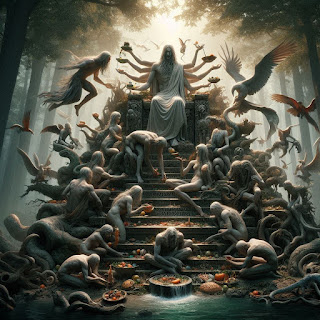
aneka-vihitaṃ pubbe-nivāsaṃ |
They recollect |
anus-sarati, |
many past lives |
seyyathidaṃ – |
like this. |
ekampi jātiṃ dvepi jātiyo tissopi jātiyo catassopi jātiyo pañcapi jātiyo |
one birth, two births, three births, four births, five births, |
dasapi jātiyo vīsampi jātiyo tiṃsampi jātiyo cattālīsampi jātiyo paññāsampi jātiyo |
ten births, twenty births, thirty births, forty births, fifty births, |
jāti-satampi jāti-sahassampi jāti-sata-sahassampi |
one hundred births, one thousand births, one hundred thousand births, |
anekepi saṃvaṭṭa-kappe |
many contractions-(of cosmic)-aeons, |
anekepi vivaṭṭa-kappe |
many expansions-(of cosmic)-aeons, |
anekepi saṃvaṭṭa-vivaṭṭa-kappe – |
many contractions-&-expansions-(of cosmic)-aeons, [recollecting], |
‘amutrāsiṃ |
There |
evaṃ-nāmo evaṃ-gotto |
I had such a name, such a clan, |
evaṃ-vaṇṇo evam-āhāro |
such an appearance, such was my food, |
evaṃ-sukha-dukkhap-paṭisaṃvedī |
Such pleasure and pain I experienced, |
evam-āyu-pariyanto, |
that’s how my life ended. |
so tato cuto |
Dying in that place, |
amutra udapādiṃ [uppādiṃ (sī.)]; |
I was reborn elsewhere. |
tatrāpāsiṃ |
There too |
evaṃ-nāmo evaṃ-gotto |
I had such a name, such a clan, |
evaṃ-vaṇṇo evam-āhāro |
such an appearance, such was my food, |
evaṃ-sukha-dukkhap-paṭisaṃvedī |
Such pleasure and pain I experienced, |
evam-āyu-pariyanto, |
that’s how my life ended. |
so tato cuto |
Dying in that place, |
idhū-(u)papanno’ti. |
I was reborn elsewhere. |
Iti sākāraṃ sa-uddesaṃ |
Thus in these aspects and features |
aneka-vihitaṃ pubbe-nivāsaṃ |
they recollect |
anus-sarati, |
many past lives. |
❧
+§10.9 – (6Ab#5: divine eye, sees rebirth according to kamma)
all

dibbena cakkhunā |
by means of the divine eye, |
visuddhena atikkanta-mānusakena |
which is purified and surpassing humans, |
satte passati cavamāne upapajjamāne |
they see beings dying and being reborn - |
hīne paṇīte |
inferior and superior, |
suvaṇṇe dubbaṇṇe, |
beautiful and ugly, |
sugate duggate |
fortunate and unfortunate |
yathā-kammū-(u)page |
in accordance with their karmic actions. |
satte pajānāti – |
They discern [how karmic results follow] those beings - |
‘ime vata, bhonto, sattā |
These dear beings |
kāya-duc-caritena samannāgatā |
Had bad bodily conduct, |
vacī-duc-caritena samannāgatā |
Had bad verbal conduct, |
mano-duc-caritena samannāgatā |
Had bad mental conduct. |
ariyānaṃ upavādakā |
They spoke ill of Noble ones, |
micchā-diṭṭhikā |
held wrong views, |
micchā-diṭṭhi-kamma-samādānā; |
decided to act according to wrong views. |
te kāyassa bhedā |
When their bodies break up |
paraṃ maraṇā |
after death, |
apāyaṃ dug-gatiṃ vinipātaṃ nirayaṃ |
they are reborn |
upapannā. |
in a place of loss, a bad place, the underworld, hell. |
Ime vā pana, bhonto, sattā |
In contrast, these dear beings |
kāya-su-caritena samannāgatā |
had good bodily conduct, |
vacī-su-caritena samannāgatā |
Had good verbal conduct, |
mano-su-caritena samannāgatā |
Had good mental conduct. |
ariyānaṃ an-upavādakā |
They did not speak ill of Noble ones, |
sammā-diṭṭhikā |
held right views, |
sammā-diṭṭhi-kamma-samādānā; |
and decided to act according to right views. |
te kāyassa bhedā |
When their bodies break up |
paraṃ maraṇā |
after death, |
Su-gatiṃ saggaṃ lokaṃ |
they are reborn |
upapannā’ti. |
in a good place, a heavenly world. |
Iti |
Thus |
+(repeat)
dibbena cakkhunā |
by means of the divine eye, |
visuddhena atikkanta-mānusakena |
which is purified and surpassing humans, |
satte passati cavamāne upapajjamāne |
they see beings dying and being reborn - |
hīne paṇīte |
inferior and superior, |
suvaṇṇe dubbaṇṇe, |
beautiful and ugly, |
sugate duggate |
fortunate and unfortunate |
yathā-kammū-(u)page |
in accordance with their karmic actions. |
satte pajānāti – |
They discern [how karmic results follow] those beings - |
❧
+§10.10 – (6Ab#6: destruction of āsavas, arahantship)
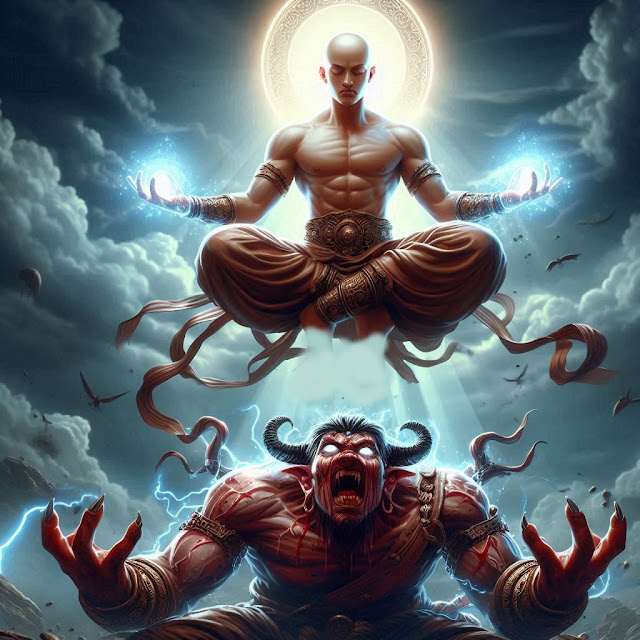
āsavānaṃ khayā |
with asinine-inclinations destroyed, |
an-āsavaṃ |
they have no more asinine-inclinations. |
ceto-vimuttiṃ |
Liberated in mind, |
paññā-vimuttiṃ |
liberated by discernment, |
diṭṭheva dhamme sayaṃ |
in this very life |
abhiññā sacchikatvā |
with their own direct knowledge. |
upasampajja viharatī’’ti. |
They live in this attainment [of full liberation]. |
| ♦ “kāyagatāya, bhikkhave, satiyā āsevitāya bhāvitāya bahulīkatāya yānīkatāya vatthukatāya anuṭṭhitāya paricitāya susamāraddhāya ime dasānisaṃsā pāṭikaṅkhā”ti. | “Monks, for one in whom remembering [and applying Dharma] while immersed in the body is cultivated, developed, pursued, given a means of transport, given a grounding, steadied, consolidated, & well-undertaken, these ten benefits can be expected.” | “比丘们,对于身念处得到培育、发展、追求、作为交通工具、作为基础、稳固、巩固和善加修习的人,可以期待这十种利益。” |
| ♦ idamavoca bhagavā. attamanā te bhikkhū bhagavato bhāsitaṃ abhinandunti. | That is what the Blessed One said. Gratified, the monks delighted in the Blessed One’s words. | 世尊如是说。比丘们心满意足,欢喜世尊的话语。 |
| ♦ kāyagatāsatisuttaṃ niṭṭhitaṃ navamaṃ. | (end of sutta) | (经文完) |
ḍaṃsamakasavātātapasarīsapasamphass 14 texts and 23 matches in Suttanta Pali
AN 4.114 war elephant patiently endures (khamo) hits ↔ monk patiently endures cold, mosquitoes
AN 4.157 Rogasutta: monks should wish for skill of khamo: patiently endures cold, mosquitoes
AN 4.165 Dutiya-khama-sutta Patience (2nd) monk patiently endures cold, mosquitoes
AN 5.140 Sotasutta A Listener khamo: patiently endures cold, mosquitoes
AN 6.58 Āsavasutta Defilements. purpose of monk robe is to resist (paṭighātāya) cold, mosquitoes
AN 10.11 Senāsanasutta: purpose of shelter is to reduce cold, mosquitoes
AN 10.71 Ākaṅkhasutta monk Might Wish for skill of khamo: patiently endures cold, mosquitoes
DN 29 Pāsādikasutta. purpose of monk robe and shelter is to resist (paṭighātāya) cold, mosquitoes
MN 2 Sabbāsavasutta. purpose of monk robe and shelter is to resist (paṭighātāya) cold, mosquitoes
MN 13 Mahādukkhakkhandhasutta. one of the drawbacks of sensual pleasures is cold, mosquitoes, etc.
MN 14 Cūḷadukkhakkhandhasutta. one of the drawbacks of sensual pleasures is cold, mosquitoes, etc.
MN 119 1 of 10 benefits of Kāyagatāsati with 4th jhāna quality, monk patiently endures (khamo) cold, mosquitoes
MN 125 war elephant patiently endures (khamo) hits ↔ monk endures cold, mosquitoes
SN 22.79 Khajjanīyasutta Itchy. cold and mosquitoes afflict rūpa aggregate and physical body.
AN 4.114 Nāgasutta A Royal Elephant ḍaṁsamakasavātātapasarīsapasamphassānaṁ 1 Pi En Ru
Quote
Idha, bhikkhave, bhikkhu khamo hoti sītassa uṇhassa jighacchāya pipāsāya, ḍaṁsamakasavātātapasarīsapasamphassānaṁ duruttānaṁ durāgatānaṁ vacanapathānaṁ uppannānaṁ sārīrikānaṁ vedanānaṁ dukkhānaṁ tibbānaṁ kharānaṁ kaṭukānaṁ asātānaṁ amanāpānaṁ pāṇaharānaṁ adhivāsakajātiko hoti. It’s when a mendicant endures cold, heat, hunger, and thirst; the touch of flies, mosquitoes, wind, sun, and reptiles; rude and unwelcome criticism; and they put up with physical pain—sharp, severe, acute, unpleasant, disagreeable, and life-threatening.
AN 4.157 Rogasutta Illness ḍaṁsamakasavātātapasarīsapasamphassānaṁ 1 Pi En Ru
Quote
‘na mahicchā bhavissāma vighātavanto asantuṭṭhā itarītaracīvarapiṇḍapātasenāsanagilānappaccayabhesajjaparikkhārena, na pāpikaṁ icchaṁ paṇidahissāma anavaññappaṭilābhāya lābhasakkārasilokappaṭilābhāya, na uṭṭhahissāma na ghaṭessāma na vāyamissāma anavaññappaṭilābhāya lābhasakkārasilokappaṭilābhāya, khamā bhavissāma sītassa uṇhassa jighacchāya pipāsāya ḍaṁsamakasavātātapasarīsapasamphassānaṁ duruttānaṁ durāgatānaṁ vacanapathānaṁ, uppannānaṁ sārīrikānaṁ vedanānaṁ dukkhānaṁ tibbānaṁ kharānaṁ kaṭukānaṁ asātānaṁ amanāpānaṁ pāṇaharānaṁ adhivāsakajātikā bhavissāmā’ti. ‘We will not have many wishes or be frustrated. We will be content with any kind of robes, almsfood, lodgings, and medicines and supplies for the sick. We won’t focus our corrupt wishes on status, and on getting material things, honor, and popularity. We won’t try hard, strive, and make an effort to get these things. We will endure cold, heat, hunger, and thirst. We will endure the touch of flies, mosquitoes, wind, sun, and reptiles. We will endure rude and unwelcome criticism. We will put up with physical pain—sharp, severe, acute, unpleasant, disagreeable, and life-threatening.’
AN 4.165 Dutiyakhamasutta Patience (2nd) ḍaṁsamakasavātātapasarīsapasamphassānaṁ 2 Pi En Ru
Quote
Idha, bhikkhave, ekacco akkhamo hoti sītassa uṇhassa jighacchāya pipāsāya, ḍaṁsamakasavātātapasarīsapasamphassānaṁ duruttānaṁ durāgatānaṁ vacanapathānaṁ uppannānaṁ sārīrikānaṁ vedanānaṁ dukkhānaṁ tibbānaṁ kharānaṁ kaṭukānaṁ asātānaṁ amanāpānaṁ pāṇaharānaṁ anadhivāsakajātiko hoti. It’s when someone cannot endure cold, heat, hunger, and thirst. They cannot endure the touch of flies, mosquitoes, wind, sun, and reptiles. They cannot endure rude and unwelcome criticism. And they cannot put up with physical pain—sharp, severe, acute, unpleasant, disagreeable, and life-threatening.
Idha, bhikkhave, ekacco khamo hoti sītassa uṇhassa jighacchāya pipāsāya, ḍaṁsamakasavātātapasarīsapasamphassānaṁ duruttānaṁ durāgatānaṁ vacanapathānaṁ uppannānaṁ sārīrikānaṁ vedanānaṁ dukkhānaṁ tibbānaṁ kharānaṁ kaṭukānaṁ asātānaṁ amanāpānaṁ pāṇaharānaṁ adhivāsakajātiko hoti.
It’s when someone endures cold, heat, hunger, and thirst. They endure the touch of flies, mosquitoes, wind, sun, and reptiles. They endure rude and unwelcome criticism. And they put up with physical pain—sharp, severe, acute, unpleasant, disagreeable, and life-threatening.
AN 5.140 Sotasutta A Listener ḍaṁsamakasavātātapasarīsapasamphassānaṁ 2 Pi En Ru
Quote
Idha, bhikkhave, bhikkhu khamo hoti sītassa uṇhassa jighacchāya pipāsāya ḍaṁsamakasavātātapasarīsapasamphassānaṁ; duruttānaṁ durāgatānaṁ vacanapathānaṁ uppannānaṁ sārīrikānaṁ vedanānaṁ dukkhānaṁ tibbānaṁ kharānaṁ kaṭukānaṁ asātānaṁ amanāpānaṁ pāṇaharānaṁ adhivāsakajātiko hoti. It’s when a mendicant endures cold, heat, hunger, and thirst; the touch of flies, mosquitoes, wind, sun, and reptiles; rude and unwelcome criticism; and puts up with physical pain—sharp, severe, acute, unpleasant, disagreeable, and life-threatening.
ḍaṁsamakasavātātapasarīsapasamphassānaṁ → … siriṁsapa … (bj, sya-all, km, pts1ed)
AN 6.58 Āsavasutta Defilements ḍaṁsamakasavātātapasarīsapasamphassānaṁ 4 Pi En Ru
Quote
‘yāvadeva sītassa paṭighātāya, uṇhassa paṭighātāya, ḍaṁsamakasavātātapasarīsapasamphassānaṁ paṭighātāya, yāvadeva hirikopīnapaṭicchādanatthaṁ’. ‘Only for the sake of warding off cold and heat; for warding off the touch of flies, mosquitoes, wind, sun, and reptiles; and for covering up the private parts.’
ḍaṁsamakasavātātapasarīsapasamphassānaṁ → ḍaṁsa … siriṁsapasamphassānaṁ (bj, sya-all, km pī)
‘yāvadeva sītassa paṭighātāya, uṇhassa paṭighātāya, ḍaṁsamakasavātātapasarīsapasamphassānaṁ paṭighātāya, yāvadeva utuparissayavinodanapaṭisallānārāmatthaṁ’.
‘Only for the sake of warding off cold and heat; for warding off the touch of flies, mosquitoes, wind, sun, and reptiles; to shelter from harsh weather and to enjoy retreat.’
Idha, bhikkhave, bhikkhu paṭisaṅkhā yoniso khamo hoti sītassa uṇhassa, jighacchāya, pipāsāya, ḍaṁsamakasavātātapasarīsapasamphassānaṁ, duruttānaṁ durāgatānaṁ vacanapathānaṁ, uppannānaṁ sārīrikānaṁ vedanānaṁ dukkhānaṁ tibbānaṁ kharānaṁ kaṭukānaṁ asātānaṁ amanāpānaṁ pāṇaharānaṁ adhivāsakajātiko hoti.
Take a mendicant who, reflecting rationally, endures cold, heat, hunger, and thirst. They endure the touch of flies, mosquitoes, wind, sun, and reptiles. They endure rude and unwelcome criticism. And they put up with physical pain—sharp, severe, acute, unpleasant, disagreeable, and life-threatening.
AN 10.11 Senāsanasutta Lodgings appaḍaṁsamakasavātātapasarīsapasamphassaṁ 2 Pi En Ru
Quote
appaḍaṁsamakasavātātapasarīsapasamphassaṁ; There’s little disturbance from flies, mosquitoes, wind, sun, and reptiles.
appaḍaṁsamakasavātātapasarīsapasamphassaṁ → appaḍaṁsa … siriṁsapasamphassaṁ (bj, sya-all, pts1ed)
AN 10.71 Ākaṅkhasutta One Might Wish ḍaṁsamakasavātātapasarīsapasamphassānaṁ 1 Pi En Ru
Quote
Ākaṅkheyya ce, bhikkhave, bhikkhu ‘khamo assaṁ sītassa uṇhassa jighacchāya pipāsāya ḍaṁsamakasavātātapasarīsapasamphassānaṁ, duruttānaṁ durāgatānaṁ vacanapathānaṁ uppannānaṁ sārīrikānaṁ vedanānaṁ dukkhānaṁ tibbānaṁ kharānaṁ kaṭukānaṁ asātānaṁ amanāpānaṁ pāṇaharānaṁ adhivāsakajātiko assan’ti, sīlesvevassa …pe… brūhetā suññāgārānaṁ. A mendicant might wish: ‘May I endure cold, heat, hunger, and thirst. May I endure the touch of flies, mosquitoes, wind, sun, and reptiles. May I endure rude and unwelcome criticism. And may I put up with physical pain—sharp, severe, acute, unpleasant, disagreeable, and life-threatening.’ So let them fulfill their precepts …
DN 29 Pāsādikasutta An Impressive Discourse ḍaṁsamakasavātātapasarīsapasamphassānaṁ 2 2 Pi En Ru
Quote
yāvadeva sītassa paṭighātāya, uṇhassa paṭighātāya, ḍaṁsamakasavātātapasarīsapasamphassānaṁ paṭighātāya, yāvadeva hirikopīnapaṭicchādanatthaṁ. only for the sake of warding off cold and heat; for warding off the touch of flies, mosquitoes, wind, sun, and reptiles; and for covering up the private parts.
yāvadeva sītassa paṭighātāya, uṇhassa paṭighātāya, ḍaṁsamakasavātātapasarīsapasamphassānaṁ paṭighātāya, yāvadeva utuparissayavinodanapaṭisallānārāmatthaṁ.
only for the sake of warding off cold and heat; for warding off the touch of flies, mosquitoes, wind, sun, and reptiles; to shelter from harsh weather and to enjoy retreat.
MN 2 Sabbāsavasutta All the Defilements ḍaṁsamakasavātātapasarīsapasamphassānaṁ 2 Pi En Ru
Quote
‘yāvadeva sītassa paṭighātāya, uṇhassa paṭighātāya, ḍaṁsamakasavātātapasarīsapasamphassānaṁ paṭighātāya, yāvadeva hirikopīnappaṭicchādanatthaṁ’. ‘Only for the sake of warding off cold and heat; for warding off the touch of flies, mosquitoes, wind, sun, and reptiles; and for covering up the private parts.’
‘yāvadeva sītassa paṭighātāya, uṇhassa paṭighātāya, ḍaṁsamakasavātātapasarīsapasamphassānaṁ paṭighātāya, yāvadeva utuparissayavinodanapaṭisallānārāmatthaṁ’.
‘Only for the sake of warding off cold and heat; for warding off the touch of flies, mosquitoes, wind, sun, and reptiles; to shelter from harsh weather and to enjoy retreat.’
MN 13 Mahādukkhakkhandhasutta The Longer Discourse on the Mass of Suffering ḍaṁsamakasavātātapasarīsapasamphassehi 1 1 Pi En Ru
Quote
sītassa purakkhato uṇhassa purakkhato ḍaṁsamakasavātātapasarīsapasamphassehi rissamāno khuppipāsāya mīyamāno; But they must face cold and heat, being hurt by the touch of flies, mosquitoes, wind, sun, and reptiles, and risking death from hunger and thirst.
MN 14 Cūḷadukkhakkhandhasutta The Shorter Discourse on the Mass of Suffering ḍaṁsamakasavātātapasarīsapasamphassehi 1 Pi En Ru
Quote
sītassa purakkhato uṇhassa purakkhato ḍaṁsamakasavātātapasarīsapasamphassehi rissamāno khuppipāsāya mīyamāno; But they must face cold and heat, being hurt by the touch of flies, mosquitoes, wind, sun, and reptiles, and risking death from hunger and thirst.
MN 119 Kāyagatāsatisutta Mindfulness of the Body ḍaṁsamakasavātātapasarīsapasamphassānaṁ 1 20 Pi En Ru
Quote
Khamo hoti sītassa uṇhassa jighacchāya pipāsāya ḍaṁsamakasavātātapasarīsapasamphassānaṁ duruttānaṁ durāgatānaṁ vacanapathānaṁ, uppannānaṁ sārīrikānaṁ vedanānaṁ dukkhānaṁ tibbānaṁ kharānaṁ kaṭukānaṁ asātānaṁ amanāpānaṁ pāṇaharānaṁ adhivāsakajātiko hoti. They endure cold, heat, hunger, and thirst; the touch of flies, mosquitoes, wind, sun, and reptiles; rude and unwelcome criticism; and put up with physical pain—sharp, severe, acute, unpleasant, disagreeable, and life-threatening.
MN 125 Dantabhūmisutta The Level of the Tamed ḍaṁsamakasavātātapasarīsapasamphassānaṁ 1 6 Pi En Ru
Quote
So hoti bhikkhu khamo sītassa uṇhassa jighacchāya pipāsāya ḍaṁsamakasavātātapasarīsapasamphassānaṁ duruttānaṁ durāgatānaṁ vacanapathānaṁ, uppannānaṁ sārīrikānaṁ vedanānaṁ dukkhānaṁ tibbānaṁ kharānaṁ kaṭukānaṁ asātānaṁ amanāpānaṁ pāṇaharānaṁ adhivāsakajātiko hoti Such a mendicant endures cold, heat, hunger, and thirst; the touch of flies, mosquitoes, wind, sun, and reptiles; rude and unwelcome criticism; and puts up with physical pain—sharp, severe, acute, unpleasant, disagreeable, and life-threatening.
SN 22.79 Khajjanīyasutta Itchy ḍaṁsamakasavātātapasarīsapasamphassenapi 2 7 Pi En Ru
Quote
Sītenapi ruppati, uṇhenapi ruppati, jighacchāyapi ruppati, pipāsāyapi ruppati, ḍaṁsamakasavātātapasarīsapasamphassenapi ruppati. Deformed by cold, heat, hunger, and thirst, and deformed by the touch of flies, mosquitoes, wind, sun, and reptiles.
ḍaṁsamakasavātātapasarīsapasamphassenapi → … siriṁsapasamphassenapi (bj, pts1ed); … sirīsapasamphassenapi (sya-all)
❧