Nimitta
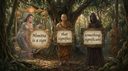
+2 – A primer on how Nimittas (signs) work in EBT
all
Original version: A primer on how Nimittas (signs) work in EBT, notesonthedhamma 2022 🔗📝
The version below is that article expanded with AI assistance — more detail and more polish than the original. The lesson and the examples are the original's; follow the link above for it in its own unembellished words.
+2.1 – Lesson 1: Jack and Jill
In the early Buddhist texts there is a curious,
recurring idiom: “following a sign,” “picking up on a sign,” “paying attention to a sign.”
The word in Pali is nimitta, and there are deep technical reasons the texts lean on it so often.
But it occurred to me recently that we already use this exact idea in plain English,
every day, usually without noticing it.
We say things like “I got a good sign from her” or “that's a red flag” — we are,
whether we know it or not, doing the same interpretive work the ancient texts are describing.
Here is a story to make it concrete.
Jack and Jill were in high school.
They liked each other — quietly, nervously — and each wanted very badly to let the other know it.
But both were shy, and neither had the life experience yet to know how such things are communicated.
This was also a time when girls were not expected to make the first move,
so the entire weight of the situation rested on Jack.
He alone had to find a way to establish,
without saying it outright, that he liked her.
Jack tried.
Jack failed.
Why?
He didn't follow the right nimittas.
It isn't that the world failed to give him signs — it gave him plenty.
He simply didn't attend to the right ones.
He attended to the wrong ones instead,
and mistook his own misreading for insight.
Consider what the right signs actually were.
When Jack worked up the nerve to approach Jill and start a conversation,
she smiled — not a polite, closed-mouth smile,
but a real one.
Her greeting was warm.
And her body language, the way she turned toward him,
the way she stayed in the conversation rather than looking for an exit,
was unmistakably that of someone engaged and interested.
That's three good nimittas, freely given,
before he'd even said anything memorable.
And what did Jack do with them?
He explained them away.
She's just like that with everyone, he told himself.
She's a nice person, that's all this is.
This was Bad Nimitta #1 — and its damage wasn't that it existed,
but that Jack let it override three pieces of good evidence
rather than simply sitting with the ambiguity a little longer.
A wiser response would have been to hold the three good signs loosely,
let them accumulate, and see what the moment offered next.
Instead, he used one flimsy explanation to erase all three at once.
The moment did offer more.
Jack, growing bolder, attempted a joke — and it was not a good joke.
It was, by any honest measure, a bad joke.
And yet Jill laughed.
She laughed heartily, generously, in a way that had nothing to
do with the actual quality of the material and everything to do with wanting Jack to feel good in that moment.
This is its own kind of nimitta, and a particularly telling one
— people do not spend genuine warmth on jokes they don't care about,
or on people they're indifferent to.
That makes four good nimittas now, and this one arguably the clearest of all.
Jack, naturally, followed Bad Nimitta #2 instead: that joke was just objectively funny,
that's all — anyone would have laughed at that.
(No. No, they would not have.
Reader, you would not have.) It is a strange feature of the unwise
mind that it can look directly at generosity and rename it coincidence.
And yet — credit where it's due — despite feeling,
by this point, like the whole endeavor was doomed,
Jack found something in himself.
Call it courage, call it recklessness born of desperation,
call it a nimitta of its own, good or bad or simply neutral,
hard to say.
Whatever it was, it moved him to ask Jill out for that Friday.
Jill said: “Sorry Jack, Bob already asked me out on a date this Friday.”
Here is where the story turns, and here is where it's worth slowing down,
because this single sentence contains a small universe of interpretive possibility,
and Jack chose the worst one available to him.
He followed Bad Nimitta #3 — the leap,
instantaneous and unexamined, that she must like Bob,
and not me — as though a single scheduling conflict were proof of a settled heart.
This is the nature of an unwisely followed sign: it doesn't just mislead you,
it feels like certainty while it does so.
Jack didn't experience this as a guess.
He experienced it as a fact he'd just learned.
Had Jack possessed a bit more paññā — a bit more wisdom in the
moment — he might have generated a good nimitta of his own instead of merely reacting to a bad one.
He could have simply asked: “Are you and Bob boyfriend and girlfriend?”
Four words.
A question, not a verdict.
It would have cost him nothing and told him everything.
He didn't ask it.
And here is the detail that makes the story ache a little: Jill,
in that same silence, was holding her own half-formed sentence.
She wanted — genuinely wanted — to say,
“But maybe we could go out next week?”
It was right there, ready.
But her shyness, and the general conservatism of how she'd been raised to carry herself,
made her hesitate.
Just a beat too long.
One breath.
And in that single beat, the window closed — not because it had to,
but because both of them were, in that instant,
prisoners of the same unexamined signs,
each one waiting for a clarity the other was too afraid to offer first.
Jack ran off crying.
Jack, in the end, wasn't foolish for lacking evidence.
He had evidence — at least five good nimittas along the way,
freely offered, unambiguous in retrospect.
He was foolish because what he practiced was a-yoniso manasi-kāra.
Rendered “unwise attention,” that term only tells you that you blew it; it doesn't tell you what to do instead.
But yoni is the womb, the origin, the source — so yoniso manasi-kāra
is the mind working its way back to where a thing came from,
the mind tracing the source SN 46.2: the mind tracing the source 🔗📝, and that is an instruction you can actually act on.
Jack never traced a single sign back to where it came from.
Had he followed the laugh back to its origin he would have found affection,
not comedy.
Had he followed “Bob already asked me out” back to its origin he would have found a calendar,
not a verdict.
Instead he took each sign at its surface and fixated on three bad nimittas of his own manufacture,
each one a small act of self-sabotage dressed up as realism,
until together they built a conclusion that felt,
to him, like the truth: that the whole thing had been hopeless from the start.
It hadn't been.
It had simply gone untraced.
❧
+99 – sutta references for nimitta
all
+99.3 – especially important samādhi nimitta ref’s
AN 3.102 goldcraft, balancing nimittas of upekkha,
samādhi, paggaha (energy)
AN 4.14.1 guarding 6 sense doors, don't grab onto signs and features
MN 20 nimittas are 5 types of mental activity that are 'signs'/methods for removing unwanted thoughts and perceptions
SN 8.4 Vangisa, turn away from subha nimitta,
develop animitta
SN 46.2 nutriments for hindrances, subha and patigha
SN 47.8 cook simile, follow good nimitta to get samādhi
SN 47.10 inspiring nimittas are good Dhamma thoughts for vitakka in directed samādhi
+99.5 – all "Nimitt" 148 texts and 584 matches in Suttanta +KN Pali
Sutta Title Words Ct Mr Links
AN 1.11-20 asubhanimittaṁ paṭighanimittaṁ subhanimittaṁ 6 Pi
AN 2.77-86 animittā nimittassa nimittavagga sanimittavagga sanimittavaggo sanimittā 7 Pi
AN 2.118-129 paṭighanimittañca subhanimittañca 2 Pi
AN 3.3 Cintīsutta Thinking bālanimittāni paṇḍitanimittāni 4 Pi En Ru
AN 3.16 Apaṇṇakasutta Guaranteed nimittaggāhī 2 Pi En Ru
AN 3.19 Paṭhamapāpaṇikasutta A Shopkeeper (1st) samādhinimittaṁ 5 Pi En Ru
AN 3.32 Ānandasutta With Ānanda sabbanimittesu 4 Pi En Ru
AN 3.33 Sāriputtasutta With Sāriputta sabbanimittesu 2 Pi En Ru
AN 3.60 Saṅgāravasutta With Saṅgārava nimittena 6 5 Pi En Ru
AN 3.68 Aññatitthiyasutta Followers of Other Religions asubhanimittan”tissa
asubhanimittaṁ paṭighanimittan”tissa paṭighanimittaṁ subhanimittan”tissa subhanimittaṁ 6 Pi En Ru
AN 3.102 Nimittasutta Foundations nimittasutta nimittāni nimittānīti
paggahanimittaṁ paggahanimittaṁyeva samādhinimittaṁ samādhinimittaṁyeva
upekkhānimittaṁ upekkhānimittaṁyeva 22 1 Pi En Ru
AN 3.183-352 animitto 2 Pi
AN 4.8 Vesārajjasutta Self-assured nimittametaṁ nimittaṁ 8 Pi En Ru
AN 4.14 Saṁvarasutta Restraint nimittaggāhī samādhinimittaṁ 3 Pi En Ru
AN 4.37 Aparihāniyasutta Non-decline nimittaggāhī 2 Pi En Ru
AN 4.164 Paṭhamakhamasutta Patient (1st) nimittaggāhī 2 Pi En Ru
AN 4.165 Dutiyakhamasutta Patience (2nd) nimittaggāhī 2 Pi En Ru
AN 4.198 Attantapasutta Fervent Mortification of Oneself nimittaggāhī 2 1 Pi En Ru
AN 5.26 Vimuttāyatanasutta Opportunities for Freedom samādhinimittaṁ 2 Pi En Ru
AN 5.28 Pañcaṅgikasutta With Five Factors paccavekkhaṇānimittaṁ 2 8 Pi En Ru
AN 5.30 Nāgitasutta With Nāgita asubhanimittānuyogaṁ subhanimitte 2 1 Pi En Ru
AN 5.76 Dutiyayodhājīvasutta Warriors (2nd) nimittaggāhī 2 5 Pi En Ru
AN 5.80 Catutthaanāgatabhayasutta Future Perils (4th) nimittaṁ 1 Pi En Ru
AN 5.83 Kuhakasutta Deceiver nimittako nimittiko 2 Pi En Ru
AN 5.140 Sotasutta A Listener nimittaggāhī 2 Pi En Ru
AN 5.193 Saṅgāravasutta With Saṅgārava mukhanimittaṁ 10 10 Pi En Ru
AN 6.13 Nissāraṇīyasutta Elements of Escape animittā animittācetovimuttī’ti
animittāya nimittānusāri sabbanimittānaṁ 6 Pi En Ru
AN 6.27 Paṭhamasamayasutta Proper Occasions (1st) nimittaṁ 6 Pi En Ru
AN 6.28 Dutiyasamayasutta Proper Occasions (2nd) nimittaṁ samādhinimittaṁ 7 Pi En Ru
AN 6.55 Soṇasutta With Soṇa nimittaṁ 2 3 Pi En Ru
AN 6.60 Hatthisāriputtasutta With Hatthisāriputta animittassa animittaṁ sabbanimittānaṁ 6 6 Pi En Ru
AN 6.68 Saṅgaṇikārāmasutta Enjoying Company nimittaṁ 4 Pi En Ru
AN 7.38 Paṭhamapaṭisambhidāsutta Textual Analysis (1st) nimittaṁ 1 Pi En Ru
AN 7.39 Dutiyapaṭisambhidāsutta Textual Analysis (2nd) nimittaṁ 1 Pi En Ru
AN 7.49 Dutiyasaññāsutta Perceptions in Detail sabbanimittesu 3 8 Pi En Ru
AN 7.56 Tissabrahmāsutta Tissa the Brahmā animittavihāriṁ animittaṁ sabbanimittānaṁ 6 2 Pi En Ru
AN 7.58 Arakkheyyasutta Nothing to Hide nimittametaṁ nimittaṁ 6 Pi En Ru
AN 8.70 Bhūmicālasutta Earthquakes nimitte 2 Pi En Ru
AN 9.35 Gāvīupamāsutta The Simile of the Cow nimittaṁ 9 3 Pi En Ru
AN 10.51 Sacittasutta Your Own Mind mukhanimittaṁ 1 2 Pi En Ru
AN 10.52 Sāriputtasutta With Sāriputta mukhanimittaṁ 1 2 Pi En Ru
AN 10.53 Ṭhitisutta Stagnation mukhanimittaṁ 1 2 Pi En Ru
AN 10.54 Samathasutta Serenity mukhanimittaṁ 1 2 Pi En Ru
AN 10.55 Parihānasutta Decline mukhanimittaṁ 1 3 Pi En Ru
AN 10.72 Kaṇṭakasutta Thorns asubhanimittānuyogaṁ subhanimittānuyogo 2 Pi En Ru
AN 10.99 Upālisutta With Upāli nimittaggāhī 2 3 Pi En Ru
AN 10.121 Pubbaṅgamasutta Forerunner pubbanimittaṁ 2 Pi En Ru
AN 11.17 Gopālasutta The Cowherd nimittaggāhī 4 Pi En Ru
DN 1 Brahmajālasutta The Divine Net nimittaṁ 1 2 Pi En Ru
DN 2 Sāmaññaphalasutta The Fruits of the Ascetic Life mukhanimittaṁ nimittaggāhī nimittaṁ 4 30 Pi En Ru
DN 10 Subhasutta With Subha mukhanimittaṁ nimittaggāhī 3 22 Pi En Ru
DN 11 Kevaṭṭasutta With Kevaḍḍha nimittā pubbanimittaṁ 2 3 Pi En Ru
DN 15 Mahānidānasutta The Great Discourse on Causation nimittehi nimittesu 3 5 Pi En Ru
DN 16 Mahāparinibbānasutta The Great Discourse on the Buddha’s Extinguishment
animittaṁ nimitte nimittobhāsakathā sabbanimittānaṁ 10 14 Pi En Ru
DN 18 Janavasabhasutta With Janavasabha nimittaṁ nimittā nimittāni pubbanimittaṁ 4 6 Pi En Ru
DN 19 Mahāgovindasutta The Great Steward nimittaṁ nimittā nimittāni pubbanimittaṁ 4 6 Pi En Ru
DN 28 Sampasādanīyasutta Inspiring Confidence nimittena 4 3 Pi En Ru
DN 30 Lakkhaṇasutta The Marks of a Great Man akhilamanimittamakaṇṭakaṁ
bahuvividhanimittalakkhaṇaññū byañjananimittadharā byañjananimittakovidā
nimittakovidā nimittan’ti pubbanimittamassa uppādanimittakovidā 10 Pi En Ru
DN 33 Saṅgītisutta Reciting in Concert animitto animittā animittāya
nimittaggāhī nimittānusāri paggahanimittañca sabbanimittānaṁ samathanimittañca samādhinimittaṁ 14 20 Pi En Ru
DN 34 Dasuttarasutta Up to Ten animittā nimittānusāri paccavekkhaṇanimittaṁ sabbanimittānaṁ samādhinimittaṁ 7 14 Pi En
MN 5 Anaṅgaṇasutta Unblemished subhanimittassa subhanimittaṁ 8 10 Pi En Ru
MN 12 Mahāsīhanādasutta The Longer Discourse on the Lion’s Roar nimittametaṁ nimittaṁ 12 29 Pi En Ru
MN 15 Anumānasutta Measuring Up mukhanimittaṁ 1 1 Pi En Ru
MN 20 Vitakkasaṇṭhānasutta How to Stop Thinking nimittaṁ nimittā nimittāni pañcanimittakathā 22 5 Pi En Ru
MN 27 Cūḷahatthipadopamasutta The Shorter Simile of the Elephant’s Footprint nimittaggāhī 2 6 Pi En Ru
MN 33 Mahāgopālakasutta The Longer Discourse on the Cowherd nimittaggāhī 4 Pi En Ru
MN 36 Mahāsaccakasutta The Longer Discourse With Saccaka samādhinimitte 1 16 Pi En Ru
MN 38 Mahātaṇhāsaṅkhayasutta The Longer Discourse on the Ending of Craving nimittaggāhī 2 4 Pi En Ru
MN 39 Mahāassapurasutta The Longer Discourse at Assapura nimittaggāhī 2 13 Pi En Ru
MN 43 Mahāvedallasutta The Great Elaboration animittaṁ animittā animittāya
nimittakaraṇo sabbanimittānañca sabbanimittānaṁ 25 1 Pi En Ru
MN 44 Cūḷavedallasutta The Shorter Elaboration animitto samādhinimittā 3 Pi En Ru
MN 51 Kandarakasutta With Kandaraka nimittaggāhī 2 5 Pi En Ru
MN 53 Sekhasutta A Trainee nimittaggāhī 2 1 Pi En Ru
MN 54 Potaliyasutta With Potaliya the Householder nimittā 1 8 Pi En Ru
MN 77 Mahāsakuludāyisutta The Longer Discourse with Sakuludāyī mukhanimittaṁ 1 19 Pi En Ru
MN 82 Raṭṭhapālasutta With Raṭṭhapāla nimittaṁ 1 Pi En Ru
MN 94 Ghoṭamukhasutta With Ghoṭamukha nimittaggāhī 2 2 Pi En Ru
MN 101 Devadahasutta At Devadaha nimittaggāhī 2 4 Pi En Ru
MN 107 Gaṇakamoggallānasutta With Moggallāna the Accountant nimittaggāhī 2 4 Pi En Ru
MN 109 Mahāpuṇṇamasutta The Longer Discourse on the Full-Moon Night sabbanimittesu 2 Pi En Ru
MN 112 Chabbisodhanasutta The Sixfold Purification nimittaggāhī sabbanimittesu 4 1 Pi En Ru
MN 121 Cūḷasuññatasutta The Shorter Discourse on Emptiness animittaṁ animitte animitto 5 2 Pi En Ru
MN 122 Mahāsuññatasutta The Longer Discourse on Emptiness sabbanimittānaṁ samādhinimitte 2 Pi En Ru
MN 124 Bākulasutta With Bakkula nimittaṁ 1 Pi En Ru
MN 125 Dantabhūmisutta The Level of the Tamed nimittaggāhī 1 6 Pi En Ru
MN 128 Upakkilesasutta Corruptions nimittaṁ obhāsanimittaṁ rūpanimittaṁ 6 4 Pi En Ru
MN 129 Bālapaṇḍitasutta The Foolish and the Astute bālanimittāni paṇḍitanimittāni 2 13 Pi En Ru
MN 138 Uddesavibhaṅgasutta The Analysis of a Recitation Passage
dhammanimittassādagadhitaṁ dhammanimittassādasaṁyojanasaṁyuttaṁ
dhammanimittassādavinibandhaṁ dhammanimittānusāri rūpanimittassādagadhitaṁ
rūpanimittassādasaṁyojanasaṁyuttaṁ rūpanimittassādavinibandhaṁ rūpanimittānusāri 16 1 Pi En Ru
SN 8.4 Ānandasutta With Ānanda animittañca nimittaṁ 2 Pi En Ru
SN 18.21 Anusayasutta Tendency sabbanimittesu 2 Pi En Ru
SN 18.22 Apagatasutta Rid of Conceit sabbanimittesu 2 Pi En Ru
SN 22.3 Hāliddikānisutta With Hāliddikāni dhammanimittaniketavisāravinibandhā
gandhanimitta phoṭṭhabbanimitta rasanimitta rūpanimittaniketavisāravinibandhā saddanimitta 12 Pi En Ru
SN 22.71 Rādhasutta With Rādha sabbanimittesu 2 Pi En Ru
SN 22.72 Surādhasutta With Surādha sabbanimittesu 2 Pi En Ru
SN 22.80 Piṇḍolyasutta Beggars animittaṁ animitto 3 6 Pi En Ru
SN 22.82 Puṇṇamasutta A Full Moon Night sabbanimittesu 2 1 Pi En Ru
SN 22.83 Ānandasutta With Ānanda mukhanimittaṁ 1 1 Pi En Ru
SN 22.91 Rāhulasutta Rāhula sabbanimittesu 2 Pi En Ru
SN 22.92 Dutiyarāhulasutta Rāhula (2nd) sabbanimittesu 2 Pi En Ru
SN 22.124 Kappasutta With Kappa sabbanimittesu 2 Pi En Ru
SN 22.125 Dutiyakappasutta With Kappa (2nd) sabbanimittesu 2 Pi En Ru
SN 35.80 Dutiyaavijjāpahānasutta Giving Up Ignorance (2nd) sabbanimittāni 1 Pi En Ru
SN 35.95 Mālukyaputtasutta Māluṅkyaputta nimittaṁ 7 Pi En Ru
SN 35.120 Sāriputtasaddhivihārikasutta Sāriputta and the Pupil nimittaggāhī 2 Pi En Ru
SN 35.127 Bhāradvājasutta With Bhāradvāja nimittaggāhino 2 1 Pi En Ru
SN 35.235 Ādittapariyāyasutta The Exposition on Burning nimittaggāho nimittassādagadhitaṁ nimittassādagathitaṁ 12 Pi En Ru
SN 35.239 Rathopamasutta The Simile of the Chariot nimittaggāhī 2 3 Pi En Ru
SN 35.240 Kummopamasutta The Simile of the Tortoise nimittaggāhino 2 1 Pi En Ru
SN 40.9 Animittapañhāsutta A Question About the Signless animittapañhāsutta
animittaṁ animitte animitto nimittānusāri sabbanimittānaṁ 16 Pi En Ru
SN 40.11 Candanasutta With Candana, Etc. animitto 1 Pi En Ru
SN 41.6 Dutiyakāmabhūsutta With Kāmabhū (2nd) animitto 1 Pi En Ru
SN 41.7 Godattasutta With Godatta animittaṁ animittā nimittakaraṇo sabbanimittānaṁ 9 Pi En Ru
SN 43.4 Suññatasamādhisutta Emptiness Immersion animitto 1 Pi En
SN 43.12 Asaṅkhatasutta The Unconditioned animitto 1 Pi En Ru
SN 45.49 Kalyāṇamittasutta Good Friends (1st) pubbanimittaṁ 2 Pi En Ru
SN 45.50-54 Sīlasampadādisuttapañcaka Five Discourses on Accomplishment in Ethics,
Etc. (1st) pubbanimittaṁ 2 Pi
SN 45.55 Yonisomanasikārasampadāsutta Accomplishment in Rational Application of Mind (1st) pubbanimittaṁ 2 Pi
SN 45.56 Dutiyakalyāṇamittasutta Good Friends (2nd) pubbanimittaṁ 2 Pi En Ru
SN 45.57-61 Dutiyasīlasampadādisuttapañcaka Five Discourses on Accomplishment in Ethics,
Etc. (2nd) pubbanimittaṁ 2 Pi
SN 46.2 Kāyasutta The Body abyagganimittaṁ paṭighanimittaṁ samathanimittaṁ samādhinimittaṁ subhanimittaṁ 6 4 Pi En Ru
SN 46.12 Paṭhamasūriyūpamasutta The Simile of the Sun (1st) nimittaṁ pubbanimittaṁ 4 1 Pi En Ru
SN 46.13 Dutiyasūriyūpamasutta The Simile of the Sun (2nd) pubbanimittaṁ 2 1 Pi En Ru
SN 46.48 Ādiccasutta The Sun pubbanimittaṁ 2 Pi En Ru
SN 46.51 Āhārasutta Nourishing abyagganimittaṁ asubhanimittaṁ paṭighanimittaṁ samathanimittaṁ subhanimittaṁ 7 Pi En Ru
SN 46.55 Saṅgāravasutta With Saṅgārava mukhanimittaṁ 10 10 Pi En Ru
SN 47.8 Sūdasutta Cooks nimittaṁ 10 2 Pi En Ru
SN 47.9 Gilānasutta Sick animittaṁ sabbanimittānaṁ 2 1 Pi En Ru
SN 47.10 Bhikkhunupassayasutta The Nuns’ Quarters nimitte 4 Pi En Ru
SN 48.40 Uppaṭipāṭikasutta Irregular Order animittaṁ sanimittaṁ 10 Pi En Ru
SN 51.10 Cetiyasutta At the Cāpāla Shrine nimitte 2 Pi En Ru
SN 51.20 Vibhaṅgasutta Analysis nimittehi 4 Pi En Ru
SN 56.37 Paṭhamasūriyasutta The Simile of the Sun (1st) pubbanimittaṁ 2 Pi En Ru
Dhp 90-99 Sāriputtattheravatthu animitto 2 En
Iti 83 Pañcapubbanimittasutta Five Warning Signs pañcapubbanimittasutta pubbanimittāni 2 Pi
Snp 2.11 Rāhulasutta With Rāhula animittañca nimittaṁ 2 Pi En Ru
Snp 3.8 Sallasutta The Dart animittamanaññātaṁ 1 Pi En Ru
Thera-gāthā 1.85 Sunāgattheragāthā Sunāga cittanimittassa 1 Pi Ru
Thera-gāthā 1.92 Vijayattheragāthā Vijaya animitto 1 Pi
Thera-gāthā 1.98 Abhayattheragāthā Abhaya nimittaṁ piyanimittaṁ 3 Pi
Thera-gāthā 1.99 Uttiyattheragāthā Uttiya (3rd) nimittaṁ piyanimittaṁ 3 Pi
Thera-gāthā 10.6 Vaṅgantaputtaupasenattheragāthā Upasena son of Vaṅgantā suggahītanimittassa 1 Pi
Thera-gāthā 16.5 Mālukyaputtattheragāthā Māluṅkyaputta (2nd) nimittaṁ 6 Pi
Thera-gāthā 19.1 Tālapuṭattheragāthā Tālapuṭa nimittaṁ 3 1 Pi
Thera-gāthā 21.1 Vaṅgīsattheragāthā Vaṅgīsa animittañca nimittaṁ 2 Pi
Therī-gāthā 2.1 Abhirūpanandātherīgāthā Abhirūpanandā animittañca 1 Pi
Therī-gāthā 3.3 Aparāuttamātherīgāthā Another Uttamā suññatassānimittassa 1 Pi
Therī-gāthā 5.8 Soṇātherīgāthā Soṇā animittañca 1 Pi Ru
Ud 6.1 Āyusaṅkhārossajjanasutta Surrendering the Life Force nimitte 2 Pi En
Showing 1 to 148 of 148 entries
❧
+99.100 – nimitta sutta exerpts from all references
nimitt 148 texts and 584 matches in Suttanta +KN Pali
nimitt has variants
entries per page
Search:
Sutta Title Words Ct Mr Links
AN 1.11-20 asubhanimittaṁ paṭighanimittaṁ subhanimittaṁ 6 Pi
| “Nāhaṁ, bhikkhave, aññaṁ ekadhammampi samanupassāmi yena anuppanno | “Mendicants, I do not see a single thing that gives rise to sensual desire, | |
| vā kāmacchando uppajjati uppanno vā kāmacchando bhiyyobhāvāya vepullāya saṁvattati yathayidaṁ, bhikkhave, subhanimittaṁ. |
or, when it has arisen, makes it increase and grow like the feature of beauty. | |
| Subhanimittaṁ, bhikkhave, ayoniso manasi karoto anuppanno ceva kāmacchando | When you apply the mind irrationally to the feature of beauty, | |
| uppajjati uppanno ca kāmacchando bhiyyobhāvāya vepullāya saṁvattatī”ti. | sensual desire arises, and once arisen it increases and grows.” | |
| “Nāhaṁ, bhikkhave, aññaṁ ekadhammampi samanupassāmi yena anuppanno | “Mendicants, I do not see a single thing that gives rise to ill will, | |
| vā byāpādo uppajjati uppanno vā byāpādo bhiyyobhāvāya vepullāya saṁvattati yathayidaṁ, bhikkhave, paṭighanimittaṁ. |
or, when it has arisen, makes it increase and grow like the feature of harshness. | |
| Paṭighanimittaṁ, bhikkhave, ayoniso manasi karoto anuppanno ceva byāpādo | When you apply the mind irrationally to the feature of harshness, | |
| uppajjati uppanno ca byāpādo bhiyyobhāvāya vepullāya saṁvattatī”ti. | ill will arises, and once arisen it increases and grows.” | |
| “Nāhaṁ, bhikkhave, aññaṁ ekadhammampi samanupassāmi yena anuppanno | “Mendicants, I do not see a single thing that prevents sensual desire from arising, | |
| vā kāmacchando nuppajjati uppanno vā kāmacchando pahīyati yathayidaṁ, bhikkhave, asubhanimittaṁ. |
or, when it has arisen, abandons it like the feature of ugliness. | |
| Asubhanimittaṁ, bhikkhave, yoniso manasi karoto anuppanno ceva kāmacchando nuppajjati uppanno ca kāmacchando pahīyatī”ti. | When you apply the mind rationally to the feature of ugliness, | |
| sensual desire does not arise, or, if it has already arisen, | ||
| it’s given up.” | ||
AN 2.77-86 animittā nimittassa nimittavagga sanimittavagga sanimittavaggo sanimittā 7 Pi
| 8. Sanimittavagga | The Chapter with a Basis |
Sanimittavagga → nimittavagga (pts1ed)
| “Sanimittā, bhikkhave, uppajjanti pāpakā akusalā dhammā, | “Bad, unskillful qualities, mendicants, | |
| no animittā. | arise with a basis, not without a basis. | |
| Tasseva nimittassa pahānā evaṁ te pāpakā akusalā dhammā na hontī”ti. Sanimittavaggo tatiyo. |
By giving up that basis, those bad, unskillful qualities do not occur.” | |
AN 2.118-129 paṭighanimittañca subhanimittañca 2 Pi
| Subhanimittañca ayoniso ca manasikāro. | The feature of beauty and irrational application of mind. | |
| Paṭighanimittañca ayoniso ca manasikāro. | The feature of harshness and irrational application of mind. | |
AN 3.3 Cintīsutta Thinking bālanimittāni paṇḍitanimittāni 4 Pi En Ru
| “Tīṇimāni, bhikkhave, bālassa bālalakkhaṇāni bālanimittāni bālāpadānāni. | “There are these three characteristics, | |
| signs, and manifestations of a fool. | ||
| Imāni kho, bhikkhave, tīṇi bālassa bālalakkhaṇāni bālanimittāni bālāpadānāni. | These are the three characteristics, signs, | |
| and manifestations of a fool. | ||
| Tīṇimāni, bhikkhave, paṇḍitassa paṇḍitalakkhaṇāni paṇḍitanimittāni paṇḍitāpadānāni. | There are these three characteristics, | |
| signs, and manifestations of an astute person. | ||
| Imāni kho, bhikkhave, tīṇi paṇḍitassa paṇḍitalakkhaṇāni paṇḍitanimittāni paṇḍitāpadānāni. | These are the three characteristics, signs, | |
| and manifestations of an astute person. | ||
AN 3.16 Apaṇṇakasutta Guaranteed nimittaggāhī 2 Pi En Ru
| Idha, bhikkhave, bhikkhu cakkhunā rūpaṁ disvā na nimittaggāhī hoti nānubyañjanaggāhī. | When a mendicant sees a sight with their eyes, | |
| they don’t get caught up in the features and details. | ||
| manasā dhammaṁ viññāya na nimittaggāhī hoti nānubyañjanaggāhī. | When they know an idea with their mind, | |
| they don’t get caught up in the features and details. | ||
AN 3.19 Paṭhamapāpaṇikasutta A Shopkeeper (1st) samādhinimittaṁ 5 Pi En Ru
| Idha, bhikkhave, bhikkhu pubbaṇhasamayaṁ na sakkaccaṁ samādhinimittaṁ adhiṭṭhāti, | It’s when a mendicant doesn’t carefully focus on a meditation subject as a basis of immersion in the morning, | |
| majjhanhikasamayaṁ na sakkaccaṁ samādhinimittaṁ adhiṭṭhāti, sāyanhasamayaṁ na sakkaccaṁ samādhinimittaṁ adhiṭṭhāti. |
at midday, and in the afternoon. | |
| Idha, bhikkhave, bhikkhu pubbaṇhasamayaṁ sakkaccaṁ samādhinimittaṁ adhiṭṭhāti, | It’s when a mendicant carefully focuses on a meditation subject as a basis of immersion in the morning, | |
| majjhanhikasamayaṁ …pe… sāyanhasamayaṁ sakkaccaṁ samādhinimittaṁ adhiṭṭhāti. | at midday, and in the afternoon. | |
AN 3.32 Ānandasutta With Ānanda sabbanimittesu 4 Pi En Ru
| “Siyā nu kho, bhante, bhikkhuno tathārūpo samādhipaṭilābho yathā imasmiñca saviññāṇake kāye ahaṅkāramamaṅkāramānānusayā nāssu, bahiddhā ca sabbanimittesu ahaṅkāramamaṅkāramānānusayā nāssu; |
“Could it be, | |
| sir, that a mendicant might gain a state of immersion such that there’s no I-making, | ||
| mine-making, or underlying tendency to conceit for this conscious body; and no I-making, | ||
| mine-making, or underlying tendency to conceit for all external stimuli; | ||
| “Siyā, ānanda, bhikkhuno tathārūpo samādhipaṭilābho yathā imasmiñca saviññāṇake kāye ahaṅkāramamaṅkāramānānusayā nāssu, | “It could be, Ānanda, that a mendicant gains a state of immersion such that they have no I-making, | |
| bahiddhā ca sabbanimittesu ahaṅkāramamaṅkāramānānusayā nāssu; | mine-making, or underlying tendency to conceit for this conscious body; and no I-making, | |
| mine-making, or underlying tendency to conceit for all external stimuli; | ||
| “Yathā kathaṁ pana, bhante, siyā bhikkhuno tathārūpo samādhipaṭilābho yathā imasmiñca saviññāṇake kāye ahaṅkāramamaṅkāramānānusayā nāssu, bahiddhā ca sabbanimittesu ahaṅkāramamaṅkāramānānusayā nāssu; |
“But how could this be, sir?” | |
| Evaṁ kho, ānanda, siyā bhikkhuno tathārūpo samādhipaṭilābho yathā | That’s how, Ānanda, a mendicant might gain a state of immersion such that there’s no I-making, | |
| imasmiñca saviññāṇake kāye ahaṅkāramamaṅkāramānānusayā nāssu, | mine-making, or underlying tendency to conceit for this conscious body; and no I-making, | |
| bahiddhā ca sabbanimittesu ahaṅkāramamaṅkāramānānusayā nāssu; | mine-making, or underlying tendency to conceit for all external stimuli; | |
AN 3.33 Sāriputtasutta With Sāriputta sabbanimittesu 2 Pi En Ru
| ‘imasmiñca saviññāṇake kāye ahaṅkāramamaṅkāramānānusayā na bhavissanti, | ‘There’ll be no I-making, mine-making, | |
| bahiddhā ca sabbanimittesu ahaṅkāramamaṅkāramānānusayā na bhavissanti, | or underlying tendency to conceit for this conscious body; and no I-making, | |
| yañca cetovimuttiṁ paññāvimuttiṁ upasampajja viharato ahaṅkāramamaṅkāramānānusayā | mine-making, or underlying tendency to conceit for all external | |
| na honti tañca cetovimuttiṁ paññāvimuttiṁ upasampajja viharissāmā’ti. | stimuli; and we’ll live having achieved the freedom of heart and freedom by wisdom where I-making, | |
| mine-making, and the underlying tendency to conceit are no more.’ | ||
| Yato ca kho, sāriputta, bhikkhuno imasmiñca saviññāṇake kāye ahaṅkāramamaṅkāramānānusayā na honti, | When a mendicant has no I-making, mine-making, | |
| bahiddhā ca sabbanimittesu ahaṅkāramamaṅkāramānānusayā na honti, | or underlying tendency to conceit for this conscious body; and no I-making, | |
| yañca cetovimuttiṁ paññāvimuttiṁ upasampajja viharato ahaṅkāramamaṅkāramānānusayā | mine-making, or underlying tendency to conceit for all external | |
| na honti tañca cetovimuttiṁ paññāvimuttiṁ upasampajja viharati; | stimuli; and they live having attained the freedom of heart and freedom by wisdom where I-making, | |
| mine-making, and the underlying tendency to conceit are no more— | ||
AN 3.60 Saṅgāravasutta With Saṅgārava nimittena 6 5 Pi En Ru
| Idha, brāhmaṇa, ekacco nimittena ādisati: | In one case, | |
| someone reveals by means of a sign: | ||
| Idha pana, brāhmaṇa, ekacco na heva kho nimittena ādisati, api ca kho manussānaṁ vā amanussānaṁ vā devatānaṁ vā saddaṁ sutvā ādisati: |
In another case, someone reveals after hearing it from humans or non-humans or deities: | |
| Idha pana, brāhmaṇa, ekacco na heva kho nimittena ādisati napi manussānaṁ vā amanussānaṁ vā devatānaṁ vā saddaṁ sutvā ādisati, api ca kho vitakkayato vicārayato vitakkavipphārasaddaṁ sutvā ādisati: |
In another case, someone reveals by hearing the sound of thought spreading as someone thinks and considers: | |
| Idha pana, brāhmaṇa, ekacco na heva kho nimittena ādisati, | In another case, someone comprehends the mind of a person who | |
| napi manussānaṁ vā amanussānaṁ vā devatānaṁ vā saddaṁ sutvā ādisati, | has attained the immersion that’s free of placing the mind and keeping it connected. | |
| napi vitakkayato vicārayato vitakkavipphārasaddaṁ sutvā ādisati, api ca kho avitakkaṁ avicāraṁ samādhiṁ samāpannassa cetasā ceto paricca pajānāti: |
They understand: | |
| Yampidaṁ, bho gotama, pāṭihāriyaṁ idhekacco nimittena ādisati: | And the demonstration where someone reveals something by means of a sign, | |
| Idha pana, bho gotama, ekacco na heva kho nimittena ādisati, | or after hearing it from humans, non-humans, | |
| api ca kho manussānaṁ vā amanussānaṁ vā devatānaṁ vā saddaṁ sutvā ādisati …pe… | or deities, | |
AN 3.68 Aññatitthiyasutta Followers of Other Religions asubhanimittan”tissa
asubhanimittaṁ paṭighanimittan”tissa paṭighanimittaṁ subhanimittan”tissa subhanimittaṁ 6 Pi En Ru
| ‘“Subhanimittan”tissa vacanīyaṁ. | You should say: ‘The beautiful feature of things. | |
| Tassa subhanimittaṁ ayoniso manasi karoto anuppanno vā rāgo uppajjati uppanno vā rāgo bhiyyobhāvāya vepullāya saṁvattati. | When you apply the mind irrationally to the beautiful feature of things, | |
| greed arises, and once arisen it increases and grows. | ||
| ‘“Paṭighanimittan”tissa vacanīyaṁ. | You should say: ‘The feature of harshness. | |
| Tassa paṭighanimittaṁ ayoniso manasi karoto anuppanno vā doso uppajjati uppanno vā doso bhiyyobhāvāya vepullāya saṁvattati. | When you apply the mind irrationally to the feature of harshness, | |
| hate arises, and once arisen it increases and grows. | ||
| ‘“Asubhanimittan”tissa vacanīyaṁ. | You should say: ‘The ugly feature of things. | |
| Tassa asubhanimittaṁ yoniso manasi karoto anuppanno ceva rāgo nuppajjati uppanno ca rāgo pahīyati. | When you apply the mind rationally on the ugly feature of things, | |
| greed doesn’t arise, or if it’s already arisen it’s given up. | ||
AN 3.102 nimittasutta Foundations nimittasutta nimittāni nimittānīti paggahanimittaṁ paggahanimittaṁyeva
samādhinimittaṁ samādhinimittaṁyeva upekkhānimittaṁ upekkhānimittaṁyeva 22 1 Pi En Ru
| nimittasutta Basis “Adhicittamanuyuttena, bhikkhave, bhikkhunā tīṇi nimittāni kālena kālaṁ manasi kātabbāni— |
“Mendicants, a mendicant committed to the higher mind should focus on three bases from time to time: | |
| kālena kālaṁ samādhinimittaṁ manasi kātabbaṁ, | the basis of immersion, the basis of exertion, | |
| kālena kālaṁ paggahanimittaṁ manasi kātabbaṁ, kālena kālaṁ upekkhānimittaṁ manasi kātabbaṁ. |
and the basis of equanimity. | |
| Sace, bhikkhave, adhicittamanuyutto bhikkhu ekantaṁ samādhinimittaṁyeva manasi kareyya, | If a mendicant dedicated to the higher mind focuses solely on the basis of immersion, | |
| ṭhānaṁ taṁ cittaṁ kosajjāya saṁvatteyya. | it’s likely their mind will incline to laziness. | |
| Sace, bhikkhave, adhicittamanuyutto bhikkhu ekantaṁ paggahanimittaṁyeva manasi kareyya, | If they focus solely on the basis of exertion, | |
| ṭhānaṁ taṁ cittaṁ uddhaccāya saṁvatteyya. | it’s likely their mind will incline to restlessness. | |
| Sace, bhikkhave, adhicittamanuyutto bhikkhu ekantaṁ upekkhānimittaṁyeva manasi kareyya, | If they focus solely on the basis of equanimity, | |
| ṭhānaṁ taṁ cittaṁ na sammā samādhiyeyya āsavānaṁ khayāya. | it’s likely their mind won’t properly become immersed in samādhi for the ending of defilements. | |
| Yato ca kho, bhikkhave, adhicittamanuyutto bhikkhu kālena kālaṁ samādhinimittaṁ manasi karoti, | But when a mendicant dedicated to the higher mind focuses from time to time on the basis of immersion, | |
| kālena kālaṁ paggahanimittaṁ manasi karoti, | the basis of exertion, and the basis of equanimity, | |
| kālena kālaṁ upekkhānimittaṁ manasi karoti, | their mind becomes pliable, workable, | |
| taṁ hoti cittaṁ muduñca kammaniyañca pabhassarañca, na ca pabhaṅgu, sammā samādhiyati āsavānaṁ khayāya. |
and radiant, not brittle, and has become rightly immersed in samādhi for the ending of defilements. | |
| Evamevaṁ kho, bhikkhave, adhicittamanuyuttena bhikkhunā tīṇi nimittāni kālena kālaṁ manasi kātabbāni— | In the same way, a mendicant committed to the higher mind should focus on three bases from time to time: | |
| kālena kālaṁ samādhinimittaṁ manasi kātabbaṁ, | the basis of immersion, the basis of exertion, | |
| kālena kālaṁ paggahanimittaṁ manasi kātabbaṁ, | and the basis of equanimity. | |
| kālena kālaṁ upekkhānimittaṁ manasi kātabbaṁ. Sace, bhikkhave, adhicittamanuyutto bhikkhu ekantaṁ samādhinimittaṁyeva manasi kareyya, ṭhānaṁ taṁ cittaṁ kosajjāya saṁvatteyya. |
… | |
| Sace, bhikkhave, adhicittamanuyutto bhikkhu ekantaṁ paggahanimittaṁyeva manasi kareyya, ṭhānaṁ taṁ cittaṁ uddhaccāya saṁvatteyya. |
||
| Sace, bhikkhave, adhicittamanuyutto bhikkhu ekantaṁ upekkhānimittaṁyeva manasi kareyya, ṭhānaṁ taṁ cittaṁ na sammā samādhiyeyya āsavānaṁ khayāya. |
||
| Yato ca kho, bhikkhave, adhicittamanuyutto bhikkhu kālena kālaṁ samādhinimittaṁ manasi karoti, | When a mendicant dedicated to the higher mind focuses from time to time on the basis of immersion, | |
| kālena kālaṁ paggahanimittaṁ manasi karoti, | the basis of exertion, and the basis of equanimity, | |
| kālena kālaṁ upekkhānimittaṁ manasi karoti, | their mind becomes pliable, workable, | |
| taṁ hoti cittaṁ muduñca kammaniyañca pabhassarañca, na ca pabhaṅgu, sammā samādhiyati āsavānaṁ khayāya. Loṇaṁ dhovati nimittānīti. " |
and radiant, not brittle, and has become rightly immersed in samādhi for the ending of defilements. | |
AN 3.183-352 animitto 2 Pi
| Suññato samādhi, animitto samādhi, appaṇihito samādhi— Suññato animitto ca, |
Emptiness immersion; signless immersion; and undirected immersion. | |
AN 4.8 Vesārajjasutta Self-assured nimittametaṁ nimittaṁ 8 Pi En Ru
| ‘“Sammāsambuddhassa te paṭijānato ime dhammā anabhisambuddhā”ti | I see no reason for anyone—whether ascetic, | |
| tatra vata maṁ samaṇo vā brāhmaṇo vā devo vā māro vā brahmā vā koci vā lokasmiṁ sahadhammena paṭicodessatī’ti nimittametaṁ, | brahmin, god, Māra, or the Divinity, | |
| bhikkhave, na samanupassāmi. | or anyone else in the world—to legitimately scold me, | |
| saying: ‘You claim to be a fully awakened Buddha, | ||
| but you don’t understand these things.’ | ||
| Etamahaṁ, bhikkhave, nimittaṁ asamanupassanto khemappatto abhayappatto vesārajjappatto viharāmi. | Since I see no such reason, I live secure, | |
| fearless, and assured. | ||
| ‘“Khīṇāsavassa te paṭijānato ime āsavā aparikkhīṇā”ti tatra vata | I see no reason for anyone—whether ascetic, | |
| maṁ samaṇo vā brāhmaṇo vā devo vā māro vā brahmā vā koci vā lokasmiṁ sahadhammena paṭicodessatī’ti nimittametaṁ, | brahmin, god, Māra, or the Divinity, | |
| bhikkhave, na samanupassāmi. | or anyone else in the world—to legitimately scold me, | |
| saying: ‘You claim to have ended all defilements, | ||
| but you still have these defilements.’ | ||
| Etamahaṁ, bhikkhave, nimittaṁ asamanupassanto khemappatto abhayappatto vesārajjappatto viharāmi. | Since I see no such reason, I live secure, | |
| fearless, and assured. | ||
| ‘“Ye kho pana te antarāyikā dhammā vuttā te paṭisevato nālaṁ | I see no reason for anyone—whether ascetic, | |
| antarāyāyā”ti tatra vata maṁ samaṇo vā brāhmaṇo vā devo vā māro | brahmin, god, Māra, or the Divinity, | |
| vā brahmā vā koci vā lokasmiṁ sahadhammena paṭicodessatī’ti nimittametaṁ, | or anyone else in the world—to legitimately scold me, | |
| bhikkhave, na samanupassāmi. | saying: ‘The acts that you say are obstructions are not really obstructions for the one who performs them.’ | |
| Etamahaṁ, bhikkhave, nimittaṁ asamanupassanto khemappatto abhayappatto vesārajjappatto viharāmi. | Since I see no such reason, I live secure, | |
| fearless, and assured. | ||
| ‘“Yassa kho pana te atthāya dhammo desito so na niyyāti takkarassa | I see no reason for anyone—whether ascetic, | |
| sammā dukkhakkhayāyā”ti tatra vata maṁ samaṇo vā brāhmaṇo vā | brahmin, god, Māra, or the Divinity, | |
| devo vā māro vā brahmā vā koci vā lokasmiṁ sahadhammena paṭicodessatī’ti nimittametaṁ, | or anyone else in the world—to legitimately scold me, | |
| bhikkhave, na samanupassāmi. | saying: ‘Though you teach that this teaching leads to the goal of the complete ending of suffering, | |
| it doesn’t lead there for one who practices it.’ | ||
| Etamahaṁ, bhikkhave, nimittaṁ asamanupassanto khemappatto abhayappatto vesārajjappatto viharāmi. | Since I see no such reason, I live secure, | |
| fearless, and assured. | ||
AN 4.14 Saṁvarasutta Restraint nimittaggāhī samādhinimittaṁ 3 Pi En Ru
| Idha, bhikkhave, bhikkhu cakkhunā rūpaṁ disvā na nimittaggāhī hoti nānubyañjanaggāhī. | When a mendicant sees a sight with their eyes, | |
| they don’t get caught up in the features and details. | ||
| manasā dhammaṁ viññāya na nimittaggāhī hoti nānubyañjanaggāhī, | When they know an idea with their mind, | |
| they don’t get caught up in the features and details. | ||
| Idha, bhikkhave, bhikkhu uppannaṁ bhaddakaṁ samādhinimittaṁ anurakkhati | It’s when a mendicant preserves a meditation subject that’s a fine basis of immersion: the perception of a skeleton, | |
| aṭṭhikasaññaṁ puḷavakasaññaṁ vinīlakasaññaṁ vicchiddakasaññaṁ uddhumātakasaññaṁ. | a worm-infested corpse, a livid corpse, | |
| a split open corpse, or a bloated corpse. | ||
AN 4.37 Aparihāniyasutta Non-decline nimittaggāhī 2 Pi En Ru
| Idha, bhikkhave, bhikkhu cakkhunā rūpaṁ disvā na nimittaggāhī hoti nānubyañjanaggāhī. | When a mendicant sees a sight with their eyes, | |
| they don’t get caught up in the features and details. | ||
| manasā dhammaṁ viññāya na nimittaggāhī hoti nānubyañjanaggāhī. | Knowing an idea with their mind, they don’t get caught up in the features and details. | |
AN 4.164 Paṭhamakhamasutta Patient (1st) nimittaggāhī 2 Pi En Ru
| Idha, bhikkhave, bhikkhu cakkhunā rūpaṁ disvā na nimittaggāhī hoti nānubyañjanaggāhī; |
When a mendicant sees a sight with their eyes, | |
| they don’t get caught up in the features and details. | ||
| manasā dhammaṁ viññāya na nimittaggāhī hoti nānubyañjanaggāhī; | When they know an idea with their mind, | |
| they don’t get caught up in the features and details. | ||
AN 4.165 Dutiyakhamasutta Patience (2nd) nimittaggāhī 2 Pi En Ru
| Idha, bhikkhave, bhikkhu cakkhunā rūpaṁ disvā na nimittaggāhī hoti …pe… | When a mendicant sees a sight with their eyes, | |
| they don’t get caught up in the features and details. | ||
| … | ||
| manasā dhammaṁ viññāya na nimittaggāhī hoti nānubyañjanaggāhī; | When they know an idea with their mind, | |
| they don’t get caught up in the features and details. | ||
AN 4.198 Attantapasutta Fervent Mortification of Oneself nimittaggāhī 2 1 Pi En Ru
| So cakkhunā rūpaṁ disvā na nimittaggāhī hoti nānubyañjanaggāhī. | Seeing a sight with the eyes, they don’t get caught up in the features and details. | |
| manasā dhammaṁ viññāya na nimittaggāhī hoti nānubyañjanaggāhī. | Knowing an idea with the mind, they don’t get caught up in the features and details. | |
AN 5.26 Vimuttāyatanasutta Opportunities for Freedom samādhinimittaṁ 2 Pi En Ru
| api ca khvassa aññataraṁ samādhinimittaṁ suggahitaṁ hoti sumanasikataṁ sūpadhāritaṁ suppaṭividdhaṁ paññāya. | But a meditation subject as a basis of immersion is properly grasped, | |
| focused on, borne in mind, and comprehended with wisdom. | ||
| Yathā yathā, bhikkhave, bhikkhuno aññataraṁ samādhinimittaṁ suggahitaṁ | In whatever way a mendicant’s meditation subject as a basis of immersion is properly grasped, | |
| hoti sumanasikataṁ sūpadhāritaṁ suppaṭividdhaṁ paññāya tathā | focused on, borne in mind, and comprehended with wisdom, | |
| tathā so tasmiṁ dhamme atthapaṭisaṁvedī ca hoti dhammapaṭisaṁvedī ca. | they always feel inspired by the meaning and the teaching in that Dhamma. | |
AN 5.28 Pañcaṅgikasutta With Five Factors paccavekkhaṇānimittaṁ 2 8 Pi En Ru
| Puna caparaṁ, bhikkhave, bhikkhuno paccavekkhaṇānimittaṁ suggahitaṁ hoti sumanasikataṁ sūpadhāritaṁ suppaṭividdhaṁ paññāya. | Furthermore, the meditation that is a basis for reviewing is properly grasped, | |
| focused on, borne in mind, and comprehended with wisdom by a mendicant. | ||
| Evamevaṁ kho, bhikkhave, bhikkhuno paccavekkhaṇānimittaṁ suggahitaṁ hoti sumanasikataṁ sūpadhāritaṁ suppaṭividdhaṁ paññāya. | In the same way, the meditation that is a basis for reviewing is properly grasped, | |
| focused on, borne in mind, and comprehended with wisdom by a mendicant. | ||
AN 5.30 Nāgitasutta With Nāgita asubhanimittānuyogaṁ subhanimitte 2 1 Pi En Ru
| Asubhanimittānuyogaṁ anuyuttassa kho, nāgita, subhanimitte pāṭikulyatā saṇṭhāti— |
When you pursue meditation on the feature of ugliness, | |
| revulsion at the feature of beauty becomes stabilized. | ||
AN 5.76 Dutiyayodhājīvasutta Warriors (2nd) nimittaggāhī 2 5 Pi En Ru
| So cakkhunā rūpaṁ disvā na nimittaggāhī hoti nānubyañjanaggāhī. | Seeing a sight with his eyes, he doesn’t get caught up in the features and details. | |
| manasā dhammaṁ viññāya na nimittaggāhī hoti nānubyañjanaggāhī. | Knowing an idea with his mind, he doesn’t get caught up in the features and details. | |
AN 5.80 Catutthaanāgatabhayasutta Future Perils (4th) nimittaṁ 1 Pi En Ru
| ‘anekavihitaṁ sannidhikāraparibhogaṁ anuyuttā viharissanti, | they will engage in storing up goods for their own use, | |
| oḷārikampi nimittaṁ karissanti, pathaviyāpi haritaggepi’. | and making obvious hints about digging the earth and cutting plants. | |
AN 5.83 Kuhakasutta Deceiver nimittako nimittiko 2 Pi En Ru
| Kuhako ca hoti, lapako ca, nemittiko ca, nippesiko ca, lābhena ca lābhaṁ nijigīsitā— |
They use deceit, | |
| flattery, hinting, and belittling, and they use material things to chase after other material things. |
nemittiko → nimittiko (sya-all, km); nemittako (pts1ed); nimittako (mr) | nijigīsitā → nijigiṁsitā (bj,
sya-all, km, pts1ed)
AN 5.140 Sotasutta A Listener nimittaggāhī 2 Pi En Ru
| Idha, bhikkhave, bhikkhu cakkhunā rūpaṁ disvā na nimittaggāhī hoti nānubyañjanaggāhī. | When a mendicant sees a sight with the eyes, | |
| they don’t get caught up in the features and details. | ||
| manasā dhammaṁ viññāya na nimittaggāhī hoti nānubyañjanaggāhī. | Knowing an idea with the mind, they don’t get caught up in the features and details. | |
AN 5.193 Saṅgāravasutta With Saṅgārava mukhanimittaṁ 10 10 Pi En Ru
| Tattha cakkhumā puriso sakaṁ mukhanimittaṁ paccavekkhamāno yathābhūtaṁ nappajāneyya na passeyya. | Even a person with clear eyes checking their own reflection wouldn’t truly know it or see it. | |
| Tattha cakkhumā puriso sakaṁ mukhanimittaṁ paccavekkhamāno yathābhūtaṁ nappajāneyya na passeyya. | Even a person with clear eyes checking their own reflection wouldn’t truly know it or see it. | |
| Tattha cakkhumā puriso sakaṁ mukhanimittaṁ paccavekkhamāno yathābhūtaṁ nappajāneyya na passeyya. | Even a person with clear eyes checking their own reflection wouldn’t truly know it or see it. | |
| Tattha cakkhumā puriso sakaṁ mukhanimittaṁ paccavekkhamāno yathābhūtaṁ nappajāneyya na passeyya. | Even a person with clear eyes checking their own reflection wouldn’t truly know it or see it. | |
| Tattha cakkhumā puriso sakaṁ mukhanimittaṁ paccavekkhamāno yathābhūtaṁ nappajāneyya na passeyya. | Even a person with clear eyes checking their own reflection wouldn’t truly know it or see it. | |
| Tattha cakkhumā puriso sakaṁ mukhanimittaṁ paccavekkhamāno yathābhūtaṁ pajāneyya passeyya. | A person with clear eyes checking their own reflection would truly know it and see it. | |
| Tattha cakkhumā puriso sakaṁ mukhanimittaṁ paccavekkhamāno yathābhūtaṁ pajāneyya passeyya. | A person with clear eyes checking their own reflection would truly know it and see it. | |
| Tattha cakkhumā puriso sakaṁ mukhanimittaṁ paccavekkhamāno yathābhūtaṁ pajāneyya passeyya. | A person with clear eyes checking their own reflection would truly know it and see it. | |
| Tattha cakkhumā puriso sakaṁ mukhanimittaṁ paccavekkhamāno yathābhūtaṁ pajāneyya passeyya. | A person with clear eyes checking their own reflection would truly know it and see it. | |
| Tattha cakkhumā puriso sakaṁ mukhanimittaṁ paccavekkhamāno yathābhūtaṁ pajāneyya passeyya. | A person with clear eyes checking their own reflection would truly know it and see it. | |
AN 6.13 Nissāraṇīyasutta Elements of Escape animittā animittācetovimuttī’ti animittāya nimittānusāri sabbanimittānaṁ 6 Pi En Ru
| ‘animittā hi kho me cetovimutti bhāvitā bahulīkatā yānīkatā vatthukatā anuṭṭhitā paricitā susamāraddhā; |
‘I’ve developed the signless release of the heart. | |
| I’ve cultivated it, made it my vehicle and my basis, | ||
| kept it up, consolidated it, and properly implemented it. | ||
| atha ca pana me nimittānusāri viññāṇaṁ hotī’ti. Aṭṭhānametaṁ, āvuso, anavakāso yaṁ animittāya cetovimuttiyā bhāvitāya bahulīkatāya yānīkatāya vatthukatāya anuṭṭhitāya paricitāya susamāraddhāya; |
Yet somehow my consciousness still follows after signs.’ | |
| atha ca panassa nimittānusāri viññāṇaṁ bhavissati, netaṁ ṭhānaṁ vijjati. |
||
| Nissaraṇañhetaṁ, āvuso, sabbanimittānaṁ yadidaṁ animittācetovimuttī’ti. | For it is the signless release of the heart that is the escape from all signs.’ | |
AN 6.27 Paṭhamasamayasutta Proper Occasions (1st) nimittaṁ 6 Pi En Ru
| Puna caparaṁ, bhikkhu, yasmiṁ samaye bhikkhu yaṁ nimittaṁ āgamma yaṁ | there’s a time when a mendicant doesn’t understand what kind | |
| nimittaṁ manasikaroto anantarā āsavānaṁ khayo hoti taṁ nimittaṁ nappajānāti | of meditation they need to focus on in order to end the defilements in the present life. | |
| tasmiṁ samaye manobhāvanīyo bhikkhu upasaṅkamitvā evamassa vacanīyo: Furthermore, | On that occasion they should go to an esteemed mendicant and say: | |
| ‘ahaṁ kho, āvuso, yaṁ nimittaṁ āgamma yaṁ nimittaṁ manasikaroto anantarā āsavānaṁ khayo hoti, taṁ nimittaṁ nappajānāmi. |
‘I don’t understand what kind of meditation to focus on in order to end the defilements in the present life. | |
AN 6.28 Dutiyasamayasutta Proper Occasions (2nd) nimittaṁ samādhinimittaṁ 7 Pi En Ru
| Yasmiṁ, āvuso, samaye manobhāvanīyo bhikkhu sāyanhasamayaṁ paṭisallānā | For at that time they are still practicing the same meditation | |
| vuṭṭhito vihārapacchāyāyaṁ nisinno hoti pallaṅkaṁ ābhujitvā ujuṁ kāyaṁ paṇidhāya parimukhaṁ satiṁ upaṭṭhapetvā, yadevassa divā samādhinimittaṁ manasikataṁ hoti tadevassa tasmiṁ samaye samudācarati. |
subject as a basis of immersion that they focused on during the day. | |
| Yaṁ nimittaṁ āgamma yaṁ nimittaṁ manasikaroto anantarā āsavānaṁ khayo hoti, | Furthermore, there’s a time when a mendicant doesn’t understand | |
| taṁ nimittaṁ na jānāti na passati, tasmiṁ samaye manobhāvanīyo bhikkhu upasaṅkamitvā evamassa vacanīyo: | what kind of meditation they need to focus on in order to end the defilements in the present life. | |
| On that occasion they should go to an esteemed mendicant and say, | ||
| “ahaṁ kho, āvuso, yaṁ nimittaṁ āgamma yaṁ nimittaṁ manasikaroto anantarā āsavānaṁ khayo hoti taṁ nimittaṁ na jānāmi na passāmi. | “I don’t understand what kind of meditation to focus on in order to end the defilements in the present life. | |
AN 6.55 Soṇasutta With Soṇa nimittaṁ 2 3 Pi En Ru
| Tasmātiha tvaṁ, soṇa, vīriyasamathaṁ adhiṭṭhaha, | So, Soṇa, you should focus on energy and serenity, | |
| indriyānañca samataṁ paṭivijjha, tattha ca nimittaṁ gaṇhāhī”ti. | find a balance of the faculties, and learn the pattern of this situation.” | |
| Atha kho āyasmā soṇo aparena samayena vīriyasamathaṁ adhiṭṭhāsi, | After some time Soṇa focused on energy and serenity, | |
| indriyānañca samataṁ paṭivijjhi, tattha ca nimittaṁ aggahesi. | found a balance of the faculties, and learned the pattern of this situation. | |
AN 6.60 Hatthisāriputtasutta With Hatthisāriputta animittassa animittaṁ sabbanimittānaṁ 6 6 Pi En Ru
| Idha, panāvuso, ekacco puggalo sabbanimittānaṁ amanasikārā animittaṁ cetosamādhiṁ upasampajja viharati. | And take a person who, not focusing on any signs, | |
| enters and remains in the signless immersion of the heart. | ||
| So ‘lābhimhi animittassa cetosamādhissā’ti saṁsaṭṭho viharati bhikkhūhi | Thinking, ‘I get the signless immersion of the heart!’ | |
| bhikkhunīhi upāsakehi upāsikāhi raññā rājamahāmattehi titthiyehi titthiyasāvakehi. | they mix closely with monks, nuns, laymen, | |
| and laywomen; with rulers and their chief ministers, | ||
| and with monastics of other religions and their disciples. | ||
| Evamevaṁ kho, āvuso, idhekacco puggalo sabbanimittānaṁ amanasikārā animittaṁ cetosamādhiṁ upasampajja viharati. | “In the same way, take a person who, not focusing on any signs, | |
| So ‘lābhimhi animittassa cetosamādhissā’ti saṁsaṭṭho viharati bhikkhūhi bhikkhunīhi upāsakehi upāsikāhi raññā rājamahāmattehi titthiyehi titthiyasāvakehi. |
enters and remains in the signless immersion of the heart … | |
AN 6.68 Saṅgaṇikārāmasutta Enjoying Company nimittaṁ 4 Pi En Ru
| ‘Eko paviveke anabhiramanto cittassa nimittaṁ gahessatī’ti netaṁ ṭhānaṁ vijjati. | Without taking pleasure in being alone in seclusion, | |
| it’s impossible to learn the patterns of the mind. | ||
| ‘Cittassa nimittaṁ agaṇhanto sammādiṭṭhiṁ paripūressatī’ti netaṁ ṭhānaṁ vijjati. | Without learning the patterns of the mind, | |
| it’s impossible to fulfill right view. | ||
| ‘Eko paviveke abhiramanto cittassa nimittaṁ gahessatī’ti ṭhānametaṁ vijjati. | For someone who takes pleasure in being alone in seclusion, | |
| it’s possible to learn the patterns of the mind. | ||
| ‘Cittassa nimittaṁ gaṇhanto sammādiṭṭhiṁ paripūressatī’ti ṭhānametaṁ vijjati. | For someone who learns the patterns of the mind, | |
| it’s possible to fulfill right view. | ||
AN 7.38 Paṭhamapaṭisambhidāsutta Textual Analysis (1st) nimittaṁ 1 Pi En Ru
| sappāyāsappāyesu kho panassa dhammesu hīnappaṇītesu kaṇhasukkasappaṭibhāgesu | The patterns of qualities—suitable or unsuitable, | |
| nimittaṁ suggahitaṁ hoti sumanasikataṁ sūpadhāritaṁ suppaṭividdhaṁ paññāya. | inferior or superior, or those on the side of dark or bright—are properly grasped, | |
| focused on, borne in mind, and comprehended with wisdom. | ||
AN 7.39 Dutiyapaṭisambhidāsutta Textual Analysis (2nd) nimittaṁ 1 Pi En Ru
| sappāyāsappāyesu kho panassa dhammesu hīnappaṇītesu kaṇhasukkasappaṭibhāgesu | The patterns of qualities—suitable or unsuitable, | |
| nimittaṁ suggahitaṁ sumanasikataṁ sūpadhāritaṁ suppaṭividdhaṁ paññāya. | inferior or superior, or those on the side of dark or bright—were properly grasped, | |
| focused on, borne in mind, and comprehended with wisdom. | ||
AN 7.49 Dutiyasaññāsutta Perceptions in Detail sabbanimittesu 3 8 Pi En Ru
| Dukkhe anattasaññāparicitena, bhikkhave, | When a mendicant often meditates with a mind reinforced with the perception of not-self in suffering, | |
| bhikkhuno cetasā bahulaṁ viharato imasmiñca saviññāṇake kāye | their mind is rid of I-making, mine-making, | |
| bahiddhā ca sabbanimittesu ahaṅkāramamaṅkāramānāpagataṁ mānasaṁ hoti vidhāsamatikkantaṁ santaṁ suvimuttaṁ. | and conceit for this conscious body and all external stimuli. | |
| It has gone beyond discrimination, and is peaceful and well freed. | ||
| Sace, bhikkhave, bhikkhuno dukkhe anattasaññāparicitena cetasā | If a mendicant often meditates with a mind reinforced with the perception of not-self in suffering, | |
| bahulaṁ viharato imasmiñca saviññāṇake kāye bahiddhā ca sabbanimittesu | but their mind is not rid of I-making, | |
| na ahaṅkāramamaṅkāramānāpagataṁ mānasaṁ hoti vidhāsamatikkantaṁ santaṁ suvimuttaṁ. | mine-making, and conceit for this conscious body and all external stimuli; nor has it gone beyond discrimination, | |
| and is not peaceful or well freed, | ||
| Sace pana, bhikkhave, bhikkhuno dukkhe anattasaññāparicitena | But if a mendicant often meditates with a mind reinforced with the perception of not-self in suffering, | |
| cetasā bahulaṁ viharato imasmiñca saviññāṇake kāye bahiddhā ca | and their mind is rid of I-making, mine-making, | |
| sabbanimittesu ahaṅkāramamaṅkāramānāpagataṁ mānasaṁ hoti vidhāsamatikkantaṁ santaṁ suvimuttaṁ. | and conceit for this conscious body and all external stimuli; and it has gone beyond discrimination, | |
| and is peaceful and well freed, | ||
AN 7.56 Tissabrahmāsutta Tissa the Brahmā animittavihāriṁ animittaṁ sabbanimittānaṁ 6 2 Pi En Ru
| “Na hi pana te, moggallāna, tisso brahmā sattamaṁ animittavihāriṁ puggalaṁ deseti”. | “But Moggallāna, Tissa the Divinity didn’t teach the seventh person, | |
| the signless meditator.” | ||
| Yaṁ bhagavā sattamaṁ animittavihāriṁ puggalaṁ deseyya. | May the Buddha teach the seventh person, | |
| Bhagavato sutvā bhikkhū dhāressantī”ti. | the signless meditator. | |
| The mendicants will listen and remember it.” | ||
| “Idha, moggallāna, bhikkhu sabbanimittānaṁ amanasikārā animittaṁ cetosamādhiṁ upasampajja viharati. | “Moggallāna, take the case of a mendicant who, | |
| not focusing on any signs, enters and remains in the signless immersion of the heart. | ||
| ‘ayaṁ kho āyasmā sabbanimittānaṁ amanasikārā animittaṁ cetosamādhiṁ upasampajja viharati. | ‘This venerable, not focusing on any signs, | |
| enters and remains in the signless immersion of the heart. | ||
AN 7.58 Arakkheyyasutta Nothing to Hide nimittametaṁ nimittaṁ 6 Pi En Ru
| nimittametaṁ, bhikkhave, na samanupassāmi. | Since I see no such reason, I live secure, | |
| Etamahaṁ, bhikkhave, nimittaṁ asamanupassanto khemappatto abhayappatto vesārajjappatto viharāmi. nimittametaṁ, bhikkhave, na samanupassāmi. |
fearless, and assured. | |
| Etamahaṁ, bhikkhave, nimittaṁ asamanupassanto khemappatto abhayappatto vesārajjappatto viharāmi. | Since I see no such reason, I live secure, | |
| nimittametaṁ, bhikkhave, na samanupassāmi. | fearless, and assured. | |
| Etamahaṁ, bhikkhave, nimittaṁ asamanupassanto khemappatto abhayappatto vesārajjappatto viharāmi. | Since I see no such reason, I live secure, | |
| fearless, and assured. | ||
AN 8.70 Bhūmicālasutta Earthquakes nimitte 2 Pi En Ru
| Evampi kho āyasmā ānando bhagavatā oḷārike nimitte kayiramāne oḷārike obhāse kayiramāne nāsakkhi paṭivijjhituṁ; |
But Ānanda didn’t get it, | |
| even though the Buddha dropped such an obvious hint, | ||
| such a clear sign. | ||
| Evampi kho āyasmā ānando bhagavatā oḷārike nimitte kayiramāne oḷārike obhāse kayiramāne nāsakkhi paṭivijjhituṁ; | But Ānanda didn’t get it, even though the Buddha dropped such an obvious hint, | |
| such a clear sign. | ||
AN 9.35 Gāvīupamāsutta The Simile of the Cow nimittaṁ 9 3 Pi En Ru
| so taṁ nimittaṁ na āsevati na bhāveti na bahulīkaroti na svādhiṭṭhitaṁ adhiṭṭhāti. | But they don’t cultivate, develop, and make much of that basis; they don’t ensure it is properly stabilized. | |
| So taṁ nimittaṁ āsevati bhāveti bahulīkaroti svādhiṭṭhitaṁ adhiṭṭhāti. | They cultivate, develop, and make much of that basis, | |
| ensuring that it’s properly stabilized. | ||
| So taṁ nimittaṁ āsevati bhāveti bahulīkaroti svādhiṭṭhitaṁ adhiṭṭhāti. | They cultivate, develop, and make much of that basis, | |
| ensuring that it’s properly stabilized. | ||
| So taṁ nimittaṁ āsevati bhāveti bahulīkaroti svādhiṭṭhitaṁ adhiṭṭhāti. | They cultivate, develop, and make much of that basis, | |
| ensuring that it’s properly stabilized. | ||
| So taṁ nimittaṁ āsevati bhāveti bahulīkaroti svādhiṭṭhitaṁ adhiṭṭhāti. | They cultivate, develop, and make much of that basis, | |
| ensuring that it’s properly stabilized. | ||
| So taṁ nimittaṁ āsevati bhāveti bahulīkaroti svādhiṭṭhitaṁ adhiṭṭhāti. | They cultivate, develop, and make much of that basis, | |
| ensuring that it’s properly stabilized. | ||
| So taṁ nimittaṁ āsevati bhāveti bahulīkaroti svādhiṭṭhitaṁ adhiṭṭhāti. | They cultivate, develop, and make much of that basis, | |
| ensuring that it’s properly stabilized. | ||
| So taṁ nimittaṁ āsevati bhāveti bahulīkaroti svādhiṭṭhitaṁ adhiṭṭhāti. | They cultivate, develop, and make much of that basis, | |
| ensuring that it’s properly stabilized. | ||
| So taṁ nimittaṁ āsevati bhāveti bahulīkaroti svādhiṭṭhitaṁ adhiṭṭhāti. | They cultivate, develop, and make much of that basis, | |
| ensuring that it’s properly stabilized. | ||
AN 10.51 Sacittasutta Your Own Mind mukhanimittaṁ 1 2 Pi En Ru
| Seyyathāpi, bhikkhave, itthī vā puriso vā daharo yuvā maṇḍanakajātiko | Suppose there was a woman or man who was young, | |
| ādāse vā parisuddhe pariyodāte acche vā udakapatte sakaṁ mukhanimittaṁ | youthful, and fond of adornments, and they check their own reflection | |
| paccavekkhamāno sace tattha passati rajaṁ vā aṅgaṇaṁ vā, | in a clean bright mirror or a clear bowl of water. | |
| tasseva rajassa vā aṅgaṇassa vā pahānāya vāyamati. | If they see any dirt or blemish there, | |
| they’d try to remove it. | ||
AN 10.52 Sāriputtasutta With Sāriputta mukhanimittaṁ 1 2 Pi En Ru
| Seyyathāpi, āvuso, itthī vā puriso vā daharo yuvā maṇḍanakajātiko | Suppose there was a woman or man who was young, | |
| ādāse vā parisuddhe pariyodāte acche vā udapatte sakaṁ mukhanimittaṁ paccavekkhamāno sace tattha passati rajaṁ vā aṅgaṇaṁ vā, | youthful, and fond of adornments, and they check their own reflection | |
| tasseva rajassa vā aṅgaṇassa vā pahānāya vāyamati. | in a clean bright mirror or a clear bowl of water. | |
| If they see any dirt or blemish there, | ||
| they’d try to remove it. | ||
AN 10.53 Ṭhitisutta Stagnation mukhanimittaṁ 1 2 Pi En Ru
| Seyyathāpi, bhikkhave, itthī vā puriso vā daharo yuvā maṇḍanakajātiko | Suppose there was a woman or man who was young, | |
| ādāse vā parisuddhe pariyodāte acche vā udapatte sakaṁ mukhanimittaṁ paccavekkhamāno sace tattha passati rajaṁ vā aṅgaṇaṁ vā, | youthful, and fond of adornments, and they check their own reflection | |
| tasseva rajassa vā aṅgaṇassa vā pahānāya vāyamati. | in a clean bright mirror or a clear bowl of water. | |
| If they see any dirt or blemish there, | ||
| they’d try to remove it. | ||
AN 10.54 Samathasutta Serenity mukhanimittaṁ 1 2 Pi En Ru
| Seyyathāpi, bhikkhave, itthī vā puriso vā daharo yuvā maṇḍanakajātiko | Suppose there was a woman or man who was young, | |
| ādāse vā parisuddhe pariyodāte acche vā udapatte sakaṁ mukhanimittaṁ paccavekkhamāno sace tattha passati rajaṁ vā aṅgaṇaṁ vā, | youthful, and fond of adornments, and they check their own reflection | |
| tasseva rajassa vā aṅgaṇassa vā pahānāya vāyamati. | in a clean bright mirror or a clear bowl of water. | |
| If they see any dirt or blemish there, | ||
| they’d try to remove it. | ||
AN 10.55 Parihānasutta Decline mukhanimittaṁ 1 3 Pi En Ru
| Seyyathāpi, āvuso, itthī vā puriso vā daharo yuvā maṇḍanakajātiko | Suppose there was a woman or man who was young, | |
| ādāse vā parisuddhe pariyodāte acche vā udapatte sakaṁ mukhanimittaṁ paccavekkhamāno sace tattha passati rajaṁ vā aṅgaṇaṁ vā, | youthful, and fond of adornments, and they check their own reflection | |
| tasseva rajassa vā aṅgaṇassa vā pahānāya vāyamati. | in a clean bright mirror or a clear bowl of water. | |
| If they see any dirt or blemish there, | ||
| they’d try to remove it. | ||
AN 10.72 Kaṇṭakasutta Thorns asubhanimittānuyogaṁ subhanimittānuyogo 2 Pi En Ru
| Pavivekārāmassa saṅgaṇikārāmatā kaṇṭako, | Relishing company is a thorn for someone who loves seclusion. | |
| asubhanimittānuyogaṁ anuyuttassa subhanimittānuyogo kaṇṭako, | Focusing on the beautiful feature of things is a thorn for someone pursuing the meditation on ugliness. | |
| indriyesu guttadvārassa visūkadassanaṁ kaṇṭako, | Seeing shows is a thorn to someone restraining the senses. | |
| brahmacariyassa mātugāmūpacāro kaṇṭako, | Lingering in the neighborhood of females is a thorn to celibacy. | |
| paṭhamassa jhānassa saddo kaṇṭako, dutiyassa jhānassa vitakkavicārā kaṇṭakā, | Sound is a thorn to the first absorption. | |
| tatiyassa jhānassa pīti kaṇṭako, catutthassa jhānassa assāsapassāso kaṇṭako, | Placing the mind and keeping it connected are a thorn to the second absorption. | |
| saññāvedayitanirodhasamāpattiyā saññā ca vedanā ca kaṇṭako rāgo kaṇṭako doso kaṇṭako moho kaṇṭako. | Rapture is a thorn to the third absorption. | |
| Breathing is a thorn to the fourth absorption. | ||
| Perception and feeling are a thorn to the attainment of the cessation of perception and feeling. | ||
| Greed, hate, and delusion are thorns. | ||
AN 10.99 Upālisutta With Upāli nimittaggāhī 2 3 Pi En Ru
| So cakkhunā rūpaṁ disvā na nimittaggāhī hoti nānubyañjanaggāhī. | When they see a sight with their eyes, | |
| they don’t get caught up in the features and details. | ||
| manasā dhammaṁ viññāya na nimittaggāhī hoti nānubyañjanaggāhī. | When they know an idea with their mind, | |
| they don’t get caught up in the features and details. | ||
AN 10.121 Pubbaṅgamasutta Forerunner pubbanimittaṁ 2 Pi En Ru
| “Sūriyassa, bhikkhave, udayato etaṁ pubbaṅgamaṁ etaṁ pubbanimittaṁ, yadidaṁ—aruṇuggaṁ. |
“Mendicants, the dawn is the forerunner and precursor of the sunrise. | |
| Evamevaṁ kho, bhikkhave, kusalānaṁ dhammānaṁ etaṁ pubbaṅgamaṁ etaṁ pubbanimittaṁ, yadidaṁ—sammādiṭṭhi. |
In the same way right view is the forerunner and precursor of skillful qualities. | |
AN 11.17 Gopālasutta The Cowherd nimittaggāhī 4 Pi En Ru
| Idha, bhikkhave, bhikkhu cakkhunā rūpaṁ disvā nimittaggāhī hoti anubyañjanaggāhī; | When a mendicant sees a sight with their eyes, | |
| they get caught up in the features and details. | ||
| manasā dhammaṁ viññāya nimittaggāhī hoti anubyañjanaggāhī; | When they know an idea with their mind, | |
| they get caught up in the features and details. | ||
| Idha, bhikkhave, bhikkhu cakkhunā rūpaṁ disvā na nimittaggāhī hoti nānubyañjanaggāhī; | When a mendicant sees a sight with their eyes, | |
| they don’t get caught up in the features and details. | ||
| manasā dhammaṁ viññāya na nimittaggāhī hoti nānubyañjanaggāhī; | When they know an idea with their mind, | |
| they don’t get caught up in the features and details. | ||
DN 1 Brahmajālasutta The Divine Net nimittaṁ 1 2 Pi En Ru
| seyyathidaṁ—aṅgaṁ nimittaṁ uppātaṁ supinaṁ lakkhaṇaṁ mūsikacchinnaṁ aggihomaṁ dabbihomaṁ thusahomaṁ kaṇahomaṁ taṇḍulahomaṁ sappihomaṁ telahomaṁ mukhahomaṁ lohitahomaṁ aṅgavijjā vatthuvijjā khattavijjā sivavijjā bhūtavijjā bhūrivijjā ahivijjā visavijjā vicchikavijjā mūsikavijjā sakuṇavijjā vāyasavijjā pakkajjhānaṁ saraparittāṇaṁ migacakkaṁ |
This includes such fields as limb-reading, | |
| omenology, divining celestial portents, | ||
| interpreting dreams, divining bodily marks, | ||
| divining holes in cloth gnawed by mice, | ||
| fire offerings, ladle offerings, offerings of husks, | ||
| rice powder, rice, ghee, or oil; offerings from the mouth, | ||
| blood sacrifices, palmistry; geomancy for building sites, | ||
| fields, and cemeteries; exorcisms, earth magic, | ||
| snake charming, poisons; the lore of the scorpion, | ||
| the rat, the bird, and the crow; prophesying lifespan, | ||
| chanting for protection, and divining omens from wild animals. | ||
DN 2 Sāmaññaphalasutta The Fruits of the Ascetic Life mukhanimittaṁ nimittaggāhī nimittaṁ 4 30 Pi En Ru
| Seyyathidaṁ—aṅgaṁ nimittaṁ uppātaṁ supinaṁ lakkhaṇaṁ mūsikacchinnaṁ aggihomaṁ dabbihomaṁ thusahomaṁ kaṇahomaṁ taṇḍulahomaṁ sappihomaṁ telahomaṁ mukhahomaṁ lohitahomaṁ aṅgavijjā vatthuvijjā khattavijjā sivavijjā bhūtavijjā bhūrivijjā ahivijjā visavijjā vicchikavijjā mūsikavijjā sakuṇavijjā vāyasavijjā pakkajjhānaṁ saraparittāṇaṁ migacakkaṁ |
This includes such fields as limb-reading, | |
| omenology, divining celestial portents, | ||
| interpreting dreams, divining bodily marks, | ||
| divining holes in cloth gnawed by mice, | ||
| fire offerings, ladle offerings, offerings of husks, | ||
| rice powder, rice, ghee, or oil; offerings from the mouth, | ||
| blood sacrifices, palmistry; geomancy for building sites, | ||
| fields, and cemeteries; exorcisms, earth magic, | ||
| snake charming, poisons; the lore of the scorpion, | ||
| the rat, the bird, and the crow; prophesying lifespan, | ||
| chanting for protection, and divining omens from wild animals. | ||
| Idha, mahārāja, bhikkhu cakkhunā rūpaṁ disvā na nimittaggāhī hoti nānubyañjanaggāhī. | When a mendicant sees a sight with their eyes, | |
| they don’t get caught up in the features and details. | ||
| manasā dhammaṁ viññāya na nimittaggāhī hoti nānubyañjanaggāhī. | When they know an idea with their mind, | |
| they don’t get caught up in the features and details. | ||
| Seyyathāpi, mahārāja, itthī vā puriso vā daharo yuvā maṇḍanajātiko | Suppose there was a woman or man who was young, | |
| ādāse vā parisuddhe pariyodāte acche vā udakapatte sakaṁ mukhanimittaṁ paccavekkhamāno sakaṇikaṁ vā ‘sakaṇikan’ti jāneyya, | youthful, and fond of adornments, and they check their own reflection | |
| akaṇikaṁ vā ‘akaṇikan’ti jāneyya; | in a clean bright mirror or a clear bowl of water. | |
| If they had a spot they’d know ‘I have a spot,’ and if they had no spots they’d know ‘I have no spots.’ | ||
DN 10 Subhasutta With Subha mukhanimittaṁ nimittaggāhī 3 22 Pi En Ru
| Idha, māṇava, bhikkhu cakkhunā rūpaṁ disvā na nimittaggāhī hoti nānubyañjanaggāhī; | When a mendicant sees a sight with their eyes, | |
| they don’t get caught up in the features and details. | ||
| manasā dhammaṁ viññāya na nimittaggāhī hoti nānubyañjanaggāhī; | When they know an idea with their mind, | |
| they don’t get caught up in the features and details. | ||
| Seyyathāpi, māṇava, itthī vā puriso vā daharo yuvā maṇḍanajātiko | Suppose there was a woman or man who was young, | |
| ādāse vā parisuddhe pariyodāte acche vā udakapatte sakaṁ mukhanimittaṁ paccavekkhamāno sakaṇikaṁ vā sakaṇikanti jāneyya, | youthful, and fond of adornments, and they check their own reflection | |
| akaṇikaṁ vā akaṇikanti jāneyya. | in a clean bright mirror or a clear bowl of water. | |
| If they had a spot they’d know ‘I have a spot,’ and if they had no spots they’d know ‘I have no spots.’ | ||
DN 11 Kevaṭṭasutta With Kevaḍḍha nimittā pubbanimittaṁ 2 3 Pi En Ru
| api ca, bhikkhu, yathā nimittā dissanti, āloko sañjāyati, | But by the signs that are seen—light arising and radiance appearing—we know that Divinity will appear. | |
| obhāso pātubhavati, brahmā pātubhavissati, | For this is the precursor for the appearance of the Divinity, | |
| brahmuno hetaṁ pubbanimittaṁ pātubhāvāya, yadidaṁ āloko sañjāyati, obhāso pātubhavatī’ti. |
namely light arising and radiance appearing.’ | |
DN 15 Mahānidānasutta The Great Discourse on Causation nimittehi nimittesu 3 5 Pi En Ru
| Yehi, ānanda, ākārehi yehi liṅgehi yehi nimittehi yehi uddesehi nāmakāyassa paññatti hoti, | Suppose there were none of the features, | |
| tesu ākāresu tesu liṅgesu tesu nimittesu tesu uddesesu asati api nu kho rūpakāye adhivacanasamphasso paññāyethā”ti? | attributes, signs, and details by which the set of mental phenomena known as name is found. | |
| Would labeling contact still be found in the set of physical phenomena?” | ||
| “Yehi, ānanda, ākārehi yehi liṅgehi yehi nimittehi yehi uddesehi rūpakāyassa paññatti hoti, | “Suppose there were none of the features, | |
| tesu ākāresu …pe… tesu uddesesu asati api nu kho nāmakāye paṭighasamphasso paññāyethā”ti? | attributes, signs, and details by which the set of physical phenomena known as form is found. | |
| Would impingement contact still be found in the set of mental phenomena?” | ||
DN 16 Mahāparinibbānasutta The Great Discourse on the Buddha’s Extinguishment animittaṁ nimitte nimittobhāsakathā sabbanimittānaṁ 10 14 Pi En Ru
| Yasmiṁ, ānanda, samaye tathāgato sabbanimittānaṁ amanasikārā ekaccānaṁ | Sometimes the Realized One, not focusing on any signs, | |
| vedanānaṁ nirodhā animittaṁ cetosamādhiṁ upasampajja viharati, | and with the cessation of certain feelings, | |
| phāsutaro, ānanda, tasmiṁ samaye tathāgatassa kāyo hoti. | enters and remains in the signless immersion of the heart. | |
| Only then does the Realized One’s body become more comfortable. | ||
| 13. nimittobhāsakathā | 13. An Obvious Hint | |
| Evampi kho āyasmā ānando bhagavatā oḷārike nimitte kayiramāne oḷārike obhāse kayiramāne nāsakkhi paṭivijjhituṁ; | But Ānanda didn’t get it, even though the Buddha dropped such an obvious hint, | |
| such a clear sign. | ||
| Evampi kho āyasmā ānando bhagavatā oḷārike nimitte kayiramāne oḷārike obhāse kayiramāne nāsakkhi paṭivijjhituṁ; | But Ānanda didn’t get it, even though the Buddha dropped such an obvious hint, | |
| such a clear sign. | ||
| “Tasmātihānanda, tuyhevetaṁ dukkaṭaṁ, | “Therefore, Ānanda, the misdeed is yours alone, | |
| tuyhevetaṁ aparaddhaṁ, yaṁ tvaṁ tathāgatena evaṁ oḷārike nimitte | the mistake is yours alone. | |
| kayiramāne oḷārike obhāse kayiramāne nāsakkhi paṭivijjhituṁ, | For even though the Realized One dropped such an obvious hint, | |
| na tathāgataṁ yāci: | such a clear sign, you didn’t beg me to remain for the proper lifespan, | |
| or what’s left of it. | ||
| Evampi kho tvaṁ, ānanda, tathāgatena oḷārike nimitte kayiramāne oḷārike obhāse kayiramāne nāsakkhi paṭivijjhituṁ, | But you didn’t get it, even though I dropped such an obvious hint, | |
| na tathāgataṁ yāci: | such a clear sign. | |
| You didn’t beg me to remain for the proper lifespan, | ||
| or what’s left of it. | ||
| Evampi kho tvaṁ, ānanda, tathāgatena oḷārike nimitte kayiramāne oḷārike obhāse kayiramāne nāsakkhi paṭivijjhituṁ, | But you didn’t get it, even though I dropped such an obvious hint, | |
| na tathāgataṁ yāci: | such a clear sign. | |
| You didn’t beg me to remain for the proper lifespan, | ||
| or what’s left of it. | ||
| Evampi kho tvaṁ, ānanda, tathāgatena oḷārike nimitte kayiramāne oḷārike obhāse kayiramāne nāsakkhi paṭivijjhituṁ, | But you didn’t get it, even though I dropped such an obvious hint, | |
| na tathāgataṁ yāci: | such a clear sign. | |
| Evampi kho tvaṁ, ānanda, tathāgatena oḷārike nimitte kayiramāne oḷārike obhāse kayiramāne nāsakkhi paṭivijjhituṁ, | You didn’t beg me to remain for the proper lifespan, | |
| na tathāgataṁ yāci: | or what’s left of it, saying: | |
DN 18 Janavasabhasutta With Janavasabha nimittaṁ nimittā nimittāni pubbanimittaṁ 4 6 Pi En Ru
| “yathā kho, mārisā, nimittāni dissanti, uḷāro āloko sañjāyati, | “As indicated by the signs—light arising and radiance appearing—The Divinity will appear. | |
| obhāso pātubhavati, brahmā pātubhavissati. | For this is the precursor for the appearance of the Divinity, | |
| Brahmuno hetaṁ pubbanimittaṁ pātubhāvāya yadidaṁ āloko sañjāyati obhāso pātubhavatī”ti. | namely light arising and radiance appearing.” | |
| Yathā nimittā dissanti, | As indicated by the signs, | |
| Brahmuno hetaṁ nimittaṁ, | For this is the sign of the Divinity: | |
DN 19 Mahāgovindasutta The Great Steward nimittaṁ nimittā nimittāni pubbanimittaṁ 4 6 Pi En Ru
| ‘yathā kho, mārisā, nimittāni dissanti, uḷāro āloko sañjāyati, obhāso pātubhavati, brahmā pātubhavissati; |
‘As indicated by | |
| the signs—light arising and radiance appearing—the Divinity will appear. | ||
| For this is the precursor for the appearance of the Divinity, | ||
| brahmuno hetaṁ pubbanimittaṁ pātubhāvāya, yadidaṁ āloko sañjāyati obhāso pātubhavatīti. | namely light arising and radiance appearing.’ | |
| Yathā nimittā dissanti, | As indicated by the signs, | |
| Brahmuno hetaṁ nimittaṁ, | For this is the sign of the Divinity: | |
DN 28 Sampasādanīyasutta Inspiring Confidence nimittena 4 3 Pi En Ru
| Idha, bhante, ekacco nimittena ādisati: Firstly, | someone reveals by means of a sign, | |
| Puna caparaṁ, bhante, idhekacco na heva kho nimittena ādisati. Api ca kho manussānaṁ vā amanussānaṁ vā devatānaṁ vā saddaṁ sutvā ādisati: |
Furthermore, someone reveals after hearing it from humans or non-humans or deities, | |
| Puna caparaṁ, bhante, idhekacco na heva kho nimittena ādisati, nāpi manussānaṁ vā amanussānaṁ vā devatānaṁ vā saddaṁ sutvā ādisati. Api ca kho vitakkayato vicārayato vitakkavipphārasaddaṁ sutvā ādisati: |
Furthermore, someone reveals by hearing the sound of thought spreading as someone thinks and considers, | |
| Puna caparaṁ, bhante, idhekacco na heva kho nimittena ādisati, | Furthermore, someone comprehends the mind of a person who has | |
| nāpi manussānaṁ vā amanussānaṁ vā devatānaṁ vā saddaṁ sutvā ādisati, | attained the immersion that’s free of placing the mind and keeping it connected. | |
| nāpi vitakkayato vicārayato vitakkavipphārasaddaṁ sutvā ādisati. Api ca kho avitakkaṁ avicāraṁ samādhiṁ samāpannassa cetasā ceto paricca pajānāti: |
They understand, | |
DN 30 Lakkhaṇasutta The Marks of a Great Man akhilamanimittamakaṇṭakaṁ
bahuvividhanimittalakkhaṇaññū byañjananimittadharā byañjananimittakovidā nimittakovidā nimittan’ti pubbanimittamassa uppādanimittakovidā 10 Pi En Ru
| So imaṁ pathaviṁ sāgarapariyantaṁ akhilamanimittamakaṇṭakaṁ iddhaṁ | After conquering this land girt by sea—free of harassment by bandits, | |
| phītaṁ khemaṁ sivaṁ nirabbudaṁ adaṇḍena asatthena dhammena abhivijiya ajjhāvasati. | successful and prosperous, safe, blessed, | |
| and untroubled—he reigns by principle, | ||
| without rod or sword. | ||
| Iti dīghāyukatāya taṁ nimittan”ti. | Thus this is the sign of long life.’” | |
| Āhu byañjananimittakovidā, | The soothsayers expert in signs declared: | |
| Byākaṁsu uppādanimittakovidā, | At his birth the soothsayers expert in signs prophesied: | |
| Bahuvividhanimittalakkhaṇaññū, | Learned experts in the many different | |
| Ahāniyaṁ pubbanimittamassa taṁ. | he had that portent of non-decline. | |
| Bahū pana nimittakovidā; | and learned in prognostic texts, | |
| Byākaṁsu byañjananimittadharā, | The experts in omens and signs prophesied: | |
| Byākaṁsu uppādanimittakovidā; | and expert in signs gathered and prophesied: | |
| So imaṁ pathaviṁ sāgarapariyantaṁ akhilamanimittamakaṇṭakaṁ iddhaṁ | After conquering this land girt by sea—free of harassment by bandits, | |
| phītaṁ khemaṁ sivaṁ nirabbudaṁ adaṇḍena asatthena dhammena abhivijiya ajjhāvasati. | successful and prosperous, safe, blessed, | |
| and untroubled—he reigns by principle, | ||
| without rod or sword. | ||
DN 33 Saṅgītisutta Reciting in Concert animitto animittā animittāya nimittaggāhī nimittānusāri
paggahanimittañca sabbanimittānaṁ samathanimittañca samādhinimittaṁ 14 20 Pi En Ru
| Samathanimittañca paggahanimittañca. | The basis of serenity and the basis of exertion. | |
| suññato samādhi, animitto samādhi, appaṇihito samādhi. | emptiness, signless, and undirected. | |
| Idhāvuso, bhikkhu cakkhunā rūpaṁ disvā na nimittaggāhī hoti nānubyañjanaggāhī. | When a mendicant sees a sight with their eyes, | |
| they don’t get caught up in the features and details. | ||
| manasā dhammaṁ viññāya na nimittaggāhī hoti nānubyañjanaggāhī. | When they know an idea with their mind, | |
| they don’t get caught up in the features and details. | ||
| Idhāvuso, bhikkhu uppannaṁ bhadrakaṁ samādhinimittaṁ anurakkhati—aṭṭhikasaññaṁ, | It’s when a mendicant preserves a meditation subject that’s a fine basis of immersion: the perception of a skeleton, | |
| puḷuvakasaññaṁ, vinīlakasaññaṁ, vicchiddakasaññaṁ, | a worm-infested corpse, a livid corpse, | |
| uddhumātakasaññaṁ. | a split open corpse, or a bloated corpse. | |
| api ca khvassa aññataraṁ samādhinimittaṁ suggahitaṁ hoti sumanasikataṁ sūpadhāritaṁ suppaṭividdhaṁ paññāya. | Or a meditation subject as a basis of immersion is properly grasped, | |
| focused on, borne in mind, and comprehended with wisdom. | ||
| Yathā yathā, āvuso, bhikkhuno aññataraṁ samādhinimittaṁ suggahitaṁ | That mendicant feels inspired by the meaning and the teaching in that Dhamma, | |
| hoti sumanasikataṁ sūpadhāritaṁ suppaṭividdhaṁ paññāya tathā | no matter how a meditation subject as a basis of immersion is properly grasped, | |
| tathā so tasmiṁ dhamme atthapaṭisaṁvedī ca hoti dhammapaṭisaṁvedī ca. | focused on, borne in mind, and comprehended with wisdom. | |
| ‘animittā hi kho me cetovimutti bhāvitā bahulīkatā yānīkatā vatthukatā anuṭṭhitā paricitā susamāraddhā. | ‘I’ve developed the signless release of the heart. | |
| I’ve cultivated it, made it my vehicle and my basis, | ||
| kept it up, consolidated it, and properly implemented it. | ||
| Atha ca pana me nimittānusāri viññāṇaṁ hotī’ti. Aṭṭhānametaṁ, āvuso, anavakāso, yaṁ animittāya cetovimuttiyā bhāvitāya bahulīkatāya yānīkatāya vatthukatāya anuṭṭhitāya paricitāya susamāraddhāya, |
Yet somehow my consciousness still follows after signs.’ | |
| atha ca panassa nimittānusāri viññāṇaṁ bhavissati, netaṁ ṭhānaṁ vijjati. |
||
| Nissaraṇaṁ hetaṁ, āvuso, sabbanimittānaṁ, yadidaṁ animittā cetovimuttī’ti. | For it is the signless release of the heart that is the escape from all signs.’ | |
DN 34 Dasuttarasutta Up to Ten animittā nimittānusāri paccavekkhaṇanimittaṁ sabbanimittānaṁ samādhinimittaṁ 7 14 Pi En
| pītipharaṇatā, sukhapharaṇatā, cetopharaṇatā, | pervasion with rapture, pervasion with pleasure, | |
| ālokapharaṇatā, paccavekkhaṇanimittaṁ. | pervasion with mind, pervasion with light, | |
| and the basis for reviewing. | ||
| api ca khvassa aññataraṁ samādhinimittaṁ suggahitaṁ hoti sumanasikataṁ sūpadhāritaṁ suppaṭividdhaṁ paññāya. | But a meditation subject as a basis of immersion is properly grasped, | |
| focused on, borne in mind, and comprehended with wisdom. | ||
| Yathā yathā, āvuso, bhikkhuno aññataraṁ samādhinimittaṁ suggahitaṁ | That mendicant feels inspired by the meaning and the teaching in that Dhamma, | |
| hoti sumanasikataṁ sūpadhāritaṁ suppaṭividdhaṁ paññāya tathā | no matter how a meditation subject as a basis of immersion is properly grasped, | |
| tathā so tasmiṁ dhamme atthappaṭisaṁvedī ca hoti dhammappaṭisaṁvedī ca. | focused on, borne in mind, and comprehended with wisdom. | |
| ‘animittā hi kho me cetovimutti bhāvitā …pe… | ‘I’ve developed the signless release of the heart. | |
| … | ||
| atha ca pana me nimittānusāri viññāṇaṁ hotī’ti. | Yet somehow my consciousness still follows after signs.’ | |
| nissaraṇaṁ hetaṁ, āvuso, sabbanimittānaṁ yadidaṁ animittā cetovimuttī’ti. | For it is the signless release of the heart that is the escape from all signs.’ | |
MN 5 Anaṅgaṇasutta Unblemished subhanimittassa subhanimittaṁ 8 10 Pi En Ru
| Tatrāvuso, yvāyaṁ puggalo anaṅgaṇova samāno ‘natthi me ajjhattaṁ aṅgaṇan’ti yathābhūtaṁ nappajānāti, | the case of the person who doesn’t have a blemish but does not understand it. | |
| tassetaṁ pāṭikaṅkhaṁ—subhanimittaṁ manasi karissati, | You can expect that they will focus on the feature of beauty, | |
| tassa subhanimittassa manasikārā rāgo cittaṁ anuddhaṁsessati; Take | and because of that, lust will infect their mind. | |
| “Evameva kho, āvuso, yvāyaṁ puggalo anaṅgaṇova samāno ‘natthi me ajjhattaṁ aṅgaṇan’ti yathābhūtaṁ nappajānāti, | “In the same way, take the case of the person who has no blemish and does not understand it. | |
| tassetaṁ pāṭikaṅkhaṁ—subhanimittaṁ manasi karissati, tassa subhanimittassa manasikārā rāgo cittaṁ anuddhaṁsessati; |
You can expect that … | |
| Tatrāvuso, yvāyaṁ puggalo anaṅgaṇova samāno ‘natthi me ajjhattaṁ aṅgaṇan’ti yathābhūtaṁ pajānāti, | Take the case of the person who doesn’t have a blemish and does understand it. | |
| tassetaṁ pāṭikaṅkhaṁ—subhanimittaṁ na manasi karissati, | You can expect that they won’t focus on the feature of beauty, | |
| tassa subhanimittassa amanasikārā rāgo cittaṁ nānuddhaṁsessati; | and because of that, lust won’t infect their mind. | |
| “Evameva kho, āvuso, yvāyaṁ puggalo anaṅgaṇova samāno ‘natthi me ajjhattaṁ aṅgaṇan’ti yathābhūtaṁ pajānāti, | “In the same way, take the case of the person who doesn’t have a blemish and does understand it. | |
| tassetaṁ pāṭikaṅkhaṁ—subhanimittaṁ na manasi karissati, tassa subhanimittassa amanasikārā rāgo cittaṁ nānuddhaṁsessati; |
You can expect that … | |
MN 12 Mahāsīhanādasutta The Longer Discourse on the Lion’s Roar nimittametaṁ nimittaṁ 12 29 Pi En Ru
| ‘Sammāsambuddhassa te paṭijānato ime dhammā anabhisambuddhā’ti. | I see no reason for anyone—whether ascetic, | |
| Tatra vata maṁ samaṇo vā brāhmaṇo vā devo vā māro vā brahmā vā koci vā lokasmiṁ sahadhammena paṭicodessatīti nimittametaṁ, | brahmin, god, Māra, or the Divinity, | |
| sāriputta, na samanupassāmi. | or anyone else in the world—to legitimately scold me, | |
| saying: ‘You claim to be a fully awakened Buddha, | ||
| but you don’t understand these things.’ | ||
| Etamahaṁ, sāriputta, nimittaṁ asamanupassanto khemappatto abhayappatto vesārajjappatto viharāmi. | Since I see no such reason, I live secure, | |
| fearless, and assured. | ||
| ‘Khīṇāsavassa te paṭijānato ime āsavā aparikkhīṇā’ti. | I see no reason for anyone—whether ascetic, | |
| Tatra vata maṁ samaṇo vā brāhmaṇo vā devo vā māro vā brahmā vā koci vā lokasmiṁ sahadhammena paṭicodessatīti nimittametaṁ, | brahmin, god, Māra, or the Divinity, | |
| sāriputta, na samanupassāmi. | or anyone else in the world—to legitimately scold me, | |
| saying: ‘You claim to have ended all defilements, | ||
| but you still have these defilements.’ | ||
| Etamahaṁ, sāriputta, nimittaṁ asamanupassanto khemappatto abhayappatto vesārajjappatto viharāmi. | Since I see no such reason, I live secure, | |
| fearless, and assured. | ||
| ‘Ye kho pana te antarāyikā dhammā vuttā, | I see no reason for anyone—whether ascetic, | |
| te paṭisevato nālaṁ antarāyāyā’ti. | brahmin, god, Māra, or the Divinity, | |
| Tatra vata maṁ samaṇo vā brāhmaṇo vā devo vā māro vā brahmā vā koci vā lokasmiṁ sahadhammena paṭicodessatīti nimittametaṁ, | or anyone else in the world—to legitimately scold me, | |
| sāriputta, na samanupassāmi. | saying: ‘The acts that you say are obstructions are not really obstructions for the one who performs them.’ | |
| Etamahaṁ, sāriputta, nimittaṁ asamanupassanto khemappatto abhayappatto vesārajjappatto viharāmi. | Since I see no such reason, I live secure, | |
| fearless, and assured. | ||
| ‘Yassa kho pana te atthāya dhammo desito, | I see no reason for anyone—whether ascetic, | |
| so na niyyāti takkarassa sammā dukkhakkhayāyā’ti. | brahmin, god, Māra, or the Divinity, | |
| Tatra vata maṁ samaṇo vā brāhmaṇo vā devo vā māro vā brahmā vā koci vā lokasmiṁ sahadhammena paṭicodessatīti nimittametaṁ, | or anyone else in the world—to legitimately scold me, | |
| sāriputta, na samanupassāmi. | saying: ‘The teaching doesn’t lead those who practice it to the complete ending of suffering, | |
| the goal for which it is taught.’ | ||
| Etamahaṁ, sāriputta, nimittaṁ asamanupassanto khemappatto abhayappatto vesārajjappatto viharāmi. | Since I see no such reason, I live secure, | |
| fearless, and assured. | ||
| Tatra vata maṁ bhayaṁ vā sārajjaṁ vā okkamissatīti nimittametaṁ, sāriputta, na samanupassāmi. |
But I don’t see any reason to feel afraid or insecure. | |
| Etamahaṁ, sāriputta, nimittaṁ asamanupassanto khemappatto abhayappatto vesārajjappatto viharāmi. | Since I see no such reason, I live secure, | |
| fearless, and assured. | ||
| Tatra vata maṁ bhayaṁ vā sārajjaṁ vā okkamissatīti nimittametaṁ, sāriputta, na samanupassāmi. |
But I don’t see any reason to feel afraid or insecure. | |
| Etamahaṁ, sāriputta, nimittaṁ asamanupassanto khemappatto abhayappatto vesārajjappatto viharāmi. | Since I see no such reason, I live secure, | |
| fearless, and assured. | ||
MN 15 Anumānasutta Measuring Up mukhanimittaṁ 1 1 Pi En Ru
| Seyyathāpi, āvuso, itthī vā puriso vā, daharo yuvā maṇḍanajātiko, ādāse vā parisuddhe pariyodāte, acche vā udakapatte, sakaṁ mukhanimittaṁ paccavekkhamāno, sace tattha passati rajaṁ vā aṅgaṇaṁ vā, tasseva rajassa vā aṅgaṇassa vā pahānāya vāyamati; |
Suppose there was a woman or man who was young, | |
| youthful, and fond of adornments, and they check their own reflection | ||
| in a clean bright mirror or a clear bowl of water. | ||
| If they see any dirt or blemish there, | ||
| they’d try to remove it. | ||
MN 20 Vitakkasaṇṭhānasutta How to Stop Thinking nimittaṁ nimittā nimittāni pañcanimittakathā 22 5 Pi En Ru
| “Adhicittamanuyuttena, bhikkhave, bhikkhunā pañca nimittāni kālena kālaṁ manasi kātabbāni. | “Mendicants, a mendicant committed to the higher mind should focus on five subjects from time to time. | |
| Idha, bhikkhave, bhikkhuno yaṁ nimittaṁ āgamma yaṁ nimittaṁ manasikaroto | Take a mendicant who is focusing on some subject that gives rise to bad, | |
| uppajjanti pāpakā akusalā vitakkā chandūpasaṁhitāpi dosūpasaṁhitāpi mohūpasaṁhitāpi, | unskillful thoughts connected with desire, | |
| tena, bhikkhave, bhikkhunā tamhā nimittā aññaṁ nimittaṁ manasi kātabbaṁ kusalūpasaṁhitaṁ. | hate, and delusion. | |
| That mendicant should focus on some other subject connected with the skillful. | ||
| Tassa tamhā nimittā aññaṁ nimittaṁ manasikaroto kusalūpasaṁhitaṁ ye pāpakā akusalā vitakkā chandūpasaṁhitāpi dosūpasaṁhitāpi mohūpasaṁhitāpi te pahīyanti te abbhatthaṁ gacchanti. |
As they do so, those bad thoughts are given up and come to an end. | |
| evameva kho, bhikkhave, bhikkhuno yaṁ nimittaṁ āgamma yaṁ nimittaṁ manasikaroto uppajjanti pāpakā akusalā vitakkā chandūpasaṁhitāpi dosūpasaṁhitāpi mohūpasaṁhitāpi, tena, bhikkhave, bhikkhunā tamhā nimittā aññaṁ nimittaṁ manasi kātabbaṁ kusalūpasaṁhitaṁ. Tassa tamhā nimittā aññaṁ nimittaṁ manasikaroto kusalūpasaṁhitaṁ ye pāpakā akusalā vitakkā chandūpasaṁhitāpi dosūpasaṁhitāpi mohūpasaṁhitāpi te pahīyanti te abbhatthaṁ gacchanti. |
In the same way, a mendicant … should focus on some other basis of meditation connected with the skillful … | |
| Tassa ce, bhikkhave, bhikkhuno tamhā nimittā aññaṁ nimittaṁ manasikaroto | Now, suppose that mendicant is focusing on some other subject connected with the skillful, | |
| kusalūpasaṁhitaṁ uppajjanteva pāpakā akusalā vitakkā chandūpasaṁhitāpi dosūpasaṁhitāpi mohūpasaṁhitāpi, | but bad, unskillful thoughts connected with desire, | |
| tena, bhikkhave, bhikkhunā tesaṁ vitakkānaṁ ādīnavo upaparikkhitabbo: | hate, and delusion keep coming up. | |
| They should examine the drawbacks of those thoughts: | ||
| evameva kho, bhikkhave, tassa ce bhikkhuno tamhāpi nimittā aññaṁ nimittaṁ manasikaroto kusalūpasaṁhitaṁ uppajjanteva pāpakā akusalā vitakkā chandūpasaṁhitāpi dosūpasaṁhitāpi mohūpasaṁhitāpi, tena, bhikkhave, bhikkhunā tesaṁ vitakkānaṁ ādīnavo upaparikkhitabbo: |
In the same way, a mendicant … should examine the drawbacks of those thoughts … | |
| Yato kho, bhikkhave, bhikkhuno yaṁ nimittaṁ āgamma yaṁ nimittaṁ manasikaroto | Now, take the mendicant who is focusing on some subject that gives rise to bad, | |
| uppajjanti pāpakā akusalā vitakkā chandūpasaṁhitāpi dosūpasaṁhitāpi mohūpasaṁhitāpi, | unskillful thoughts connected with desire, | |
| tassa tamhā nimittā aññaṁ nimittaṁ manasikaroto kusalūpasaṁhitaṁ ye pāpakā | hate, and delusion. | |
| akusalā vitakkā chandūpasaṁhitāpi dosūpasaṁhitāpi mohūpasaṁhitāpi te pahīyanti te abbhatthaṁ gacchanti. Pañcanimittakathā puna vaggo. |
They focus on some other subject connected with the skillful … | |
MN 27 Cūḷahatthipadopamasutta The Shorter Simile of the Elephant’s Footprint nimittaggāhī 2 6 Pi En Ru
| So cakkhunā rūpaṁ disvā na nimittaggāhī hoti nānubyañjanaggāhī. | When they see a sight with their eyes, | |
| they don’t get caught up in the features and details. | ||
| manasā dhammaṁ viññāya na nimittaggāhī hoti nānubyañjanaggāhī. | When they know an idea with their mind, | |
| they don’t get caught up in the features and details. | ||
MN 33 Mahāgopālakasutta The Longer Discourse on the Cowherd nimittaggāhī 4 Pi En Ru
| Idha, bhikkhave, bhikkhu cakkhunā rūpaṁ disvā nimittaggāhī hoti anubyañjanaggāhī. | When a mendicant sees a sight with their eyes, | |
| they get caught up in the features and details. | ||
| manasā dhammaṁ viññāya nimittaggāhī hoti anubyañjanaggāhī. | know an idea with their mind, they get caught up in the features and details. | |
| Idha, bhikkhave, bhikkhu cakkhunā rūpaṁ disvā na nimittaggāhī hoti nānubyañjanaggāhī. | When a mendicant sees a sight with their eyes, | |
| they don’t get caught up in the features and details. | ||
| manasā dhammaṁ viññāya na nimittaggāhī hoti nānubyañjanaggāhī. | know an idea with their mind, they don’t get caught up in the features and details. | |
MN 36 Mahāsaccakasutta The Longer Discourse With Saccaka samādhinimitte 1 16 Pi En Ru
| So kho ahaṁ, aggivessana, tassāyeva kathāya pariyosāne, | When that talk was finished, I stilled, | |
| tasmiṁyeva purimasmiṁ samādhinimitte ajjhattameva cittaṁ saṇṭhapemi sannisādemi ekodiṁ karomi samādahāmi, | settled, unified, and immersed my mind in samādhi internally, | |
| yena sudaṁ niccakappaṁ viharāmī”ti. | using the same meditation subject as a basis of immersion that I used before, | |
| which I regularly use to meditate.” | ||
MN 38 Mahātaṇhāsaṅkhayasutta The Longer Discourse on the Ending of Craving nimittaggāhī 2 4 Pi En Ru
| So cakkhunā rūpaṁ disvā na nimittaggāhī hoti nānubyañjanaggāhī. | When they see a sight with their eyes, | |
| they don’t get caught up in the features and details. | ||
| manasā dhammaṁ viññāya na nimittaggāhī hoti nānubyañjanaggāhī. | When they know an idea with their mind, | |
| they don’t get caught up in the features and details. | ||
MN 39 Mahāassapurasutta The Longer Discourse at Assapura nimittaggāhī 2 13 Pi En Ru
| cakkhunā rūpaṁ disvā na nimittaggāhī nānubyañjanaggāhī. | When we see a sight with our eyes, we won’t get caught up in the features and details. | |
| manasā dhammaṁ viññāya na nimittaggāhī nānubyañjanaggāhī. | When we know an idea with our mind, we won’t get caught up in the features and details. | |
MN 43 Mahāvedallasutta The Great Elaboration animittaṁ animittā animittāya nimittakaraṇo sabbanimittānañca sabbanimittānaṁ 25 1 Pi En Ru
| “Kati panāvuso, paccayā animittāya cetovimuttiyā samāpattiyā”ti? | “How many conditions are necessary to attain the signless release of the heart?” | |
| “Dve kho, āvuso, paccayā animittāya cetovimuttiyā samāpattiyā— | “Two conditions are necessary to attain the signless release of the heart: | |
| sabbanimittānañca amanasikāro, animittāya ca dhātuyā manasikāro. | not focusing on any signs, and focusing on the signless. | |
| Ime kho, āvuso, dve paccayā animittāya cetovimuttiyā samāpattiyā”ti. | These two conditions are necessary to attain the signless release of the heart.” | |
| “Kati panāvuso, paccayā animittāya cetovimuttiyā ṭhitiyā”ti? | “How many conditions are necessary to remain in the signless release of the heart?” | |
| “Tayo kho, āvuso, paccayā animittāya cetovimuttiyā ṭhitiyā— | “Three conditions are necessary to remain in the signless release of the heart: | |
| sabbanimittānañca amanasikāro, animittāya ca dhātuyā manasikāro, | not focusing on any signs, focusing on the signless, | |
| pubbe ca abhisaṅkhāro. | and a previous determination. | |
| Ime kho, āvuso, tayo paccayā animittāya cetovimuttiyā ṭhitiyā”ti. | These three conditions are necessary to remain in the signless release of the heart.” | |
| “Kati panāvuso, paccayā animittāya cetovimuttiyā vuṭṭhānāyā”ti? | “How many conditions are necessary to emerge from the signless release of the heart?” | |
| “Dve kho, āvuso, paccayā animittāya cetovimuttiyā vuṭṭhānāya— | “Two conditions are necessary to emerge from the signless release of the heart: | |
| sabbanimittānañca manasikāro, animittāya ca dhātuyā amanasikāro. | focusing on all signs, and not focusing on the signless. | |
| Ime kho, āvuso, dve paccayā animittāya cetovimuttiyā vuṭṭhānāyā”ti. | These two conditions are necessary to emerge from the signless release of the heart.” | |
| “Yā cāyaṁ, āvuso, appamāṇā cetovimutti, | “The limitless release of the heart, and the release of the heart through nothingness, | |
| yā ca ākiñcaññā cetovimutti, yā ca suññatā cetovimutti, | and the release of the heart through emptiness, | |
| yā ca animittā cetovimutti—ime dhammā nānātthā ceva nānābyañjanā ca udāhu ekatthā byañjanameva nānan”ti? | and the signless release of the heart: do these things differ in both meaning and phrasing? | |
| Or do they mean the same thing, and differ only in the phrasing?” | ||
| “Yā cāyaṁ, āvuso, appamāṇā cetovimutti, yā ca ākiñcaññā cetovimutti, yā ca suññatā cetovimutti, yā ca animittā cetovimutti—atthi kho, āvuso, pariyāyo yaṁ pariyāyaṁ āgamma ime dhammā nānātthā ceva nānābyañjanā ca; |
“There is a way in which these things differ in both meaning and phrasing. | |
| Katamā cāvuso, animittā cetovimutti? | And what is the signless release of the heart? | |
| Idhāvuso, bhikkhu sabbanimittānaṁ amanasikārā animittaṁ cetosamādhiṁ upasampajja viharati. | It’s when a mendicant, not focusing on any signs, | |
| enters and remains in the signless immersion of the heart. | ||
| Ayaṁ vuccatāvuso, animittā cetovimutti. | This is called the signless release of the heart. | |
| Rāgo kho, āvuso, nimittakaraṇo, doso nimittakaraṇo, moho nimittakaraṇo. |
Greed, hate, and delusion are makers of signs. | |
| Yāvatā kho, āvuso, animittā cetovimuttiyo, akuppā tāsaṁ cetovimutti aggamakkhāyati. |
The unshakable release of the heart is said to be the best kind of signless release of the heart. | |
MN 44 Cūḷavedallasutta The Shorter Elaboration animitto samādhinimittā 3 Pi En Ru
| “Katamo panāyye, samādhi, katame dhammā samādhinimittā, | “But ma’am, what is immersion? | |
| katame dhammā samādhiparikkhārā, katamā samādhibhāvanā”ti? | What things are the bases of immersion? | |
| What things are the prerequisites for immersion? | ||
| What is the development of immersion?” | ||
| cattāro satipaṭṭhānā samādhinimittā; | The four kinds of mindfulness meditation are the bases for immersion. | |
| “Saññāvedayitanirodhasamāpattiyā vuṭṭhitaṁ kho, | “They experience three kinds of contact: emptiness, | |
| āvuso visākha, bhikkhuṁ tayo phassā phusanti—suññato phasso, animitto phasso, appaṇihito phasso”ti. |
signless, and undirected contacts.” | |
MN 51 Kandarakasutta With Kandaraka nimittaggāhī 2 5 Pi En Ru
| So cakkhunā rūpaṁ disvā na nimittaggāhī hoti nānubyañjanaggāhī. | When they see a sight with their eyes, | |
| they don’t get caught up in the features and details. | ||
| manasā dhammaṁ viññāya na nimittaggāhī hoti nānubyañjanaggāhī. | When they know an idea with their mind, | |
| they don’t get caught up in the features and details. | ||
MN 53 Sekhasutta A Trainee nimittaggāhī 2 1 Pi En Ru
| Idha, mahānāma, ariyasāvako cakkhunā rūpaṁ disvā na nimittaggāhī hoti nānubyañjanaggāhī. | When a noble disciple sees a sight with their eyes, | |
| they don’t get caught up in the features and details. | ||
| manasā dhammaṁ viññāya na nimittaggāhī hoti nānubyañjanaggāhī. | When they know an idea with their mind, | |
| they don’t get caught up in the features and details. | ||
MN 54 Potaliyasutta With Potaliya the Householder nimittā 1 8 Pi En Ru
| “Te hi te, gahapati, ākārā, te liṅgā, | “Well, householder, you have the features, | |
| te nimittā yathā taṁ gahapatissā”ti. | attributes, and signs of a householder.” | |
MN 77 Mahāsakuludāyisutta The Longer Discourse with Sakuludāyī mukhanimittaṁ 1 19 Pi En Ru
| Seyyathāpi, udāyi, itthī vā puriso vā daharo yuvā maṇḍanakajātiko ādāse vā parisuddhe pariyodāte acche vā udakapatte sakaṁ mukhanimittaṁ paccavekkhamāno sakaṇikaṁ vā ‘sakaṇikan’ti jāneyya, akaṇikaṁ vā ‘akaṇikan’ti jāneyya; |
Suppose there was a woman or man who was young, | |
| youthful, and fond of adornments, and they check their own reflection | ||
| in a clean bright mirror or a clear bowl of water. | ||
| If they had a spot they’d know ‘I have a spot’, | ||
| and if they had no spots they’d know ‘I have no spots’. | ||
MN 82 Raṭṭhapālasutta With Raṭṭhapāla nimittaṁ 1 Pi En Ru
| Atha kho āyasmato raṭṭhapālassa ñātidāsī taṁ ābhidosikaṁ kummāsaṁ | As she was pouring the porridge into his bowl, | |
| āyasmato raṭṭhapālassa patte ākirantī hatthānañca pādānañca sarassa ca nimittaṁ aggahesi. | she recognized the features of his hands, | |
| feet, and voice. | ||
MN 94 Ghoṭamukhasutta With Ghoṭamukha nimittaggāhī 2 2 Pi En Ru
| So cakkhunā rūpaṁ disvā na nimittaggāhī hoti nānubyañjanaggāhī. | When they see a sight with their eyes, | |
| they don’t get caught up in the features and details. | ||
| manasā dhammaṁ viññāya na nimittaggāhī hoti nānubyañjanaggāhī. | When they know an idea with their mind, | |
| they don’t get caught up in the features and details. | ||
MN 101 Devadahasutta At Devadaha nimittaggāhī 2 4 Pi En Ru
| So cakkhunā rūpaṁ disvā na nimittaggāhī hoti nānubyañjanaggāhī. | When they see a sight with their eyes, | |
| they don’t get caught up in the features and details. | ||
| manasā dhammaṁ viññāya na nimittaggāhī hoti nānubyañjanaggāhī. | When they know an idea with their mind, | |
| they don’t get caught up in the features and details. | ||
MN 107 Gaṇakamoggallānasutta With Moggallāna the Accountant nimittaggāhī 2 4 Pi En Ru
| ‘ehi tvaṁ, bhikkhu, indriyesu guttadvāro hohi, | ‘Come, mendicant, guard your sense doors. | |
| cakkhunā rūpaṁ disvā mā nimittaggāhī hohi mānubyañjanaggāhī. | When you see a sight with your eyes, don’t get caught up in the features and details. | |
| manasā dhammaṁ viññāya mā nimittaggāhī hohi mānubyañjanaggāhī. | When you know an idea with your mind, | |
| don’t get caught up in the features and details. | ||
MN 109 Mahāpuṇṇamasutta The Longer Discourse on the Full-Moon Night sabbanimittesu 2 Pi En Ru
| “Kathaṁ pana, bhante, jānato kathaṁ passato imasmiñca saviññāṇake | “Sir, how does one know and see so that there’s no I-making, | |
| kāye bahiddhā ca sabbanimittesu ahaṅkāramamaṅkāramānānusayā na hontī”ti? | mine-making, or underlying tendency to conceit for this conscious body and all external stimuli?” | |
| Evaṁ kho, bhikkhu, jānato evaṁ passato imasmiñca saviññāṇake | That’s how to know and see so that there’s no I-making, | |
| kāye bahiddhā ca sabbanimittesu ahaṅkāramamaṅkāramānānusayā na hontī”ti. | mine-making, or underlying tendency to conceit for this conscious body and all external stimuli.” | |
MN 112 Chabbisodhanasutta The Sixfold Purification nimittaggāhī sabbanimittesu 4 1 Pi En Ru
| ‘Kathaṁ jānato panāyasmato, kathaṁ passato imasmiñca saviññāṇake | ‘Sir, how does the venerable know and see so that he has eradicated I-making, | |
| kāye bahiddhā ca sabbanimittesu ahaṅkāramamaṅkāramānānusayā samūhatā’ti? | mine-making, and the underlying tendency to conceit for this conscious body and all external stimuli?’ | |
| So cakkhunā rūpaṁ disvā na nimittaggāhī ahosiṁ nānubyañjanaggāhī; | When I saw a sight with my eyes, I didn’t get caught up in the features and details. | |
| manasā dhammaṁ viññāya na nimittaggāhī ahosiṁ nānubyañjanaggāhī; | When I knew an idea with my mind, I didn’t get caught up in the features and details. | |
| Evaṁ kho me, āvuso, jānato evaṁ passato imasmiñca saviññāṇake | That is how I know and see so that I have eradicated I-making, | |
| kāye bahiddhā ca sabbanimittesu ahaṅkāramamaṅkāramānānusayā samūhatā’ti. | mine-making, and the underlying tendency to conceit for this conscious body and all external stimuli.’ | |
MN 121 Cūḷasuññatasutta The Shorter Discourse on Emptiness animittaṁ animitte animitto 5 2 Pi En Ru
| Puna caparaṁ, ānanda, bhikkhu amanasikaritvā ākiñcaññāyatanasaññaṁ, | Furthermore, a mendicant—ignoring the perception of the dimension | |
| amanasikaritvā nevasaññānāsaññāyatanasaññaṁ, | of nothingness and the perception of the dimension of neither | |
| animittaṁ cetosamādhiṁ paṭicca manasi karoti ekattaṁ. | perception nor non-perception—focuses on the oneness dependent on the signless immersion of the heart. | |
| Tassa animitte cetosamādhimhi cittaṁ pakkhandati pasīdati santiṭṭhati adhimuccati. | Their mind leaps forth, gains confidence, | |
| settles down, and becomes decided in that signless immersion of the heart. | ||
| Puna caparaṁ, ānanda, bhikkhu amanasikaritvā ākiñcaññāyatanasaññaṁ, | Furthermore, a mendicant—ignoring the perception of the dimension | |
| amanasikaritvā nevasaññānāsaññāyatanasaññaṁ, | of nothingness and the perception of the dimension of neither | |
| animittaṁ cetosamādhiṁ paṭicca manasi karoti ekattaṁ. | perception nor non-perception—focuses on the oneness dependent on the signless immersion of the heart. | |
| Tassa animitte cetosamādhimhi cittaṁ pakkhandati pasīdati santiṭṭhati adhimuccati. | Their mind leaps forth, gains confidence, | |
| settles down, and becomes decided in that signless immersion of the heart. | ||
| ‘ayampi kho animitto cetosamādhi abhisaṅkhato abhisañcetayito’. | ‘Even this signless immersion of the heart is produced by choices and intentions.’ | |
MN 122 Mahāsuññatasutta The Longer Discourse on Emptiness sabbanimittānaṁ samādhinimitte 2 Pi En Ru
| sabbanimittānaṁ amanasikārā ajjhattaṁ suññataṁ upasampajja viharituṁ. | to enter and remain in emptiness internally by not focusing on any signs. | |
| Tenānanda, bhikkhunā tasmiṁyeva purimasmiṁ samādhinimitte ajjhattameva | Then that mendicant should still, settle, | |
| cittaṁ saṇṭhapetabbaṁ sannisādetabbaṁ ekodi kātabbaṁ samādahātabbaṁ. | unify, and immerse their mind in samādhi internally using the | |
| same meditation subject as a basis of immersion that they used before. | ||
MN 124 Bākulasutta With Bakkula nimittaṁ 1 Pi En Ru
| nābhijānāmi mātugāmassa anubyañjanaso nimittaṁ gahetā … | getting caught up in the details of female’s appearance … | |
MN 125 Dantabhūmisutta The Level of the Tamed nimittaggāhī 1 6 Pi En Ru
| ‘ehi tvaṁ, bhikkhu, indriyesu guttadvāro hohi, | mendicant, guard your sense doors. | |
| cakkhunā rūpaṁ disvā mā nimittaggāhī …pe… ‘Come, | When you see a sight with your eyes, don’t get caught up in the features and details. | |
| … | ||
MN 128 Upakkilesasutta Corruptions nimittaṁ obhāsanimittaṁ rūpanimittaṁ 6 4 Pi En Ru
| tañca nimittaṁ nappaṭivijjhāmā”ti. | We haven’t worked out the basis of that.” | |
| “Taṁ kho pana vo, anuruddhā, nimittaṁ paṭivijjhitabbaṁ. | “Well, you should work out the basis of that. | |
| ‘yasmiñhi kho ahaṁ samaye rūpanimittaṁ amanasikaritvā obhāsanimittaṁ manasi karomi, | ‘When I don’t focus on the basis of the forms, | |
| obhāsañhi kho tasmiṁ samaye sañjānāmi, | but focus on the basis of the light, | |
| na ca rūpāni passāmi. | then I perceive light and do not see forms. | |
| Yasmiṁ panāhaṁ samaye obhāsanimittaṁ amanasikaritvā rūpanimittaṁ manasi karomi, | But when I don’t focus on the basis of the light, | |
| rūpāni hi kho tasmiṁ samaye passāmi na ca obhāsaṁ sañjānāmi— | but focus on the basis of the forms, | |
| then I see forms and do not perceive light. | ||
MN 129 Bālapaṇḍitasutta The Foolish and the Astute bālanimittāni paṇḍitanimittāni 2 13 Pi En Ru
| “Tīṇimāni, bhikkhave, bālassa bālalakkhaṇāni bālanimittāni bālāpadānāni. | “These are the three characteristics, | |
| signs, and manifestations of a fool. | ||
| Tīṇimāni, bhikkhave, paṇḍitassa paṇḍitalakkhaṇāni paṇḍitanimittāni paṇḍitāpadānāni. | There are these three characteristics, | |
| signs, and manifestations of an astute person. | ||
MN 138 Uddesavibhaṅgasutta The Analysis of a Recitation Passage dhammanimittassādagadhitaṁ
| dhammanimittassādasaṁyojanasaṁyuttaṁ dhammanimittassādavinibandhaṁ dhammanimittānusāri |
rūpanimittassādagadhitaṁ rūpanimittassādasaṁyojanasaṁyuttaṁ rūpanimittassādavinibandhaṁ rūpanimittānusāri 16 1 Pi En Ru
| Idhāvuso, bhikkhuno cakkhunā rūpaṁ disvā rūpanimittānusāri viññāṇaṁ | In this case, when a mendicant sees a sight with their eyes, | |
| hoti rūpanimittassādagadhitaṁ rūpanimittassādavinibandhaṁ rūpanimittassādasaṁyojanasaṁyuttaṁ | and consciousness follows after the features of that sight—tied, | |
| bahiddhā viññāṇaṁ vikkhittaṁ visaṭanti vuccati. | attached, and fettered to gratification in its features—consciousness is said to be scattered and diffused externally. | |
| manasā dhammaṁ viññāya dhammanimittānusāri viññāṇaṁ hoti; dhammanimittassādagadhitaṁ | When they know an idea with their mind, | |
| dhammanimittassādavinibandhaṁ dhammanimittassādasaṁyojanasaṁyuttaṁ bahiddhā viññāṇaṁ vikkhittaṁ visaṭanti vuccati. | and consciousness follows after the features of that idea—tied, | |
| attached, and fettered to gratification in its features—consciousness is said to be scattered and diffused externally. | ||
| Idhāvuso, bhikkhuno cakkhunā rūpaṁ disvā na rūpanimittānusāri viññāṇaṁ hoti, | In this case, when a mendicant sees a sight with their eyes, | |
| na rūpanimittassādagadhitaṁ na rūpanimittassādavinibandhaṁ na rūpanimittassādasaṁyojanasaṁyuttaṁ | but consciousness does not follow after the features of that sight—not tied, | |
| bahiddhā viññāṇaṁ avikkhittaṁ avisaṭanti vuccati. | attached, and fettered to gratification in its features—consciousness | |
| is said to be not scattered and diffused externally. | ||
| manasā dhammaṁ viññāya na dhammanimittānusāri viññāṇaṁ hoti na dhammanimittassādagadhitaṁ | When they know an idea with their mind, | |
| na dhammanimittassādavinibandhaṁ na dhammanimittassādasaṁyojanasaṁyuttaṁ bahiddhā viññāṇaṁ avikkhittaṁ avisaṭanti vuccati. | but consciousness does not follow after the features of that idea—not tied, | |
| attached, and fettered to gratification in its features—consciousness | ||
| is said to be not scattered and diffused externally. | ||
SN 8.4 Ānandasutta With Ānanda animittañca nimittaṁ 2 Pi En Ru
| nimittaṁ parivajjehi, | Turn away from the feature of things | |
| Animittañca bhāvehi, | Meditate on the signless, | |
SN 18.21 Anusayasutta Tendency sabbanimittesu 2 Pi En Ru
| “kathaṁ nu kho, bhante, jānato kathaṁ passato imasmiñca saviññāṇake | “Sir, how does one know and see so that there’s no I-making, | |
| kāye bahiddhā ca sabbanimittesu ahaṅkāramamaṅkāramānānusayā na hontī”ti? | mine-making, or underlying tendency to conceit for this conscious body and all external stimuli?” | |
| Evaṁ kho, rāhula, jānato evaṁ passato imasmiñca saviññāṇake kāye | That’s how to know and see so that there’s no I-making, | |
| bahiddhā ca sabbanimittesu ahaṅkāramamaṅkāramānānusayā na hontī”ti. | mine-making, or underlying tendency to conceit for this conscious body and all external stimuli.” | |
SN 18.22 Apagatasutta Rid of Conceit sabbanimittesu 2 Pi En Ru
| “kathaṁ nu kho, bhante, jānato kathaṁ passato imasmiṁ ca saviññāṇake | “Sir, how does one know and see so that the mind is rid of I-making, | |
| kāye bahiddhā ca sabbanimittesu ahaṅkāramamaṅkāramānāpagataṁ mānasaṁ hoti vidhā samatikkantaṁ santaṁ suvimuttan”ti? | mine-making, and conceit for this conscious body and all external stimuli; and going beyond discrimination, | |
| it’s peaceful and well freed?” | ||
| Evaṁ kho, rāhula, jānato evaṁ passato imasmiñca saviññāṇake kāye | That’s how to know and see so that the mind is rid of I-making, | |
| bahiddhā ca sabbanimittesu ahaṅkāramamaṅkāramānāpagataṁ mānasaṁ hoti vidhā samatikkantaṁ santaṁ suvimuttan”ti. | mine-making, and conceit for this conscious body and all external stimuli; and going beyond discrimination, | |
| it’s peaceful and well freed.” | ||
SN 22.3 Hāliddikānisutta With Hāliddikāni dhammanimittaniketavisāravinibandhā
gandhanimitta phoṭṭhabbanimitta rasanimitta rūpanimittaniketavisāravinibandhā saddanimitta 12 Pi En Ru
| Rūpanimittaniketavisāravinibandhā kho, gahapati, | Attached to drifting between abodes in pursuit of sights, | |
| ‘niketasārī’ti vuccati. | one is called a migrant going from abode to abode. | |
| Saddanimitta …pe… | Attached to drifting between settlements in pursuit of sounds … | |
| gandhanimitta … | smells … | |
| rasanimitta … | tastes … | |
| phoṭṭhabbanimitta … | touches … | |
| dhammanimittaniketavisāravinibandhā kho, gahapati, ‘niketasārī’ti vuccati. |
thoughts, one is called a migrant going from abode to abode. | |
| Rūpanimittaniketavisāravinibandhā kho, gahapati, | The Realized One has given up attachment to drifting between abodes in pursuit of sights. | |
| tathāgatassa pahīnā ucchinnamūlā tālāvatthukatā anabhāvaṅkatā āyatiṁ anuppādadhammā. | He has cut it off at the root, made it like a palm stump, | |
| obliterated it, so it’s unable to arise in the future. | ||
| Saddanimitta … | The Realized One has given up attachment to drifting between settlements in pursuit of sounds … | |
| gandhanimitta … | smells … | |
| rasanimitta … | tastes … | |
| phoṭṭhabbanimitta … | touches … | |
| dhammanimittaniketavisāravinibandhā kho, gahapati, | ideas. | |
| tathāgatassa pahīnā ucchinnamūlā tālāvatthukatā anabhāvaṅkatā āyatiṁ anuppādadhammā. | He has cut it off at the root, made it like a palm stump, | |
| obliterated it, so it’s unable to arise in the future. | ||
SN 22.71 Rādhasutta With Rādha sabbanimittesu 2 Pi En Ru
| “kathaṁ nu kho, bhante, jānato, kathaṁ passato imasmiñca saviññāṇake | “Sir, how does one know and see so that there’s no I-making, | |
| kāye bahiddhā ca sabbanimittesu ahaṅkāramamaṅkāramānānusayā na hontī”ti? | mine-making, or underlying tendency to conceit for this conscious body and all external stimuli?” | |
| Evaṁ kho, rādha, jānato evaṁ passato imasmiñca saviññāṇake kāye | That’s how to know and see so that there’s no I-making, | |
| bahiddhā ca sabbanimittesu ahaṅkāramamaṅkāramānānusayā na hontī”ti …pe… | mine-making, or underlying tendency to conceit for this conscious body and all external stimuli.” | |
| … | ||
SN 22.72 Surādhasutta With Surādha sabbanimittesu 2 Pi En Ru
| “kathaṁ nu kho, bhante, jānato kathaṁ passato imasmiñca saviññāṇake | “Sir, how does one know and see so that the mind is rid of I-making, | |
| kāye bahiddhā ca sabbanimittesu ahaṅkāramamaṅkāramānāpagataṁ mānasaṁ hoti, | mine-making, and conceit for this conscious body and all external stimuli; and going beyond discrimination, | |
| vidhā samatikkantaṁ santaṁ suvimuttan”ti? | it’s peaceful and well freed?” | |
| Evaṁ kho, surādha, jānato evaṁ passato imasmiñca saviññāṇake kāye, | That’s how to know and see so that the mind is rid of I-making, | |
| bahiddhā ca sabbanimittesu ahaṅkāramamaṅkāramānāpagataṁ mānasaṁ hoti vidhā samatikkantaṁ santaṁ suvimuttan”ti …pe… | mine-making, and conceit for this conscious body and all external stimuli; and going beyond discrimination, | |
| it’s peaceful and well freed.” | ||
| … | ||
SN 22.80 Piṇḍolyasutta Beggars animittaṁ animitto 3 6 Pi En Ru
| Catūsu vā satipaṭṭhānesu suppatiṭṭhitacittassa viharato animittaṁ vā samādhiṁ bhāvayato. | In those who meditate with their mind firmly established in the | |
| four kinds of mindfulness meditation; or who develop signless immersion. | ||
| Yāvañcidaṁ, bhikkhave, alameva animitto samādhi bhāvetuṁ. | This is quite enough motivation to develop signless immersion. | |
| Animitto, bhikkhave, samādhi bhāvito bahulīkato mahapphalo hoti mahānisaṁso. | When signless immersion is developed and cultivated it is very fruitful and beneficial. | |
SN 22.82 Puṇṇamasutta A Full Moon Night sabbanimittesu 2 1 Pi En Ru
| “Kathaṁ nu kho, bhante, jānato, kathaṁ passato imasmiñca saviññāṇake | “Sir, how does one know and see so that there’s no I-making, | |
| kāye bahiddhā ca sabbanimittesu ahaṅkāramamaṅkāramānānusayā na hontī”ti? | mine-making, or underlying tendency to conceit for this conscious body and all external stimuli?” | |
| Evaṁ kho, bhikkhu, jānato evaṁ passato imasmiñca saviññāṇake | That’s how to know and see so that there’s no I-making, | |
| kāye bahiddhā ca sabbanimittesu ahaṅkāramamaṅkāramānānusayā na hontī”ti. | mine-making, or underlying tendency to conceit for this conscious body and all external stimuli.” | |
SN 22.83 Ānandasutta With Ānanda mukhanimittaṁ 1 1 Pi En Ru
| Seyyathāpi, āvuso ānanda, itthī vā puriso vā daharo yuvā maṇḍanakajātiko ādāse vā parisuddhe pariyodāte acche vā udakapatte sakaṁ mukhanimittaṁ paccavekkhamāno upādāya passeyya, no anupādāya; |
Suppose there was a woman or man who was young, | |
| youthful, and fond of adornments, and they check their own reflection | ||
| in a clean bright mirror or a clear bowl of water. | ||
| They’d look because of grasping, not by not grasping. | ||
SN 22.91 Rāhulasutta Rāhula sabbanimittesu 2 Pi En Ru
| “kathaṁ nu kho, bhante, jānato kathaṁ passato imasmiñca saviññāṇake | “Sir, how does one know and see so that there’s no I-making, | |
| kāye bahiddhā ca sabbanimittesu ahaṅkāramamaṅkāramānānusayā na hontī”ti? | mine-making, or underlying tendency to conceit for this conscious body and all external stimuli?” | |
| Evaṁ kho, rāhula, jānato evaṁ passato imasmiñca saviññāṇake kāye | That’s how to know and see so that there’s no I-making, | |
| bahiddhā ca sabbanimittesu ahaṅkāramamaṅkāramānānusayā na hontī”ti. | mine-making, or underlying tendency to conceit for this conscious body and all external stimuli.” | |
SN 22.92 Dutiyarāhulasutta Rāhula (2nd) sabbanimittesu 2 Pi En Ru
| “kathaṁ nu kho, bhante, jānato kathaṁ passato imasmiñca saviññāṇake | “Sir, how does one know and see so that the mind is rid of I-making, | |
| kāye bahiddhā ca sabbanimittesu ahaṅkāramamaṅkāramānāpagataṁ mānasaṁ hoti vidhāsamatikkantaṁ santaṁ suvimuttan”ti? | mine-making, and conceit for this conscious body and all external stimuli; and going beyond discrimination, | |
| it’s peaceful and well freed?” | ||
| Evaṁ kho, rāhula, jānato evaṁ passato imasmiñca saviññāṇake kāye | That’s how to know and see so that the mind is rid of I-making, | |
| bahiddhā ca sabbanimittesu ahaṅkāramamaṅkāramānāpagataṁ mānasaṁ hoti vidhāsamatikkantaṁ santaṁ suvimuttan”ti. | mine-making, and conceit for this conscious body and all external stimuli; and going beyond discrimination, | |
| it’s peaceful and well freed.” | ||
SN 22.124 Kappasutta With Kappa sabbanimittesu 2 Pi En Ru
| “kathaṁ nu kho, bhante, jānato kathaṁ passato imasmiñca saviññāṇake | “Sir, how does one know and see so that there’s no I-making, | |
| kāye bahiddhā ca sabbanimittesu ahaṅkāramamaṅkāramānānusayā na hontī”ti? | mine-making, or underlying tendency to conceit for this conscious body and all external stimuli?” | |
| Evaṁ kho, kappa, jānato evaṁ passato imasmiñca saviññāṇake kāye | That’s how to know and see so that there’s no I-making, | |
| bahiddhā ca sabbanimittesu ahaṅkāramamaṅkāramānānusayā na hontī”ti. | mine-making, or underlying tendency to conceit for this conscious body and all external stimuli.” | |
SN 22.125 Dutiyakappasutta With Kappa (2nd) sabbanimittesu 2 Pi En Ru
| “kathaṁ nu kho, bhante, jānato kathaṁ passato imasmiñca saviññāṇake | “Sir, how does one know and see so that the mind is rid of I-making, | |
| kāye bahiddhā ca sabbanimittesu ahaṅkāramamaṅkāramānāpagataṁ mānasaṁ hoti vidhā samatikkantaṁ santaṁ suvimuttan”ti? | mine-making, and conceit for this conscious body and all external stimuli; and going beyond discrimination, | |
| it’s peaceful and well freed?” | ||
| Evaṁ kho, kappa, jānato evaṁ passato imasmiñca saviññāṇake kāye | That’s how to know and see so that the mind is rid of I-making, | |
| bahiddhā ca sabbanimittesu ahaṅkāramamaṅkāramānāpagataṁ mānasaṁ hoti vidhā samatikkantaṁ santaṁ suvimuttan”ti. | mine-making, and conceit for this conscious body and all external stimuli; and going beyond discrimination, | |
| it’s peaceful and well freed.” | ||
SN 35.80 Dutiyaavijjāpahānasutta Giving Up Ignorance (2nd) sabbanimittāni 1 Pi En Ru
| So sabbaṁ dhammaṁ abhijānāti, sabbaṁ dhammaṁ abhiññāya sabbaṁ dhammaṁ parijānāti, sabbaṁ dhammaṁ pariññāya sabbanimittāni aññato passati, cakkhuṁ aññato passati, rūpe … |
they directly know all things. | |
| Directly knowing all things, they completely understand all things. | ||
| Completely understanding all things, they see all signs as other. | ||
| They see the eye, sights, | ||
SN 35.95 Mālukyaputtasutta Māluṅkyaputta nimittaṁ 7 Pi En Ru
| Piyaṁ nimittaṁ manasi karoto; | as you focus on a pleasant feature. | |
| Piyaṁ nimittaṁ manasi karoto; | as you focus on a pleasant feature. | |
| Piyaṁ nimittaṁ manasi karoto; | as you focus on a pleasant feature. | |
| Piyaṁ nimittaṁ manasi karoto; | as you focus on a pleasant feature. | |
| Piyaṁ nimittaṁ manasi karoto; | as you focus on a pleasant feature. | |
| Piyaṁ nimittaṁ manasi karoto; Piyaṁ nimittaṁ manasi karoto; |
as you focus on a pleasant feature. | |
SN 35.120 Sāriputtasaddhivihārikasutta Sāriputta and the Pupil nimittaggāhī 2 Pi En Ru
| Idhāvuso, bhikkhu cakkhunā rūpaṁ disvā na nimittaggāhī hoti nānubyañjanaggāhī. | When a mendicant sees a sight with the eyes, | |
| they don’t get caught up in the features and details. | ||
| manasā dhammaṁ viññāya na nimittaggāhī hoti nānubyañjanaggāhī. | When they know an idea with their mind, | |
| they don’t get caught up in the features and details. | ||
SN 35.127 Bhāradvājasutta With Bhāradvāja nimittaggāhino 2 1 Pi En Ru
| Cakkhunā rūpaṁ disvā mā nimittaggāhino ahuvattha, mānubyañjanaggāhino. |
When you see a sight with your eyes, don’t get caught up in the features and details. | |
| manasā dhammaṁ viññāya mā nimittaggāhino ahuvattha, | When you know an idea with your mind, | |
| mānubyañjanaggāhino. | don’t get caught up in the features and details. | |
SN 35.235 Ādittapariyāyasutta The Exposition on Burning nimittaggāho nimittassādagadhitaṁ nimittassādagathitaṁ 12 Pi En Ru
| Varaṁ, bhikkhave, tattāya ayosalākāya ādittāya sampajjalitāya sajotibhūtāya cakkhundriyaṁ sampalimaṭṭhaṁ, | You’d be better off mutilating your eye faculty with a red-hot iron nail, | |
| na tveva cakkhuviññeyyesu rūpesu anubyañjanaso nimittaggāho. | burning, blazing and glowing, than getting caught up in the features by way of the details in sights known by the eye. | |
| nimittassādagathitaṁ vā, bhikkhave, viññāṇaṁ tiṭṭhamānaṁ tiṭṭheyya, | For if you die at a time when your consciousness is still tied to gratification in the features or details, | |
| anubyañjanassādagathitaṁ vā tasmiñce samaye kālaṁ kareyya, ṭhānametaṁ vijjati, yaṁ dvinnaṁ gatīnaṁ aññataraṁ gatiṁ gaccheyya— |
it’s possible you’ll go to one of two destinations: |
nimittassādagathitaṁ → nimittassādagadhitaṁ (sya-all,
km, pts1ed, mr)
| Varaṁ, bhikkhave, tiṇhena ayosaṅkunā ādittena sampajjalitena sajotibhūtena sotindriyaṁ sampalimaṭṭhaṁ, na tveva sotaviññeyyesu saddesu anubyañjanaso nimittaggāho. nimittassādagathitaṁ vā, bhikkhave, viññāṇaṁ tiṭṭhamānaṁ tiṭṭheyya, anubyañjanassādagathitaṁ vā tasmiñce samaye kālaṁ kareyya, ṭhānametaṁ vijjati, yaṁ dvinnaṁ gatīnaṁ aññataraṁ gatiṁ gaccheyya— |
You’d be better off mutilating your ear faculty with a sharp iron spike … | |
| Varaṁ, bhikkhave, tiṇhena nakhacchedanena ādittena sampajjalitena sajotibhūtena ghānindriyaṁ sampalimaṭṭhaṁ, na tveva ghānaviññeyyesu gandhesu anubyañjanaso nimittaggāho. nimittassādagathitaṁ vā, bhikkhave, viññāṇaṁ tiṭṭhamānaṁ tiṭṭheyya, anubyañjanassādagathitaṁ vā tasmiñce samaye kālaṁ kareyya. |
You’d be better off mutilating your nose faculty with a sharp nail cutter … | |
| Varaṁ, bhikkhave, tiṇhena khurena ādittena sampajjalitena sajotibhūtena jivhindriyaṁ sampalimaṭṭhaṁ, na tveva jivhāviññeyyesu rasesu anubyañjanaso nimittaggāho. nimittassādagathitaṁ vā, bhikkhave, viññāṇaṁ tiṭṭhamānaṁ tiṭṭheyya, anubyañjanassādagathitaṁ vā tasmiñce samaye kālaṁ kareyya. |
You’d be better off mutilating your tongue faculty with a sharp razor … | |
| Varaṁ, bhikkhave, tiṇhāya sattiyā ādittāya sampajjalitāya sajotibhūtāya kāyindriyaṁ sampalimaṭṭhaṁ, | You’d be better off mutilating your body faculty with a sharp spear, | |
| na tveva kāyaviññeyyesu phoṭṭhabbesu anubyañjanaso nimittaggāho. | burning, blazing and glowing, than getting caught up in the | |
| features by way of the details in touches known by the body. | ||
| nimittassādagathitaṁ vā, bhikkhave, viññāṇaṁ tiṭṭhamānaṁ tiṭṭheyya, | For if you die at a time when your consciousness is still tied to gratification in the features or details, | |
| anubyañjanassādagathitaṁ vā tasmiñce samaye kālaṁ kareyya. | it’s possible you’ll go to one of two destinations: | |
SN 35.239 Rathopamasutta The Simile of the Chariot nimittaggāhī 2 3 Pi En Ru
| Idha, bhikkhave, bhikkhu cakkhunā rūpaṁ disvā na nimittaggāhī hoti, nānubyañjanaggāhī; |
When a mendicant sees a sight with their eyes, | |
| they don’t get caught up in the features and details. | ||
| manasā dhammaṁ viññāya na nimittaggāhī hoti nānubyañjanaggāhī; | When they know an idea with their mind, | |
| they don’t get caught up in the features and details. | ||
SN 35.240 Kummopamasutta The Simile of the Tortoise nimittaggāhino 2 1 Pi En Ru
| Cakkhunā rūpaṁ disvā mā nimittaggāhino ahuvattha, mā anubyañjanaggāhino. |
When you see a sight with your eyes, don’t get caught up in the features and details. | |
| manasā dhammaṁ viññāya mā nimittaggāhino ahuvattha, | When you know an idea with your mind, | |
| mā anubyañjanaggāhino. | don’t get caught up in the features and details. | |
SN 40.9 Animittapañhāsutta A Question About the Signless animittapañhāsutta animittaṁ animitte animitto nimittānusāri sabbanimittānaṁ 16 Pi En Ru
| Animittapañhāsutta | A Question About the Signless | |
| “‘Animitto cetosamādhi, animitto cetosamādhī’ti vuccati. | “They speak of this thing called the ‘signless immersion of the heart’. | |
| Katamo nu kho animitto cetosamādhīti? | What is the signless immersion of the heart? | |
| ‘idha bhikkhu sabbanimittānaṁ amanasikārā animittaṁ cetosamādhiṁ upasampajja viharati. | ‘It’s when a mendicant, not focusing on any signs, | |
| enters and remains in the signless immersion of the heart. | ||
| Ayaṁ vuccati animitto cetosamādhī’ti. | This is called the signless immersion of the heart.’ | |
| So khvāhaṁ, āvuso, sabbanimittānaṁ amanasikārā animittaṁ cetosamādhiṁ upasampajja viharāmi. | And so … I was entering and remaining in the signless immersion of the heart. | |
| Tassa mayhaṁ, āvuso, iminā vihārena viharato nimittānusāri viññāṇaṁ hoti. | While I was in that meditation, my consciousness followed after signs. | |
| Mā, brāhmaṇa, animittaṁ cetosamādhiṁ pamādo, | Don’t neglect the signless immersion of the heart, | |
| animitte cetosamādhismiṁ cittaṁ saṇṭhapehi, | brahmin! | |
| animitte cetosamādhismiṁ cittaṁ ekodiṁ karohi, | Settle your mind in the signless immersion of the heart; unify | |
| animitte cetosamādhismiṁ cittaṁ samādahā’ti. | your mind and immerse it in the signless immersion of the heart.’ | |
| So khvāhaṁ, āvuso, aparena samayena sabbanimittānaṁ amanasikārā animittaṁ cetosamādhiṁ upasampajja vihāsiṁ. | And so, after some time … I entered and remained in the signless immersion of the heart. | |
SN 40.11 Candanasutta With Candana, Etc. animitto 1 Pi En Ru
| Animitto ca sakko ca, | ||
SN 41.6 Dutiyakāmabhūsutta With Kāmabhū (2nd) animitto 1 Pi En Ru
| suññato phasso, animitto phasso, appaṇihito phasso”ti. | emptiness, signless, and undirected contacts.” | |
SN 41.7 Godattasutta With Godatta animittaṁ animittā nimittakaraṇo sabbanimittānaṁ 9 Pi En Ru
| “yā cāyaṁ, gahapati, appamāṇā cetovimutti, | “Householder, the limitless release of the heart, | |
| yā ca ākiñcaññā cetovimutti, yā ca suññatā cetovimutti, | and the release of the heart through nothingness, | |
| yā ca animittā cetovimutti, ime dhammā nānatthā nānābyañjanā udāhu ekatthā byañjanameva nānan”ti? | and the release of the heart through emptiness, | |
| and the signless release of the heart: do these things differ in both meaning and phrasing? | ||
| Or do they mean the same thing, and differ only in the phrasing?” | ||
| Katamā ca, bhante, animittā cetovimutti? | And what is the signless heart’s release? | |
| Idha, bhante, bhikkhu sabbanimittānaṁ amanasikārā animittaṁ cetosamādhiṁ upasampajja viharati. | It’s when a mendicant, not focusing on any signs, | |
| enters and remains in the signless immersion of the heart. | ||
| Ayaṁ vuccati, bhante, animittā cetovimutti. | This is called the signless release of the heart. | |
| Rāgo kho, bhante, nimittakaraṇo, doso nimittakaraṇo, moho nimittakaraṇo. |
Greed, hate, and delusion are makers of signs. | |
| Yāvatā kho, bhante, animittā cetovimuttiyo, akuppā tāsaṁ cetovimutti aggamakkhāyati. |
The unshakable release of the heart is said to be the best kind of signless release of the heart. | |
SN 43.4 Suññatasamādhisutta Emptiness Immersion animitto 1 Pi En
| Suññato samādhi, animitto samādhi, appaṇihito samādhi—ayaṁ vuccati, | Emptiness immersion; signless immersion; undirected immersion. | |
| bhikkhave, asaṅkhatagāmimaggo …pe…. | …” | |
SN 43.12 Asaṅkhatasutta The Unconditioned animitto 1 Pi En Ru
| Animitto samādhi. | Signless immersion. | |
| … | ||
SN 45.49 Kalyāṇamittasutta Good Friends (1st) pubbanimittaṁ 2 Pi En Ru
| “Sūriyassa, bhikkhave, udayato etaṁ pubbaṅgamaṁ etaṁ pubbanimittaṁ, yadidaṁ—aruṇuggaṁ; |
“Mendicants, the dawn is the forerunner and precursor of the sunrise. | |
| evameva kho, bhikkhave, bhikkhuno ariyassa aṭṭhaṅgikassa maggassa uppādāya etaṁ pubbaṅgamaṁ etaṁ pubbanimittaṁ, yadidaṁ—kalyāṇamittatā. |
In the same way good friendship is the forerunner and precursor of the noble eightfold path for a mendicant. | |
SN 45.50-54 Sīlasampadādisuttapañcaka Five Discourses on Accomplishment in Ethics,
Etc. (1st) pubbanimittaṁ 2 Pi
| “Sūriyassa, bhikkhave, udayato etaṁ pubbaṅgamaṁ etaṁ pubbanimittaṁ, yadidaṁ—aruṇuggaṁ; |
“Mendicants, the dawn is the forerunner and precursor of the sunrise. | |
| evameva kho, bhikkhave, bhikkhuno ariyassa aṭṭhaṅgikassa maggassa uppādāya etaṁ pubbaṅgamaṁ etaṁ pubbanimittaṁ, yadidaṁ—sīlasampadā. |
In the same way accomplishment in ethics is the forerunner and precursor of the noble eightfold path for a mendicant. | |
SN 45.55 Yonisomanasikārasampadāsutta Accomplishment in Rational Application of Mind (1st) pubbanimittaṁ 2 Pi
| “Sūriyassa, bhikkhave, udayato etaṁ pubbaṅgamaṁ etaṁ pubbanimittaṁ, yadidaṁ—aruṇuggaṁ; |
“Mendicants, the dawn is the forerunner and precursor of the sunrise. | |
| evameva kho, bhikkhave, bhikkhuno ariyassa aṭṭhaṅgikassa maggassa uppādāya etaṁ pubbaṅgamaṁ etaṁ pubbanimittaṁ, | In the same way accomplishment in rational application of mind | |
| yadidaṁ—yonisomanasikārasampadā. | is the forerunner and precursor of the noble eightfold path for a mendicant. | |
SN 45.56 Dutiyakalyāṇamittasutta Good Friends (2nd) pubbanimittaṁ 2 Pi En Ru
| “Sūriyassa, bhikkhave, udayato etaṁ pubbaṅgamaṁ etaṁ pubbanimittaṁ, yadidaṁ—aruṇuggaṁ; |
“Mendicants, the dawn is the forerunner and precursor of the sunrise. | |
| evameva kho, bhikkhave, bhikkhuno ariyassa aṭṭhaṅgikassa maggassa uppādāya etaṁ pubbaṅgamaṁ etaṁ pubbanimittaṁ, yadidaṁ—kalyāṇamittatā. |
In the same way good friendship is the forerunner and precursor of the noble eightfold path for a mendicant. | |
SN 45.57-61 Dutiyasīlasampadādisuttapañcaka Five Discourses on Accomplishment in Ethics,
Etc. (2nd) pubbanimittaṁ 2 Pi
| “Sūriyassa, bhikkhave, udayato etaṁ pubbaṅgamaṁ etaṁ pubbanimittaṁ, yadidaṁ—aruṇuggaṁ; |
“Mendicants, the dawn is the forerunner and precursor of the sunrise. | |
| evameva kho, bhikkhave, bhikkhuno ariyassa aṭṭhaṅgikassa maggassa uppādāya etaṁ pubbaṅgamaṁ etaṁ pubbanimittaṁ, | In the same way accomplishment in ethics is the forerunner and precursor of the noble eightfold path for a mendicant. | |
| yadidaṁ—sīlasampadā …pe… | …” | |
SN 46.2 Kāyasutta The Body abyagganimittaṁ paṭighanimittaṁ samathanimittaṁ samādhinimittaṁ subhanimittaṁ 6 4 Pi En Ru
| Atthi, bhikkhave, subhanimittaṁ. | There is the feature of beauty. | |
| Atthi, bhikkhave, paṭighanimittaṁ. | There is the feature of harshness. | |
| Atthi, bhikkhave, samathanimittaṁ abyagganimittaṁ. | There are things that are the basis of serenity and freedom from distraction. |
samathanimittaṁ → samādhinimittaṁ (sya-all)
SN 46.12 Paṭhamasūriyūpamasutta The Simile of the Sun (1st) nimittaṁ pubbanimittaṁ 4 1 Pi En Ru
| “Sūriyassa, bhikkhave, udayato etaṁ pubbaṅgamaṁ etaṁ pubbanimittaṁ, yadidaṁ—aruṇuggaṁ; |
“Mendicants, the dawn is the forerunner and precursor of the sunrise. | |
| evameva kho, bhikkhave, bhikkhuno sattannaṁ bojjhaṅgānaṁ uppādāya etaṁ pubbaṅgamaṁ etaṁ nimittaṁ, | In the same way, for a mendicant good friendship is the forerunner | |
| yadidaṁ—kalyāṇamittatā. | and precursor of the arising of the seven awakening factors. |
etaṁ nimittaṁ → pubbanimittaṁ (bj, pts1ed)
SN 46.13 Dutiyasūriyūpamasutta The Simile of the Sun (2nd) pubbanimittaṁ 2 1 Pi En Ru
| “Sūriyassa, bhikkhave, udayato etaṁ pubbaṅgamaṁ etaṁ pubbanimittaṁ, yadidaṁ—aruṇuggaṁ; |
“Mendicants, the dawn is the forerunner and precursor of the sunrise. | |
| evameva kho, bhikkhave, bhikkhuno sattannaṁ bojjhaṅgānaṁ uppādāya etaṁ pubbaṅgamaṁ etaṁ pubbanimittaṁ, | In the same way, for a mendicant rational application of mind | |
| yadidaṁ—yonisomanasikāro. | is the forerunner and precursor of the arising of the seven awakening factors. | |
SN 46.48 Ādiccasutta The Sun pubbanimittaṁ 2 Pi En Ru
| “Ādiccassa, bhikkhave, udayato etaṁ pubbaṅgamaṁ etaṁ pubbanimittaṁ, yadidaṁ—aruṇuggaṁ. |
“Mendicants, the dawn is the forerunner and precursor of the sunrise. | |
| Evameva kho, bhikkhave, bhikkhuno sattannaṁ bojjhaṅgānaṁ uppādāya etaṁ pubbaṅgamaṁ etaṁ pubbanimittaṁ, | In the same way, for a mendicant good friendship is the forerunner | |
| yadidaṁ—kalyāṇamittatā. | and precursor of the arising of the seven awakening factors. | |
SN 46.51 Āhārasutta Nourishing abyagganimittaṁ asubhanimittaṁ paṭighanimittaṁ samathanimittaṁ subhanimittaṁ 7 Pi En Ru
| Atthi, bhikkhave, subhanimittaṁ. | There is the feature of beauty. | |
| Atthi, bhikkhave, paṭighanimittaṁ. | There is the feature of harshness. | |
| Atthi, bhikkhave, samathanimittaṁ abyagganimittaṁ. | There are things that are the basis of serenity and freedom from distraction. | |
| Atthi, bhikkhave, asubhanimittaṁ. | There is the feature of ugliness. | |
| Atthi, bhikkhave, samathanimittaṁ abyagganimittaṁ. | There are things that are the basis of serenity and freedom from distraction. | |
SN 46.55 Saṅgāravasutta With Saṅgārava mukhanimittaṁ 10 10 Pi En Ru
| Tattha cakkhumā puriso sakaṁ mukhanimittaṁ paccavekkhamāno yathābhūtaṁ na jāneyya na passeyya. | Even a person with clear eyes checking their own reflection wouldn’t truly know it or see it. | |
| Tattha cakkhumā puriso sakaṁ mukhanimittaṁ paccavekkhamāno yathābhūtaṁ na jāneyya na passeyya. | Even a person with clear eyes checking their own reflection wouldn’t truly know it or see it. | |
| Tattha cakkhumā puriso sakaṁ mukhanimittaṁ paccavekkhamāno yathābhūtaṁ na jāneyya na passeyya. | Even a person with clear eyes checking their own reflection wouldn’t truly know it or see it. | |
| Tattha cakkhumā puriso sakaṁ mukhanimittaṁ paccavekkhamāno yathābhūtaṁ na jāneyya na passeyya. | Even a person with clear eyes checking their own reflection wouldn’t truly know it or see it. | |
| Tattha cakkhumā puriso sakaṁ mukhanimittaṁ paccavekkhamāno yathābhūtaṁ na jāneyya na passeyya. | Even a person with clear eyes checking their own reflection wouldn’t truly know it or see it. | |
| Tattha cakkhumā puriso sakaṁ mukhanimittaṁ paccavekkhamāno yathābhūtaṁ jāneyya passeyya. | A person with clear eyes checking their own reflection would truly know it and see it. | |
| Tattha cakkhumā puriso sakaṁ mukhanimittaṁ paccavekkhamāno yathābhūtaṁ jāneyya passeyya. | A person with clear eyes checking their own reflection would truly know it and see it. | |
| Tattha cakkhumā puriso sakaṁ mukhanimittaṁ paccavekkhamāno yathābhūtaṁ jāneyya passeyya. | A person with clear eyes checking their own reflection would truly know it and see it. | |
| Tattha cakkhumā puriso sakaṁ mukhanimittaṁ paccavekkhamāno yathābhūtaṁ jāneyya passeyya. | A person with clear eyes checking their own reflection would truly know it and see it. | |
| Tattha cakkhumā puriso sakaṁ mukhanimittaṁ paccavekkhamāno yathābhūtaṁ jāneyya passeyya. | A person with clear eyes checking their own reflection would truly know it and see it. | |
SN 47.8 Sūdasutta Cooks nimittaṁ 10 2 Pi En Ru
| Sa kho so, bhikkhave, bālo abyatto akusalo sūdo sakassa bhattu nimittaṁ na uggaṇhāti: |
But that cook didn’t take their master’s hint: | |
| Tathā hi so, bhikkhave, bālo abyatto akusalo sūdo sakassa bhattu nimittaṁ na uggaṇhāti. | Because they don’t take their master’s hint. | |
| So taṁ nimittaṁ na uggaṇhāti. | But they don’t take the hint. | |
| So taṁ nimittaṁ na uggaṇhāti. | But they don’t take the hint. | |
| Tathā hi so, bhikkhave, bālo abyatto akusalo bhikkhu sakassa cittassa nimittaṁ na uggaṇhāti. | Because they don’t take their mind’s hint. | |
| Sa kho so, bhikkhave, paṇḍito byatto kusalo sūdo sakassa bhattu nimittaṁ uggaṇhāti: | And that cook took their master’s hint: | |
| Tathā hi so, bhikkhave, paṇḍito byatto kusalo sūdo sakassa bhattu nimittaṁ uggaṇhāti. | Because they take their master’s hint. | |
| So taṁ nimittaṁ uggaṇhāti. | They take the hint. | |
| So taṁ nimittaṁ uggaṇhāti. | They take the hint. | |
| Tathā hi so, bhikkhave, paṇḍito byatto kusalo bhikkhu sakassa cittassa nimittaṁ uggaṇhātī”ti. | Because they take their mind’s hint.” | |
SN 47.9 Gilānasutta Sick animittaṁ sabbanimittānaṁ 2 1 Pi En Ru
| Yasmiṁ, ānanda, samaye tathāgato sabbanimittānaṁ amanasikārā ekaccānaṁ | Sometimes the Realized One, not focusing on any signs, | |
| vedanānaṁ nirodhā animittaṁ cetosamādhiṁ upasampajja viharati, | and with the cessation of certain feelings, | |
| phāsutaro, ānanda, tasmiṁ samaye tathāgatassa kāyo hoti. | enters and remains in the signless immersion of the heart. | |
| Only then does the Realized One’s body become more comfortable. | ||
SN 47.10 Bhikkhunupassayasutta The Nuns’ Quarters nimitte 4 Pi En Ru
| Tenānanda, bhikkhunā kismiñcideva pasādanīye nimitte cittaṁ paṇidahitabbaṁ. | That mendicant should direct their mind towards an inspiring subject as a basis for meditation. | |
| Tassa kismiñcideva pasādanīye nimitte cittaṁ paṇidahato pāmojjaṁ jāyati. | As they do so, joy springs up. | |
| Tenānanda, bhikkhunā kismiñcideva pasādanīye nimitte cittaṁ paṇidahitabbaṁ. | That mendicant should direct their mind towards an inspiring subject as a basis for meditation. | |
| Tassa kismiñcideva pasādanīye nimitte cittaṁ paṇidahato pāmojjaṁ jāyati. | As they do so, joy springs up. | |
SN 48.40 Uppaṭipāṭikasutta Irregular Order animittaṁ sanimittaṁ 10 Pi En Ru
| ‘uppannaṁ kho me idaṁ dukkhindriyaṁ, tañca kho sanimittaṁ sanidānaṁ sasaṅkhāraṁ sappaccayaṁ. | ‘The faculty of pain has arisen in me. | |
| And that has a basis, a source, a condition, | ||
| and a reason. | ||
| Tañca animittaṁ anidānaṁ asaṅkhāraṁ appaccayaṁ dukkhindriyaṁ uppajjissatī’ti—netaṁ ṭhānaṁ vijjati. | It’s not possible for the faculty of pain to arise without a basis, | |
| a source, a condition, or a reason.’ | ||
| ‘uppannaṁ kho me idaṁ domanassindriyaṁ, | ‘The faculty of sadness has arisen in me. | |
| tañca kho sanimittaṁ sanidānaṁ sasaṅkhāraṁ sappaccayaṁ. | And that has a basis, a source, a condition, | |
| and a reason. | ||
| tañca animittaṁ anidānaṁ asaṅkhāraṁ appaccayaṁ domanassindriyaṁ uppajjissatī’ti—netaṁ ṭhānaṁ vijjati. | It’s not possible for the faculty of sadness to arise without a basis, | |
| a source, a condition, or a reason.’ | ||
| ‘uppannaṁ kho me idaṁ sukhindriyaṁ, tañca kho sanimittaṁ sanidānaṁ sasaṅkhāraṁ sappaccayaṁ. | ‘The faculty of pleasure has arisen in me. | |
| And that has a basis, a source, a condition, | ||
| and a reason. | ||
| tañca animittaṁ anidānaṁ asaṅkhāraṁ appaccayaṁ sukhindriyaṁ uppajjissatī’ti—netaṁ ṭhānaṁ vijjati. | It’s not possible for the faculty of pleasure to arise without a basis, | |
| a source, a condition, or a reason.’ | ||
| ‘uppannaṁ kho me idaṁ somanassindriyaṁ, | ‘The faculty of happiness has arisen in me. | |
| tañca kho sanimittaṁ sanidānaṁ sasaṅkhāraṁ sappaccayaṁ. | And that has a basis, a source, a condition, | |
| and a reason. | ||
| tañca animittaṁ anidānaṁ asaṅkhāraṁ appaccayaṁ somanassindriyaṁ uppajjissatī’ti—netaṁ ṭhānaṁ vijjati. | It’s not possible for the faculty of happiness to arise without a basis, | |
| a source, a condition, or a reason.’ | ||
| ‘uppannaṁ kho me idaṁ upekkhindriyaṁ, | ‘The faculty of equanimity has arisen in me. | |
| tañca kho sanimittaṁ sanidānaṁ sasaṅkhāraṁ sappaccayaṁ. | And that has a basis, a source, a condition, | |
| and a reason. | ||
| tañca animittaṁ anidānaṁ asaṅkhāraṁ appaccayaṁ upekkhindriyaṁ uppajjissatī’ti—netaṁ ṭhānaṁ vijjati. | It’s not possible for the faculty of equanimity to arise without a basis, | |
| a source, a condition, or a reason.’ | ||
SN 51.10 Cetiyasutta At the Cāpāla Shrine nimitte 2 Pi En Ru
| Evampi kho āyasmā ānando bhagavatā oḷārike nimitte kayiramāne oḷārike obhāse kayiramāne nāsakkhi paṭivijjhituṁ; |
But Ānanda didn’t get it, | |
| even though the Buddha dropped such an obvious hint, | ||
| such a clear sign. | ||
| Evampi kho āyasmā ānando bhagavatā oḷārike nimitte kayiramāne oḷārike obhāse kayiramāne nāsakkhi paṭivijjhituṁ; | But Ānanda didn’t get it, even though the Buddha dropped such an obvious hint, | |
| such a clear sign. | ||
SN 51.20 Vibhaṅgasutta Analysis nimittehi 4 Pi En Ru
| Idha, bhikkhave, bhikkhu yehi ākārehi yehi liṅgehi yehi nimittehi divā chandasamādhippadhānasaṅkhārasamannāgataṁ iddhipādaṁ bhāveti, so tehi ākārehi tehi liṅgehi tehi nimittehi rattiṁ chandasamādhippadhānasaṅkhārasamannāgataṁ iddhipādaṁ bhāveti; |
It’s when | |
| a mendicant develops the basis of psychic power that has immersion due to enthusiasm, | ||
| and active effort, with the same features, | ||
| attributes, and signs by day as by night. | ||
| yehi vā pana ākārehi yehi liṅgehi yehi nimittehi rattiṁ chandasamādhippadhānasaṅkhārasamannāgataṁ iddhipādaṁ bhāveti, | And they develop it with the same features, | |
| so tehi ākārehi tehi liṅgehi tehi nimittehi divā chandasamādhippadhānasaṅkhārasamannāgataṁ iddhipādaṁ bhāveti. | attributes, and signs by night as by day. | |
SN 56.37 Paṭhamasūriyasutta The Simile of the Sun (1st) pubbanimittaṁ 2 Pi En Ru
| “Sūriyassa, bhikkhave, udayato etaṁ pubbaṅgamaṁ etaṁ pubbanimittaṁ, yadidaṁ—aruṇuggaṁ. |
“Mendicants, the dawn is the forerunner and precursor of the sunrise. | |
| Evameva kho, bhikkhave, bhikkhuno catunnaṁ ariyasaccānaṁ yathābhūtaṁ abhisamayāya etaṁ pubbaṅgamaṁ etaṁ pubbanimittaṁ, yadidaṁ—sammādiṭṭhi. |
In the same way, right view is the forerunner and precursor of truly comprehending the four noble truths. | |
| dhp90-99 Sāriputtattheravatthu animitto 2 En | ||
| Suññato animitto ca, | whose domain is the liberation | |
| Suññato animitto ca, | whose domain is the liberation | |
iti83 Pañcapubbanimittasutta Five Warning Signs pañcapubbanimittasutta pubbanimittāni 2 Pi
| Pañcapubbanimittasutta | Five Warning Signs | |
| “Yadā, bhikkhave, devo devakāyā cavanadhammo hoti, | “Mendicants, when a god is due to pass away from the realm of the gods, | |
| pañcassa pubbanimittāni pātubhavanti— | five warning signs appear. | |
snp2.11 Rāhulasutta With Rāhula animittañca nimittaṁ 2 Pi En Ru
| nimittaṁ parivajjehi, | Turn away from the sign | |
| Animittañca bhāvehi, | Meditate on the signless, | |
snp3.8 Sallasutta The Dart animittamanaññātaṁ 1 Pi En Ru
| Animittamanaññātaṁ, | Unforeseen and unknown | |
thag1.85 Sunāgattheragāthā Sunāga cittanimittassa 1 Pi Ru
| “Cittanimittassa kovido, | Skilled in the patterns of the mind, | |
thag1.92 Vijayattheragāthā Vijaya animitto 1 Pi
| Suññato animitto ca, | whose range is the liberation | |
thag1.98 Abhayattheragāthā Abhaya nimittaṁ piyanimittaṁ 3 Pi
| Piyaṁ nimittaṁ manasikaroto; | as you focus on a pleasant feature. |
Piyaṁ nimittaṁ → piyanimittaṁ (bj, sya1ed, sya2ed,
pts1ed)
thag1.99 Uttiyattheragāthā Uttiya (3rd) nimittaṁ piyanimittaṁ 3 Pi
| Piyaṁ nimittaṁ manasikaroto; | as you focus on a pleasant feature. |
Piyaṁ nimittaṁ → piyanimittaṁ (bj, sya1ed, sya2ed,
pts1ed)
thag10.6 Vaṅgantaputtaupasenattheragāthā Upasena son of Vaṅgantā suggahītanimittassa 1 Pi
| Suggahītanimittassa, | Expert in the arising of thought, | |
thag16.5 Mālukyaputtattheragāthā Māluṅkyaputta (2nd) nimittaṁ 6 Pi
| Piyaṁ nimittaṁ manasi karoto; | as you focus on a pleasant feature. | |
| Piyaṁ nimittaṁ manasi karoto; | as you focus on a pleasant feature. | |
| Piyaṁ nimittaṁ manasi karoto; | as you focus on a pleasant feature. | |
| Piyaṁ nimittaṁ manasi karoto; | as you focus on a pleasant feature. | |
| Piyaṁ nimittaṁ manasi karoto; | as you focus on a pleasant feature. | |
| Piyaṁ nimittaṁ manasi karoto; | as you focus on a pleasant feature. | |
thag19.1 Tālapuṭattheragāthā Tālapuṭa nimittaṁ 3 1 Pi
| Tato nimittaṁ vimano na hessaṁ; | because of criticism, | |
| Atho pasatthopi tato nimittaṁ, | nor elated because of praise? | |
| Nibbajjayaṁ sabbasubhaṁ nimittaṁ, | splitting apart desire for sensual stimulation, | |
thag21.1 Vaṅgīsattheragāthā Vaṅgīsa animittañca nimittaṁ 2 Pi
| nimittaṁ parivajjehi, | Turn away from the sign | |
| Animittañca bhāvehi, | Meditate on the signless, | |
thig2.1 Abhirūpanandātherīgāthā Abhirūpanandā animittañca 1 Pi
| Animittañca bhāvehi, | Meditate on the signless, | |
thig3.3 Aparāuttamātherīgāthā Another Uttamā suññatassānimittassa 1 Pi
| Suññatassānimittassa, | I attain the meditations on emptiness | |
thig5.8 Soṇātherīgāthā Soṇā animittañca 1 Pi Ru
| Animittañca bhāvemi, | I meditate on the signless, | |
ud6.1 Āyusaṅkhārossajjanasutta Surrendering the Life Force nimitte 2 Pi En
| Evampi kho āyasmā ānando bhagavatā oḷārike nimitte kayiramāne, oḷārike obhāse kayiramāne, nāsakkhi paṭivijjhituṁ; |
But Ānanda didn’t get it, | |
| even though the Buddha dropped such an obvious hint, | ||
| such a clear sign. | ||
| Evampi kho āyasmā ānando bhagavatā oḷārike nimitte kayiramāne, | But Ānanda didn’t get it, even though the Buddha dropped such an obvious hint, | |
| oḷārike obhāse kayiramāne, nāsakkhi paṭivijjhituṁ; | such a clear sign. | |
Showing 1 to 148 of 148 entries
Custom Search Builder (1)
❧