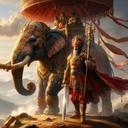
+☂️ Samādhi (in broadest sense)
all
+samādhi = undistractibility
The ability to maintain a mind of singular focus (ekagga citta).
Not just in Buddhism, but in any religion, and any activity in life in general.
+The 4 jhānas are 4 quality levels of samādhi
They have quiescent (sitting, standing) and dynamic modes (any posture or activity).
You can bet that anyone who is demonstrating excellence and a high skill level at anything
while looking relaxed and effortless,
is likely exercising samādhi in the 4 jhāna spectrum,
whether Buddhist or not, meditator or not.
+1 – samādhi = sammā samādhi = undistractible-lucidity
all
In EBT, when the term ‘samādhi’ is unqualified, used in isolation in the suttas,
it is almost always referring to undistractibility with respect to the Buddha’s Dhamma.
‘Lucidity’ (yathā bhūta) means seeing reality as it is according to right view, 4👑☸.
+1.1 – just as ‘sati’ in isolation usually = sammā sati
Right remembering and application of Dhamma.
Another legitimate way to define sammā samādhi is
the undistractible, unbroken stream of continuous right remembering and application of (the Buddha’s) Dhamma.
+1.2 – proof that Samādhi = Undistractable-Lucidity
all
With a digital search on the string ‘samādh’ in all of the EBT Pāḷi suttas,
I’ve exhaustively listed every single term that includes the word ‘samādhi’
as part of its term or definition (for example, ekaggata is a synonym).
So an ideal translation for the word samādhi,
would work in every single one of these nuanced contexts.
+§2.1 – “Concentration” misses the essence, lacks passaddhi
all
“Concentration” doesn’t capture the full essence of samādhi,
and the crucial, indispensable role it plays in realizing Dhamma, nirvana.
The comprehensive set of passages collected works in every situation for ‘undistractible-lucidity’.
‘Concentration’ as we usually use it is associated with tension (both physical and mental).
Tension is the exact opposite of the passaddhi awakening factor (pacification of body and mind).
‘Undistractibility’ covers the function it shares with ‘ekaggata’,
and ‘lucidity’ makes explicit what the Buddha’s ‘samādhi’ was intended for:
making the mind so clear, sharp, and bright, ready to penetrate through to nirvana.
“Concentration” loses the nirvana motive.
+§1.1 – ‘concentration’ lacks passaddhi/pacification awakening factor
The image of someone ‘concentrating’ is a person with scrunched face frowning with tension.
Physical and mental tension blocks 4 jhāna quality of samādhi.
As you my recall, passaddhi is the 5th of 7 awakening factors preceding and setting the table for the 6th one, samādhi.
+1.3 – Patient endurance (khamo/khanti) is hallmark of Samādhi
all
Note the title of the sutta AN 5.113 sammā·samādhi·suttaṃ.
There are many suttas in the EBT titled “samādhi”
but this is the only sutta that’s called “sammā samādhi”.
For further proof, a highly developed 4th jhāna capable of full awakening and psychic powers is described as imperturbable (aneñja).
Imperturbability is patient endurance at a consummate level.
+AN 5.113 sammā·samādhi can withstand sounds, pain, etc.
| sammā·samādhi·suttaṃ | AN 5.113 right samādhi discourse | |
| … | … | |
| ♦ “pañca-hi, bhikkhave, dhammehi samannāgato | “Possessing five of these dharmas, | |
| bhikkhu bhabbo sammā-samādhiṃ | a monk is capable of righteous-undistractable-lucidity, | |
| upasampajja viharituṃ. | Is capable of attaining and living in that state. | |
| katamehi pañcahi? | Which five? | |
| idha, bhikkhave, bhikkhu | Here, monks, a monk | |
| 1. khamo hoti rūpānaṃ, | 1. can patiently-endure forms, | |
| 2. khamo saddānaṃ, | 2. can patiently-endure sounds, | |
| 3. khamo gandhānaṃ, | 3. can patiently-endure odors, | |
| 4. khamo rasānaṃ, | 4. can patiently-endure tastes, | |
| 5. khamo phoṭṭhabbānaṃ. | 5. can patiently-endure tactile-objects. |
+AN 5.139, kings warrior elephant builds on AN 5.113
all
| (key word, khamo = resilience, or patient endurance from AN 5.113) | ||
| 2. ♦ “kathañca, bhikkhave, rañño nāgo khamo hoti saddānaṃ? idha, bhikkhave, rañño nāgo saṅgāmagato hatthisaddaṃ vā sutvā assasaddaṃ vā sutvā rathasaddaṃ vā sutvā pattisaddaṃ vā sutvā bheripaṇavasaṅkhatiṇavaninnādasaddaṃ vā sutvā na saṃsīdati na visīdati, santhambhati sakkoti saṅgāmaṃ otarituṃ. evaṃ kho, bhikkhave, rañño nāgo khamo hoti saddānaṃ. | 2. “And how is a king’s elephant resilient to sounds? There is the case where a king’s elephant, having gone into battle, hears the sound of elephants, the sound of cavalry, the sound of chariots, the sound of foot soldiers, the resounding din of drums, cymbals, conchs, & tom-toms, but he doesn’t falter or faint, he steels himself and engages in the battle. This is how a king’s elephant is resilient to sounds. | |
| 3. ♦ “kathañca, bhikkhave, rañño nāgo khamo hoti gandhānaṃ? idha, bhikkhave, rañño nāgo saṅgāmagato ye te rañño nāgā abhijātā saṅgāmāvacarā tesaṃ muttakarīsassa gandhaṃ ghāyitvā na saṃsīdati na visīdati, santhambhati sakkoti saṅgāmaṃ otarituṃ. evaṃ kho, bhikkhave, rañño nāgo khamo hoti gandhānaṃ. | 3. “And how is a king’s elephant resilient to aromas? There is the case where a king’s elephant, having gone into battle, smells the stench of the urine & feces of those pedigreed royal elephants who are at home in the battlefield, but he doesn’t falter or faint, he steels himself and engages in the battle. This is how a king’s elephant is not resilient to aromas. | |
| … | ||
| 5. ♦ “kathañca, bhikkhave, rañño nāgo khamo hoti phoṭṭhabbānaṃ? idha, bhikkhave, rañño nāgo saṅgāmagato ekena vā saravegena viddho, dvīhi vā tīhi vā catūhi vā pañcahi vā saravegehi viddho na saṃsīdati na visīdati, santhambhati sakkoti saṅgāmaṃ otarituṃ. evaṃ kho, bhikkhave, rañño nāgo khamo hoti phoṭṭhabbānaṃ. | 5. “And how is a king’s elephant resilient to tactile sensations? There is the case where a king’s elephant, having gone into battle, is pierced by a flight of arrows, two flights, three flights, four flights, five flights of arrows, but he doesn’t falter or faint, he steels himself and engages in the battle. This is how a king’s elephant is resilient to tactile sensations. |
+(monk who patiently endures stimuli like warrior elephant is in “samādhi”)
| 2. ♦ “kathañca, bhikkhave, bhikkhu khamo hoti saddānaṃ? idha, bhikkhave, bhikkhu sotena saddaṃ sutvā rajanīye sadde na sārajjati, sakkoti cittaṃ samādahituṃ. evaṃ kho, bhikkhave, bhikkhu khamo hoti saddānaṃ. | 2. “And how is a monk resilient to sounds? There is the case where a monk, on hearing a sound with the ear, feels no passion for a sound that incites passion and can undistractify-&-lucidify his mind. This is how a monk is resilient to sounds. | |
| 3. ♦ “kathañca, bhikkhave, bhikkhu khamo hoti gandhānaṃ. idha, bhikkhave, bhikkhu ghānena gandhaṃ ghāyitvā rajanīye gandhe na sārajjati, sakkoti cittaṃ samādahituṃ. evaṃ kho, bhikkhave, bhikkhu khamo hoti gandhānaṃ. | 3. “And how is a monk resilient to aromas? There is the case where a monk, on smelling an aroma with the nose, feels no passion for an aroma that incites passion and can undistractify-&-lucidify his mind. This is how a monk is resilient to aromas. | |
| 5. ♦ “kathañca, bhikkhave, bhikkhu khamo hoti phoṭṭhabbānaṃ? idha, bhikkhave, bhikkhu kāyena phoṭṭhabbaṃ phusitvā rajanīye phoṭṭhabbe na sārajjati, sakkoti cittaṃ samādahituṃ. evaṃ kho, bhikkhave, bhikkhu khamo hoti phoṭṭhabbānaṃ. | 5. “And how is a monk resilient to tactile sensations? There is the case where a monk, on touching a tactile sensation with the body, feels no passion for a tactile sensation that incites passion and can undistractify-&-lucidify his mind. This is how a monk is resilient to tactile sensations. |
+AN 6.5, 6.6, 6.7 khamo, thoroughbred horse
(word ‘samadhi’ is not used, but the khamo qualities just like AN 5.139 elephant and monk)
| Idha, bhikkhave, rañño bhadro assājānīyo khamo hoti rūpānaṃ, khamo saddānaṃ, khamo gandhānaṃ, khamo rasānaṃ, khamo phoṭṭhabbānaṃ, javasampanno ca hoti. | It’s when a fine royal thoroughbred can endure sights, sounds, smells, tastes, and touches. And it’s fast. | |
| Evamevaṃ kho, bhikkhave, chahi dhammehi samannāgato bhikkhu āhuneyyo hoti … pe … anuttaraṃ puññakkhettaṃ lokassa. | In the same way, a mendicant with these six factors is worthy of offerings dedicated to the gods, worthy of hospitality, worthy of a teacher’s offering, worthy of veneration with joined palms, and is a supreme field of merit for the world. | |
| Idha, bhikkhave, bhikkhu khamo hoti rūpānaṃ … pe … khamo dhammānaṃ. | What six? Katamehi chahi? It’s when a mendicant can endure sights, sounds, smells, tastes, touches, and thoughts. |
❧
+1.4 – Mastery of thought closely related to undistractibility
all
MN 20 gives 5 strategies for removing unwanted thoughts.
Works not just for the verbal thoughts that gate skillful Dharma from non Dharma thoughts to first jhāna,
but also works in calming the nonverbal mental processing that lucidly discerns in jhānas 2 through 4.
+MN 20 Vitakka·saṇṭhāna (calming verbal thoughts)
| ayaṃ vuccati, bhikkhave, bhikkhu | This (is) called, **********, (a) monk | |
| vasī vitakka·pariyāya·pathesu. | (who is a) master (of) thought-order-pathways. | |
| yaṃ vitakkaṃ ākaṅkhissati | The thoughts (he) wishes, | |
| taṃ vitakkaṃ vitakkessati, | those thoughts (he) thinks. | |
| yaṃ vitakkaṃ n·ākaṅkhissati | The thoughts (he does) not wish, | |
| na taṃ vitakkaṃ vitakkessati. | those thoughts (he does) {not} think. | |
| ac·checchi taṇhaṃ, | Fully-cut-off craving, | |
| vivattayi saṃyojanaṃ, | Flung-away (the) fetters, | |
| sammā mān·ābhisamayā | Right {penetration}-of-conceit, | |
| anta·m·akāsi dukkhassā”ti. | end-reached (for) suffering." |
+1.5 – Samādhi is not...
all
+§5.1 – Samādhi is not “stillness”
Samādhi is not 'stillness'.
Stillness is an ingredient of samādhi, an important aspect of it,
but samādhi is not equivalent to 'stillness'.
If stillness were the defining characteristic of EBT Buddhist samādhi,
then a dead tree stump and a corpse of a dead person buried next to it
would be your king and queen of samādhi.
+§5.2 – Samādhi is not “immersion”
See above section ☂️🌄 1.3 on 'Patient endurance (khamo/khanti)',
and plug in 'immersion' in those sutta passages and see how well that works for you.
Samādhi as 'undistractibility' has an aspect of 'immersion' to it,
but 'immersion' loses the quality of 3rd and 4th jhāna's lucid-discerning,
the pañña, sampajāno wisdom discernment factor.
You can be 'immersed' in a frozen stupor,
or immersed in sex or rage.
But only undistractible-lucidity captures four jhāna quality of samādhi
and right remembering and application of Dharma
moment to moment, in stillness, in immersion,
in any posture or activity,
in all the sutta passages that reference 'samādhi'.
+§5.3 – Samādhi is not nirvana, not the end goal in itself
+2 – Nuances of samādhi (alphabetized eng.)
all
+2.1 – Ānā·pānas·sati·samādhi, 16 APS is a samādhi, 16 APSS
SN 54, which contains 20 suttas, starting with sutta #7, the latter 14 suttas switch terminologly from16APS to 16APSS (16APS + samādhi). It’s the same 16 steps, nothing different about it, but the Buddha starts labeling the practice a samādhi practice.
| SN 54.8 Pa·dīp'·opama·sutta | SN 54.8 (the) **-lamp-simile-discourse | |
| “Ānā·pānas·sati·samādhi, bhikkhave, | "Inhale-exhale-mindful-concentration, monks, | |
| bhāvito bahulīkato | [when] developed (and) pursued, | |
| mahap·phalo hoti mahā·nisaṃso. | {is of} great-fruit ****, great-benefit. |
+2.5 – a·nimitta ceto·samādhi: sign-less mind’s-undistractable-lucidity
(see separate article,A·nimitta samādhi , that examines all EBT passsages on animitta)
| SN 40.9 a·nimitta·pañhā·suttaṃ | SN 40.9 sign-less-question-discourse | |
| ♦ 340. “‘a·nimitto ceto·samādhi, | "'Sign-less concentration-of-mind, | |
| a·nimitto ceto·samādhī’ti vuccati. | Sign-less concentration-of-mind,' (it is) said. | |
| katamo nu kho a·nimitto ceto·samādhīti? | what the heck (is) Sign-less concentration-of-mind? | |
| tassa mayhaṃ, āvuso, etad·ahosi — | Then I, *****, (had) this-[thought]-occur (to me): | |
| ‘idha bhikkhu | 'Here (a) monk, | |
| sabba·nimittānaṃ a·manasi·kārā | (regarding) all-signs, no-attention-(is)-given (to them). | |
| a·nimittaṃ ceto·samādhiṃ upasampajja viharati. | Sign-less concentration-of-mind (he) enters (and) dwells. | |
| ayaṃ vuccati a·nimitto ceto·samādhī’ti. | This (is) called Sign-less concentration-of-mind.'" |
+2.9 – ap·paṇihito samādhi, ap·paṇidhāya bhāvanā, un-directed samadhi
+2.13 – Ariyassa pañc·aṅgikassa sammā·samādhissa
AN 5.28 noble five-factored right-concentration
5 factors = 4 jhānas + reflection-nimitta + 5 similes
| AN 5.28 Pañc·aṅgika·sutta | AN 5.28 Five-Factored-discourse | |
| “Ariyassa, bhikkhave, pañc·aṅgikassa sammā·samādhissa | (This) Noble, ********, five-factored right-concentration; | |
| … | … | |
| Puna ca·paraṃ, bhikkhave, bhikkhuno | Again, and-furthermore, *********, ******** | |
| paccavekkhaṇā·nimittaṃ sug·gahitaṃ hoti | (the) reviewing-sign {has been} well-grasped ****, | |
| su·manasikataṃ sū·(u)padhāritaṃ sup·paṭividdhaṃ paññāya. | well-attended, well-sustained, well-penetrated (by) wisdom. |
+2.17 – ariyo sammā·samādhi sa·upaniso itipi sa·parikkhāro itipī
| AN 7.45 samādhi·parikkhāra·suttaṃ | AN 7.45 concentration-Accessories-discourse | |
| ♦ 45. “satt·ime, bhikkhave, samādhi·parikkhārā. | “[There are] seven-(of)-these, *********, concentration-accessories. | |
| katame satta? | What seven? | |
| sammādiṭṭhi, sammāsaṅkappo, | Right view, right intention, | |
| sammāvācā, sammākammanto, sammāājīvo, | right speech, right action, right livelihood, | |
| sammāvāyāmo, sammāsati. | right effort, and right mindfulness. | |
| yā kho, bhikkhave, | what ever, *********, | |
| imehi sattah·aṅgehi | (with) these seven-factors | |
| cittass·ekaggatā parikkhatā, | (that the) mind's-unification (is) equipped (with), | |
| ayaṃ vuccati, bhikkhave, | that (is) called, *********, | |
| ariyo sammā·samādhi sa·upaniso itipi sa·parikkhāro itipī”ti. | noble right-concentration with-supports ***** &-with-accessories *****.’” |
+2.21 – a·vitakko a·vicāro samādhi.
| ♦ “katamo ca, bhikkhave, asaṅkhatagāmimaggo? | what is the way to the unconditioned? | |
| a·vitakko a·vicāro samādhi. | Without-thinking, without-evaluation undistractable lucidity [second jhana or higher] |
+2.25 – a·vitakko vicāra·matto samādhi.
| ♦ “katamo ca, bhikkhave, asaṅkhatagāmimaggo? | what is the way to the unconditioned? | |
| a·vitakko vicāra·matto samādhi. | Without-thinking, with-some-evaluation undistractable lucidity [between first and second jhana] |
+2.29 – bala = power (samādhi·bala is one of 5bal)
+2.33 – bhāvanā = development, (samādhi·bhāvanā)
| MN 44 | ||
| katamā samādhi·bhāvanā”ti? | what (is) undistractable-lucidity-development? | |
| yā tesaṃyeva dhammānaṃ | Whichever of these Dhammas [right-effort, right-remembering, right-samādhi]; (their) | |
| āsevanā bhāvanā bahulī·kammaṃ, | cultivation, development, abundant-pursuit, | |
| ayaṃ ettha samādhi·bhāvanā”ti. | that there (is) undistractable-lucidity-development. |
AN 4.41 samādhi·bhāvanā·sutta
(1. STED Four Jhānas for pleasant abiding now)
(2. STED smd-asnd: For knowledge and vision)
(3. For sati and sampajaññāya)
(4. For destroying Āsava's)
+2.37 – bojjhanga (samādhi·sambojjhanga)
all
| 1. Sīlavato, bhikkhave, sīla·sampannassa | 1. “(for a) virtuous [person], *********, (who has) virtuous-behavior -- in possession, | |
| upanisa·sampanno hoti a·vippaṭisāro; | (the) proximate-cause-is-possessed (by) non-regret. | |
| 2. a·vippaṭisāre sati a·vippaṭisāra·sampannassa | 2. (when there is) non-regret ****, (for one with) non-regret- in possession, | |
| upanisa·sampannaṃ hoti pāmojjaṃ; | (the) proximate-cause-is-possessed (by) mirth. | |
| 3. pāmojje sati pāmojja·sampannassa | 3. (When there is) mirth ****, (for one with) mirth- in possession, | |
| upanisa·sampannā hoti pīti; | (the) proximate-cause-is-possessed (by) rapture. | |
| 4. pītiyā sati pīti·sampannassa | 4. (When there is) rapture ****, (for one with) rapture- in possession, | |
| upanisa·sampannā hoti passaddhi; | (the) proximate-cause-is-possessed (by) pacification. | |
| 5. passaddhiyā sati passaddhi·sampannassa | 5.(When there is) pacification ****, (for one with) pacification- in possession, | |
| upanisa·sampannaṃ hoti sukhaṃ; | (the) proximate-cause-is-possessed (by) pleasure. | |
| 6. sukhe sati sukha·sampannassa | 6. (When there is) pleasure ****, (for one with) pleasure- in possession, | |
| upanisa·sampanno hoti sammā·samādhi; | (the) proximate-cause-is-possessed (by) righteous - undistractable-lucidity. | |
| 7. sammā·samādhimhi sati sammā·samādhi·sampannassa | 7. (When there is) righteous - undistractable-lucidity ****, (for one with) righteous - undistractable-lucidity- in possession, | |
| upanisa·sampannaṃ hoti yathā·bhūta·ñāṇa·dassanaṃ; | (the) proximate-cause-is-possessed (by) knowledge and vision of things as they really are. | |
| 8. yathā·bhūta·ñāṇa·dassane sati yathā·bhūta·ñāṇa·dassana·sampannassa | 8. (When there is) knowledge and vision of things as they really are ****, (for one with) knowledge and vision of things as they really are - in possession, | |
| upanisa·sampanno hoti nibbidā·virāgo; | (the) proximate-cause-is-possessed (by) disenchantment and dispassion | |
| 9. nibbidā·virāge sati nibbidā·virāga·sampannassa | 9. (When there is) disenchantment and dispassion ****, (for one with) disenchantment and dispassion - in possession, | |
| 10. upanisa·sampannaṃ hoti vimutti·ñāṇa·dassanaṃ. | 10. (the) proximate-cause-is-possessed (by) liberation's - knowledge and vision. |
+2.41 – chanda·samādhip·padhāna·saṅkhāra… of 4ip
see 4ip 🌕⚡ iddhi·pada entry for more details on 4ip.
| chanda·samādhip·padhāna·saṅkhāra·samannāgataṃ | desire-(based)-undistractable-lucidity--;--exertion-fabrications-(it)-possesses. | |
| iddhi·pādaṃ bhāveti, | (this) [spiritual] power-base (he) develops. |
+2.45 – citta·samādhip·padhāna·saṅkhāra… of 4ip
see 4ip 🌕⚡ iddhi·pada entry for more details on 4ip.
| citta·samādhip·padhāna·saṅkhāra·samannāgataṃ | mind-(based)-undistractable-lucidity--;--exertion-fabrications-(it)-possesses. | |
| iddhi·pādaṃ bhāveti, | (this) [spiritual] power-base (he) develops. |
+2.49 – ekaggata: samādhi = cittassa ekaggata = mind’s unification
refer to entry: samādhi = cittassa ekaggata = mind’s unification
for passsages supporting that
+2.53 – ekodi·bhava: synonymous with ekaggata
refer to entry: samādhi = cittassa ekaggata = mind’s unification
for passsages supporting that
+2.57 – iddhi·pāda: 4ip = 4 [spiritual] power bases
SN 51 iddhi·pāda samyutta. The 4ip are a commentary on how right effort and right exertion (4pd) are used to perfect 4th jhana (see AN 6.29). Notice the lack of pleasure factors in 4ip, compared to first 3 jhanas. And notice the words chanda, viriya, citta are key words in the standard 4pd and right effort formulas.
+2.61 – indriya = faculty (samādhi·indriya is one of 5ind)
all
Note that what makes this interesting and distinctive from the STED sammā samādhi is that it must be directed towards attaining Nirvana to make it right concentration.
+SN 48.9 samādhi·indriya definition is ekagga citta directed towards nirvana
| ♦ “katamañ·ca, bhikkhave, samādh·indriyaṃ? | "{And}-what, monks, (is) undistractable-lucidity-faculty? | |
| idha, bhikkhave, ariya·sāvako | Here, monks, (a) disciple-of-the-noble-ones, | |
| vossagg·ārammaṇaṃ karitvā | {having made} release-(as the)-object | |
| labhati samādhiṃ, | (he) obtains undistractable-lucidity, | |
| labhati cittassa ekaggataṃ — | (he) obtains mind’s singularity - | |
| idaṃ vuccati, bhikkhave, samādh·indriyaṃ. | this (is) called, *********, undistractable-lucidity-faculty. |
+2.65 – jhāna, 4j, 4 jhānas
see entry under sammā·samādhi
+2.69 – khandha = aggregate: (samādhi·khandha)
| MN 44 | ||
| yo ca sammā·vāyāmo yā ca sammā·sati yo ca sammā·samādhi | Right-effort, right-remembering, & righteous-undistractable-lucidity | |
| ime dhammā samādhik·khandhe saṅgahitā. | those Dhammas {come under the} undistractable-lucidity-aggregate. |
+2.71 – nibbāna (nirvana)
here nirvana described as an actual samādhi meditative attainment not of the 6 senses, rather than the usual nirvana as part of 6 senses but devoid of greed, anger, delusion.
full collection of these passages: etaṃ santaṃ etaṃ paṇītaṃ (this is peaceful, this is exquisite)
+2.73 – nimitta = sign, theme (samādhi·nimittā = 4sp)
| MN 44 | ||
| katame dhammā samādhi·nimittā, | which Dhammas are undistractable-lucidity-themes? | |
| cattāro sati·’paṭṭhānā samādhi·nimittā; | four remembrance-establishings (are) undistractable-lucidity-themes. |
+2.77 – paṇihito samādhi, paṇidhāya bhāvanā, directed samadhi
+2.81 – parikkhārā = requisites, equipment, indispensables (samādhi·parikkhārā = 4pd)
all
| MN 44 | ||
| katame dhammā samādhi·parikkhārā, | what Dhammas are undistractable-lucidity-requisites? | |
| cattāro sammap·padhānā samādhi·parikkhārā. | four right-exertions (are) undistractable-lucidity-requisites. |
note: 4pd defined exactly same as sammā vāyāmo (right effort)
+also see: ariyo sammā·samādhi sa·upaniso itipi sa·parikkhāro itipī
+2.85 – samādhi = cittassa ekaggata = mind’s unification
all
+exhibit 1: MN 44
| ♦ “katamo panāyye, samādhi, | “Now what, lady, (is) undistractable-lucidity? | |
| ♦ “yā kho, āvuso visākha, cittassa ekaggatā ayaṃ samādhi; | “friend Visākha, mind’s unification is undistractable-lucidity. |
exhibit 2: see: ariyo sammā·samādhi sa·upaniso itipi sa·parikkhāro itipī
exhibit 3: samadhi·indriya also supports the ekaggata equivalence
+exhibit 4: AN 4.29 samma samadhi not explicitly defined, but see verse
| ♦ “sammā·samādhi, bhikkhave, dhammapadaṃ | (4) Righteous-undistractable-lucidity is a Dhamma footstep, | |
| aggaññaṃ rattaññaṃ | primal, of long standing, | |
| vaṃsaññaṃ porāṇaṃ | traditional, ancient, | |
| asaṃkiṇṇaṃ asaṃkiṇṇapubbaṃ, | un-mixed and never before mixed [with impurities], | |
| na saṃkīyati na saṃkīyissati, | which are not being mixed and will not be mixed, | |
| appaṭikuṭṭhaṃ samaṇehi brāhmaṇehi viññūhi. | which are not repudiated by wise ascetics and brahmins. | |
| … | … |
+(verse)
| ♦ “an·abhijjhālu vihareyya, | free-(from)-longing (one) should-dwell, | |
| A·byāpannena cetasā. | no-ill-will (in) mind. | |
| ♦ sato ekagga·cittassa, | mindful, singular-mind, | |
| ajjhattaṃ su·samāhito”ti. | internally, thoroughly,-undistractably-lucid [samādhi]. |
+2.89 – samatha: a nutriment for samādhi, samatha is not samādhi
all
+SN 46.2: (6. Samādhi ← Samatha·nimittaṃ, A·by·agga·nimittaṃ)
| Ko ca, bhikkhave, | “{And} what, monks, [is the] | |
| āhāro an·uppannassa vā | nutriment (for) un-arisen | |
| samādhi·sam·bojjh·aṅgassa uppādāya, | undistractable-lucidity-awakening-factor's arising, | |
| uppannassa vā samādhi·sam·bojjh·aṅgassa | (and) arisen undistractable-lucidity-awakening-factor's | |
| bhāvanāya pāripūriyā? | development (and) fulfillment? | |
| Atthi, bhikkhave, | There-is, monks, | |
| Samatha·nimittaṃ | stillness-sign, | |
| A·by·agga·nimittaṃ. | non-distraction-sign. | |
| Tattha yoniso·manasi·kāra·bahulī·kāro– | (To) that-there, wise-mental-production-frequently-done, | |
| ayam·āhāro an·uppannassa vā | is-the-nutriment (for) un-arisen | |
| samādhi·sam·bojjh·aṅgassa uppādāya, | undistractable-lucidity-awakening-factor's arising, | |
| uppannassa vā samādhi·sam·bojjh·aṅgassa | (and) arisen undistractable-lucidity-awakening-factor's | |
| bhāvanāya pāripūriyā. | development (and) fulfillment. |
+2.93 – sam·bojjhanga (samādhi·sambojjhanga)
see 7sb☀️ bojjhanga
+2.97 – sammā·samādhi = righteous-undistractable-lucidity
+2.101 – sa·vitakko sa·vicāro samādhi
| ♦ “katamo ca, bhikkhave, asaṅkhatagāmimaggo? | what is the way to the unconditioned? | |
| sa·vitakko sa·vicāro samādhi. | With-thinking, with-evaluation undistractable lucidity [first jhana] |
+2.105 – suññato samādhi: emptiness samadhi
see separate article surveying all passages on this topic.
+2.109 – vīmaṃsā·samādhip·padhāna·saṅkhāra… of 4ip
see 4ip 🌕⚡ iddhi·pada entry for more details on 4ip.
| vīmaṃsā·samādhip·padhāna·saṅkhāra·samannāgataṃ | discrimination-(based)-undistractable-lucidity--;--exertion-fabrications-(it)-possesses. | |
| iddhi·pādaṃ bhāveti, | (this) [spiritual] power-base (he) develops. |
+2.113 – vi·passana: clear seeing
vipassana in the 4 jhānas is done with S&S&U (sati & sampajano & upekkha).
upekkha 7🛆👁 is equanimous-observation (ikkhati), not just passive equanimity.
In first jhana, V&V (vitakka & vicara) does a coarser version of S&S&U with thinking & evaluation.
If you’re in a frozen meditation state, such as VRJ (vism. Redefinition of jhana) where S&S&U can’t function, you’re not in the 4 jhānas.
+2.117 – vīriya·samādhip·padhāna·saṅkhāra… of 4ip
see 4ip 🌕⚡ iddhi·pada entry for more details on 4ip.
| vīriya·samādhip·padhāna·saṅkhāra·samannāgataṃ | vigor-(based)-undistractable-lucidity--;--exertion-fabrications-(it)-possesses. | |
| iddhi·pādaṃ bhāveti, | (this) [spiritual] power-base (he) develops. |
❧